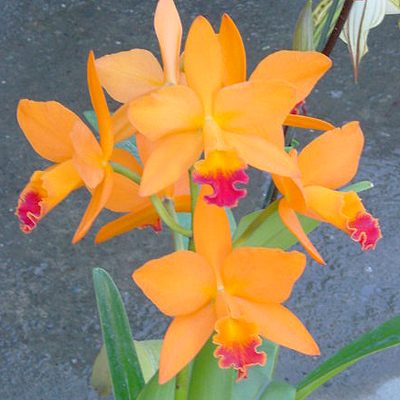
What a mericlone is and how it is made
A mericlone is a plant that is grown from a tiny piece of tissue taken from a mother plant. This process is called micropropagation or tissue culture. The tissue is cleaned and placed on a special gel that has nutrients, sugar and plant hormones to help it grow. Over time, that small piece of tissue develops into a complete plantlet. Because it comes from one specific plant, the mericlone is genetically identical to the mother plant. This means it will have the same flower color, shape and growth habit as the plant it came from.
What a seedling is and how it is made
A seedling is a plant that grows from a seed. In orchids, seeds are produced when pollen from one flower fertilizes the ovule of another flower. The resulting seed pod contains many tiny seeds. When these seeds are germinated and grown, each seedling is a unique individual. Even if the two parent plants are the same, the seedlings can vary in flower color, size and form because of how their genes combine. This is similar to how siblings in a family can look different from each other even though they share the same parents.
How cultivar names work and what they mean
When an orchid has a special trait that growers want to keep, such as a particularly beautiful flower or strong growth, it may be given a cultivar name. This name is always written in single quotes, like ‘Golden Treasure’ or ‘Moonlight Dance’. The cultivar name identifies a specific individual plant that has been selected for its qualities. If that plant is propagated by mericlone, all the resulting plants will carry the same cultivar name and be genetically identical to it. If the plant is grown from seed, the offspring will not keep the cultivar name unless they happen to show the same traits, which is rare.
How grex names group orchids by parentage
Orchid hybrids are often grouped under a grex name, which comes from the Latin word for flock. A grex name is based only on the parentage of the hybrid. For example, if a Cattleya warscewiczii is crossed with a Cattleya aurea, all offspring from that cross belong to the grex called Cattleya hardyana. This name applies to every seedling from that cross, no matter how they look. If you see a grex name on a label, it tells you which two species or grexes were used to create the hybrid, but it does not tell you anything about the flower’s appearance or quality.
What to look for on an orchid label when you are buying
When you read an orchid label, check for two things: whether there is a name in quotes and whether there is a grex name. If you see a name in quotes, such as ‘Royal Ruby’, that means the plant is a cultivar. If it was produced by mericlone, it will be a copy of that specific plant and will match its description. If there is no name in quotes, only a grex name like Phalaenopsis Golden Dragon, then the plant is a seedling. It will be one of many unique individuals from that cross, and its flowers may vary. If you want predictability in flower color and form, choose a mericlone with a cultivar name. If you enjoy surprise and variety, a seedling from a grex may be interesting, but you cannot know exactly what it will look like until it blooms.
Why mericlones are often recommended for beginners
For someone new to growing orchids, a mericlone with a cultivar name offers the best chance of success. Because it is genetically identical to a known plant, you can expect it to grow and flower in a predictable way. This makes it easier to learn its needs for light, water and temperature. Seedlings, while interesting, can be unpredictable. One might bloom easily while another struggles, even if they are treated the same. Starting with a mericlone lets you build confidence with a plant that has proven performance. As you gain experience, you may enjoy growing seedlings to see what new combinations nature and careful breeding can produce.
How to tell if a plant is a mericlone or a seedling from the label
The most reliable clue is the presence of a cultivar name in quotes. If the label shows a name like ‘Sunset Glow’ or ‘Emerald Isle’, and especially if it is paired with a grex name, the plant is almost certainly a mericlone. Nurseries use mericlone to multiply these selected plants so they can sell many copies that are all the same. If the label only shows a grex name, such as Dendrobium Stardust, with no quoted name, then the plant is a seedling. It was grown from seed and is one of many unique individuals from that cross. Remember, the grex name tells you about parentage, not uniformity. Only the cultivar name in quotes, when paired with mericlone propagation, tells you the plant is a copy of a specific individual.
Steps in Micropropagation
Micropropagation involves four main stages: selection of mother plant, multiplication, rooting and acclimatizing, and transfer of new plants to soil. The process begins with selecting healthy, virus-free plant material from a mother plant. Explants such as stem tips, anthers, petals, or pollen are removed and surface sterilized using bleach and alcohol washes before being placed on a nutrient-rich growth medium containing sucrose, macro- and micronutrients, water, and plant growth regulators. The medium is often thickened with agar to support tissue growth.
During the multiplication stage, tissue samples from the initial culture are increased in number through repeated cycles. Depending on the tissue type—such as callus or plantlets—different methods are used. Callus tissue can be blended and recultured to produce more callus, while plantlets may be treated with hormones to generate multiple offshoots. These shoots are then transferred to a rooting medium with a high auxin-to-cytokinin ratio to encourage root development.
The pretransplant stage, also known as hardening, occurs in vitro and prepares plantlets for survival outside the laboratory. This step encourages root formation and acclimatization to external conditions. Once hardened, the plantlets are transferred to soil for continued growth.
Grex Names in Orchid Horticulture
In orchid horticulture, a grex name describes a hybrid based solely on its parentage and is governed by the International Code of Nomenclature for Cultivated Plants. The term grex, derived from the Latin word for ‘flock’, refers to a group of hybrid orchids sharing the same parents. Within a grex, plants can vary significantly in appearance, as the grex name does not guarantee uniformity. To identify specific, consistent traits, growers use cultivar names in quotes, which refer to individual plants selected for desirable characteristics and propagated clonally.
Grex names are one of three categories of cultivated plant names, alongside cultivar and group names. While the grex indicates lineage, the cultivar group category can be used to classify plants by shared traits such as color or form. Individual orchids with outstanding features may be selected, named as cultivars, and propagated through mericlone methods to preserve those traits. This system allows breeders to track both the genetic origin and the selected qualities of orchid hybrids.
Sources
Based on: Wikipedia · Wikipedia. Written and checked by the Orkpedia editors.