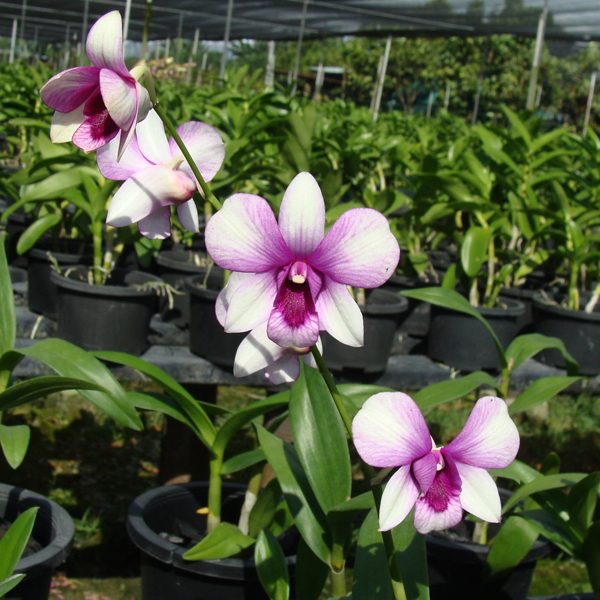
Understanding the plant’s natural growth
Dendrobium orchids grow in a way that is different from many common houseplants. They are sympodial herbs, which means they grow sideways from a base, producing new shoots as they mature. Each shoot often develops a thickened stem called a pseudobulb. This pseudobulb stores water and nutrients, helping the plant survive dry periods. The leaves grow from the top of the pseudobulb and usually last only one growing season before they yellow and fall off. This is normal and not a sign of poor health. The roots are typically thick and cord-like, designed to cling to bark or rock rather than sit in soil. In nature, they absorb moisture and nutrients from the air, rain, and debris around them. Understanding this helps you mimic their natural conditions at home.
Choosing the right light for healthy growth
Dendrobiums need bright, indirect light to thrive and flower well. Think of the light you get under a sheer curtain on a sunny windowsill — bright enough to read by, but not so harsh it burns your skin. Direct midday sun, especially through glass, can scorch the leaves, causing yellow or brown patches. An east-facing window is often ideal, giving gentle morning light. A south or west window may work if you diffuse the light with a blind or place the plant a few feet back. If the leaves are dark green and the plant isn’t flowering, it may need more light. If they are reddish or yellowish, it may be getting too much. Adjust gradually to avoid shock.
Watering with the plant’s rhythm in mind
Watering should follow the plant’s natural cycle, not a fixed calendar. During active growth — when new shoots and leaves are forming — the plant uses more water. At this time, water thoroughly when the top layer of the potting medium feels dry to the touch. Allow excess water to drain away completely; never let the pot sit in water. As growth slows and the plant prepares for rest, reduce watering. During the rest period, many Dendrobiums need only enough water to prevent the pseudobulbs from shriveling. Overwatering during rest is a common cause of root rot. Use room-temperature water and avoid softened water if possible, as salts can build up and harm the roots.
Respecting the rest period for better blooms
Most Dendrobiums need a rest period to initiate flowering. This is a time when growth slows or stops, and the plant conserves energy. It often coincides with cooler temperatures and shorter days in nature. To encourage this, reduce watering and stop fertilizing for several weeks — typically six to eight — while keeping the plant in bright light. Do not expose it to freezing temperatures, but a slight drop in nighttime temperature can help signal the rest phase. During this time, older leaves may yellow and drop; this is normal. When you see new growth beginning at the base of the pseudobulbs, it’s a sign the rest period is ending and you can resume regular watering and feeding.
Feeding to support growth and flowering
During active growth, Dendrobiums benefit from regular feeding. Use a balanced orchid fertilizer at half the recommended strength every two weeks. Avoid fertilizing during the rest period or when the plant is not growing. Over-fertilizing can damage roots and lead to salt buildup in the potting medium. If you notice white crust on the surface of the medium or pot, flush it with plain water to remove excess salts. Always water the plant lightly before applying fertilizer to prevent root burn. The goal is to support steady, healthy growth without pushing the plant too hard.
Repotting only when necessary
Dendrobiums prefer to be slightly pot-bound and do not need frequent repotting. Repot only when the potting medium has broken down, smells sour, or no longer drains well — usually every two to three years. The best time to repot is just after flowering or when new growth begins, never during the rest period. Use a loose, well-draining medium such as orchid bark, perlite, or charcoal. Choose a pot that allows for one to two years of growth; too large a pot holds too much moisture and increases rot risk. When repotting, gently remove old medium, trim any dead or rotting roots, and position the plant so the base of the newest pseudobulb is level with the medium surface. Do not bury the pseudobulbs.
Observing and responding to the plant’s signals
The best care comes from paying attention to what the plant shows you. Healthy roots are silvery when dry and green when wet. New growth should feel firm and plump. If pseudobulbs shrivel despite watering, check the roots — they may be damaged or rotting. If leaves develop black spots, it could indicate fungal issues from too much moisture or poor airflow. Increase ventilation and avoid water on leaves overnight. If flower buds form but drop before opening, it may be due to sudden changes in temperature, light, or water. Consistency matters more than perfection. By learning your plant’s patterns, you’ll know when to adjust care without guesswork.
Sources
Based on: Wikipedia. Written and checked by the Orkpedia editors.