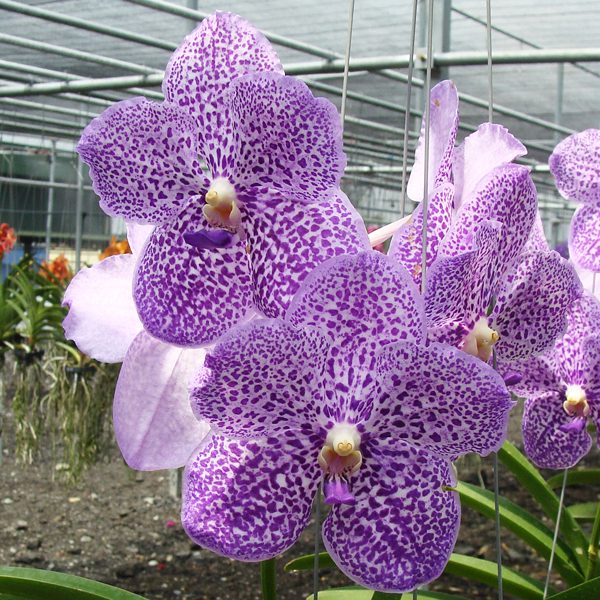
Understanding how Vanda orchids grow
Vanda orchids grow differently from many common houseplants. They have a single stem that grows upward from the base, with leaves arranged along it. This growth pattern is called monopodial. Unlike some orchids, they do not form swollen storage stems known as pseudobulbs. Instead, they rely on their leaves and roots to store water and nutrients. Their leaves are typically broad and flat, often described as strap-like. Some varieties have round, fleshy leaves that help them survive dry periods, but these are now classified in a separate group. In nature, Vanda orchids grow on trees or rocks, absorbing moisture and nutrients from the air, rain, and debris around their roots. This makes them epiphytic, meaning they use other plants for support but do not parasitize them.
Providing the right light
Vanda orchids need very high light levels to thrive and bloom. In their natural habitat, they grow in open areas where sunlight is strong and direct for much of the day. When grown indoors or in a greenhouse, they should receive bright, filtered light for most of the day. A south-facing window in the Northern Hemisphere often works well, but the light should be softened with a sheer curtain if it becomes too intense and risks scorching the leaves. The leaves should be a medium green color. If they turn dark green, the plant is not getting enough light. If they turn yellowish or red-tinged, the light may be too strong. These orchids can be grown outdoors in warm climates like Hawaii, where they benefit from morning sun and afternoon shade. Consistent light day to day helps prevent stress and leaf drop.
Watering for healthy roots
Because Vanda orchids are often grown without potting material, their roots are exposed to the air. This setup mimics their natural epiphytic lifestyle. When grown bare-rooted in baskets or mounted on slabs, they need frequent watering. The roots should be soaked thoroughly until they turn silvery or white, then allowed to dry slightly before the next watering. In warm weather, this may mean watering once a day. In cooler or more humid conditions, less frequent watering may be needed. The key is to avoid letting the roots stay wet for too long, which can lead to rot, while also preventing them from drying out completely for extended periods. Using water at room temperature helps avoid shocking the plant. Rainwater or filtered water is ideal if tap water is heavily mineralized.
Maintaining proper humidity and air movement
Vanda orchids come from humid tropical forests, so they prefer moist air. A humidity level between 60 and 80 percent is ideal for most species. In dry indoor environments, especially during winter with heating systems running, the air can become too dry. Misting the roots and leaves in the morning can help increase humidity temporarily, but it should not replace proper watering. Good air movement is just as important as humidity. Stagnant air increases the risk of fungal problems. A gentle fan circulating air around the plants, without blowing directly on them constantly, helps keep the roots dry between waterings and reduces disease risk. This balance of moisture and airflow mimics the breezy, humid conditions of their native treetop homes.
Feeding for strong growth and blooms
Vanda orchids are heavy feeders, especially when grown bare-rooted. They absorb nutrients directly through their exposed roots. During the growing season, they benefit from weekly feeding with a balanced orchid fertilizer. The fertilizer should be diluted to half or quarter strength to avoid burning the roots. A formula with equal parts nitrogen, phosphorus, and potassium, such as 20-20-20, works well for general growth. To encourage blooming, a fertilizer higher in phosphorus, like 10-30-20, can be used occasionally. It is important to flush the roots with plain water once a month to prevent salt buildup from fertilizer. Feeding should be reduced or stopped during periods of slow growth, such as in cooler months, when the plant’s needs decrease.
Choosing baskets and managing roots
The best way to grow most Vanda orchids is in large wooden baskets with little or no potting medium. This allows their long, rambling aerial roots to hang freely and absorb moisture from the air. The baskets should be made of rot-resistant wood like cedar or redwood and have plenty of gaps for air circulation. When placing the plant in the basket, spread the roots out naturally without bending or breaking them. Do not pack moss or bark tightly around the roots, as this can hold too much moisture and lead to rot. Over time, the roots will grow and attach to the basket itself. It is crucial to avoid disturbing or damaging the roots of mature plants. Root injury can cause the plant to stop flowering and go into decline for a season or more. If repotting is necessary, do it gently and only when the plant has outgrown its basket.
Watching for common problems
One of the most serious issues in Vanda cultivation is fungal infection. Fusarium wilt is a known pathogen that affects these orchids. It starts in the vascular tissue, which transports water and nutrients through the plant. Early signs may include purple discoloration inside the stems. The fungus blocks the internal vessels, preventing proper flow. Even if the plant looks healthy on the outside, with continued growth, the oldest parts may be affected first. Over time, the infection spreads and can eventually kill the plant. To prevent this, always sterilize cutting tools before use, especially when trimming roots or flower spikes. Avoid overwatering and ensure good air movement, as damp, still conditions favor fungal growth. If a plant shows signs of infection, isolate it immediately to protect others. The terete-leaved terrestrial Vanda species are generally easier to grow and less prone to such issues, but the majority of cultivated Vandas are epiphytic and require careful attention to root health and hygiene.
Sources
Based on: Wikipedia. Written and checked by the Orkpedia editors.