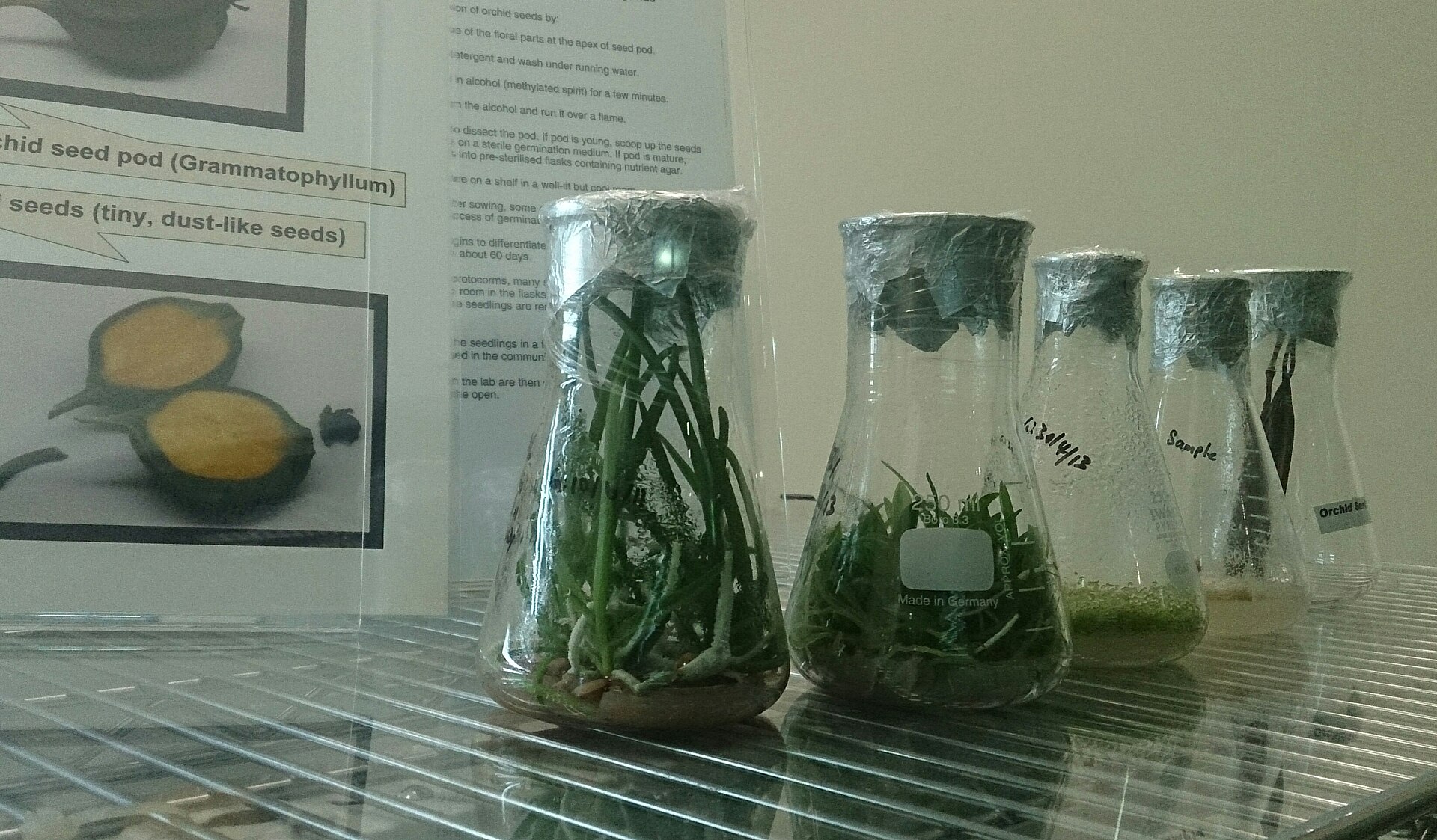
Choosing the Mother Plant
The first step in creating a mericlone is selecting a healthy mother plant. This plant should show strong growth, desirable flowers, and no signs of disease. Growers look for plants that are virus-free and fungi-free because any infection in the mother plant will be copied in all the clones. The tissue used for cloning is taken from the growing tip of the stem, known as the meristem. This area contains undifferentiated cells that can develop into any part of the plant. By choosing a meristem from a strong, clean plant, the grower increases the chance of producing vigorous, true-to-type offspring.
Sterilising the Explants
Once the mother plant is chosen, a small piece of tissue is removed. This piece, called an explant, is usually just a few millimeters long and taken from the stem tip. Before it can be placed in culture, the explant must be sterilised to remove any surface microbes. This is done by washing it in a mild bleach solution, often followed by alcohol, and then rinsing it several times in sterile water. The goal is to kill bacteria, fungi, and viruses on the outside without damaging the delicate plant tissue. All of this work is done under clean conditions, often in a laminar flow cabinet that provides HEPA-filtered air to keep the workspace sterile.
Placing on Culture Medium
The sterilised explant is then placed on a nutrient-rich gel called culture medium. This medium provides everything the plant tissue needs to grow: water, minerals, and a sugar source like sucrose for energy. It also contains plant hormones that guide development. For shoot multiplication, a hormone called cytokinin is often added to encourage the formation of multiple buds. The medium is thickened with a gelling agent, usually agar, so it forms a solid surface that supports the explant. Some plants grow well on simple mixtures, while others need more complex formulations. One widely used medium in labs is the Murashige and Skoog formula, which balances nutrients for many species.
Multiplying the Shoots
After the explant establishes itself on the medium, it begins to grow and produce new shoots. This stage is called multiplication. Through repeated cycles, a single explant can generate dozens, then hundreds, of tiny plantlets. Each time shoots reach a certain size, they are clipped and transferred to fresh medium to stimulate further branching. This process allows for rapid increase in numbers without losing the genetic traits of the mother plant. It is especially valuable for orchids and other plants that are slow or difficult to propagate by traditional means.
Rooting the Plantlets
Once enough shoots have been produced, the next step is to encourage root growth. The shoots are moved to a different medium that contains hormones favoring root development, such as auxin. Over time, tiny roots begin to form at the base of each shoot. At this stage, the plantlets are still very small and fragile, but they are now complete plants with both shoots and roots. They remain in the sterile containers, where they continue to grow under controlled light and temperature until they are strong enough to face the outside world.
Deflasking and Growing On
The final laboratory step is deflasking, which means removing the plantlets from their sterile containers. This is done carefully to avoid damaging the roots. The agar gel is rinsed off, and the young plants are placed in a humid environment, such as a propagation tray with moist sphagnum moss or perlite. Here, they begin to acclimatise to lower humidity and normal air conditions — a process called hardening off. Over several weeks, they are gradually exposed to more light and less moisture until they can survive in regular potting mix. After that, they are treated like any other young orchid: watered, fed, and monitored for healthy growth.
What a Mericlone Label Means
When you see a plant labelled as a mericlone, it tells you that the plant was produced through tissue culture from a single mother plant. This means it is a genetic copy, so it should have the same flower color, shape, and growth habit as the original. Mericlone labelling helps growers know they are getting consistency, especially when breeding for specific traits. However, because the process involves rapid cell division, there is a small chance of mutation. These rare changes, called somaclonal variations, can lead to differences in flower color, pattern, or growth. While most mericlones are true to type, occasional variants may appear — some of which might be interesting new forms, though others could be weaker or less desirable.
Stages of Micropropagation
The process of micropropagation is generally divided into four main stages: selection of the mother plant, multiplication, rooting and acclimatizing, and transfer to soil. During the selection phase, healthy, virus-free plant material is chosen and explants are taken from parts such as stem tips, anthers, petals, or pollen. These explants are surface sterilized using bleach and alcohol washes before being placed on a nutrient medium containing macro- and micronutrients, sucrose, water, and plant growth regulators. The medium is often gelled with agar to support growth. In the multiplication stage, the cultured tissue is subdivided and transferred to fresh media repeatedly to increase the number of shoots. This phase can produce hundreds or thousands of plantlets from a single explant. Rooting is induced by adjusting the hormone balance in the medium, often using auxins, to encourage root formation. The final stage involves acclimatizing the plantlets to external conditions before transferring them to soil or potting mix.
Applications and Benefits
Micropropagation is used to rapidly multiply plants that are difficult to propagate through conventional methods, including orchids and other recalcitrant species. It allows for the production of disease-free plants by starting with sterilized explants and maintaining sterile conditions throughout the process. The technique is valuable for preserving genetic material of rare or endangered plants and for producing uniform crops in agriculture and horticulture. It enables year-round production independent of seasonal seed availability and reduces the space needed for large-scale plant propagation. Micropropagation also supports the regeneration of genetically modified plants and the recovery of plants from protoplasts or single cells under appropriate culture conditions.
Sources
Based on: Wikipedia · Wikipedia · Wikipedia · Wikipedia. Written and checked by the Orkpedia editors.