Author: Orkpedia Editors

  • BC141 · Cattleya Netrasiri Fame

    Flower numberBC141
    NameCattleya Netrasiri Fame
    GenusCattleya
    PropagationMericlone (tissue culture)

    As a mericlone, every plant sold under this number is a tissue-culture copy of one selected mother plant, so its flowers should closely match the photo.

    No photo on file for this flower number yet.

    Bought an orchid from us? Flower number BC141 is the number on your original listing or plant tag. Look up any other number in the flower number index.

  • BC140 · Brassocattleya Yellow Splash Red ‘Big’

    Flower numberBC140
    NameBrassocattleya Yellow Splash Red ‘Big’
    GenusBrassocattleya
    PropagationMericlone (tissue culture)

    As a mericlone, every plant sold under this number is a tissue-culture copy of one selected mother plant, so its flowers should closely match the photo.

    No photo on file for this flower number yet.

    Bought an orchid from us? Flower number BC140 is the number on your original listing or plant tag. Look up any other number in the flower number index.

  • BC139 · Brassocattleya Hidden ‘Gold’

    Flower numberBC139
    NameBrassocattleya Hidden ‘Gold’
    GenusBrassocattleya
    PropagationMericlone (tissue culture)

    As a mericlone, every plant sold under this number is a tissue-culture copy of one selected mother plant, so its flowers should closely match the photo.

    No photo on file for this flower number yet.

    Bought an orchid from us? Flower number BC139 is the number on your original listing or plant tag. Look up any other number in the flower number index.

  • BC135 · Brassolaeliocattleya Irene Finney ‘York’ AM/AOS

    Flower numberBC135
    NameBrassolaeliocattleya Irene Finney ‘York’ AM/AOS
    GenusBrassolaeliocattleya
    PropagationMericlone (tissue culture)
    AwardsAM/AOS: Award of Merit (80-89 points), American Orchid Society · what the letters mean

    As a mericlone, every plant sold under this number is a tissue-culture copy of one selected mother plant, so its flowers should closely match the photo.

    No photo on file for this flower number yet.

    Bought an orchid from us? Flower number BC135 is the number on your original listing or plant tag. Look up any other number in the flower number index.

  • BC120 · Brassocattleya Star Trek ‘Orange’

    Flower numberBC120
    NameBrassocattleya Star Trek ‘Orange’
    ParentageCattleya intermedia × Brassavola perrinii
    GenusBrassocattleya
    PropagationMericlone (tissue culture)
    ColourOrange

    As a mericlone, every plant sold under this number is a tissue-culture copy of one selected mother plant, so its flowers should closely match the photo.

    No photo on file for this flower number yet.

    Bought an orchid from us? Flower number BC120 is the number on your original listing or plant tag. Look up any other number in the flower number index.

  • BC118 · Laeliocattleya Mem Robert Strait ‘Blue Hawaii’ JC/AOS

    Flower numberBC118
    NameLaeliocattleya Mem Robert Strait ‘Blue Hawaii’ JC/AOS
    GenusLaeliocattleya
    PropagationMericlone (tissue culture)
    AwardsJC/AOS: Judges’ Commendation (a distinctive feature), American Orchid Society · what the letters mean

    As a mericlone, every plant sold under this number is a tissue-culture copy of one selected mother plant, so its flowers should closely match the photo.

    No photo on file for this flower number yet.

    Bought an orchid from us? Flower number BC118 is the number on your original listing or plant tag. Look up any other number in the flower number index.

  • BC106 · Brassolaeliocattleya Sa-Ngob Delight ‘Sa -Ngob’ AM/AOS

    Flower numberBC106
    NameBrassolaeliocattleya Sa-Ngob Delight ‘Sa -Ngob’ AM/AOS
    GenusBrassolaeliocattleya
    PropagationMericlone (tissue culture)
    AwardsAM/AOS: Award of Merit (80-89 points), American Orchid Society · what the letters mean

    As a mericlone, every plant sold under this number is a tissue-culture copy of one selected mother plant, so its flowers should closely match the photo.

    No photo on file for this flower number yet.

    Bought an orchid from us? Flower number BC106 is the number on your original listing or plant tag. Look up any other number in the flower number index.

  • A92 · Mokara Kititiya

    Flower numberA92
    NameMokara Kititiya
    GenusMokara
    PropagationMericlone (tissue culture)

    As a mericlone, every plant sold under this number is a tissue-culture copy of one selected mother plant, so its flowers should closely match the photo.

    No photo on file for this flower number yet.

    Bought an orchid from us? Flower number A92 is the number on your original listing or plant tag. Look up any other number in the flower number index.

  • A89 · Mokara Chitti ‘Orange’

    Flower numberA89
    NameMokara Chitti ‘Orange’
    GenusMokara
    PropagationMericlone (tissue culture)

    As a mericlone, every plant sold under this number is a tissue-culture copy of one selected mother plant, so its flowers should closely match the photo.

    No photo on file for this flower number yet.

    Bought an orchid from us? Flower number A89 is the number on your original listing or plant tag. Look up any other number in the flower number index.

  • Coming up: Atlanta Orchid Society show at the Atlanta Botanical Garden, March 12-14, 2027

    Atlanta Orchid Society show at the Atlanta Botanical Garden, March 12-14, 2027

    What to expect at the show

    The Atlanta Orchid Society will host its annual show and sale at the Atlanta Botanical Garden’s Day Hall. Visitors can see individually created exhibits featuring flowering orchids at their best, including many unusual and rarely seen species and hybrids. The displays will fill the space with fragrance and beauty. As an American Orchid Society sanctioned event, the show will include award judging by experts. Vendors will have sales areas offering plants for sale and provide free growing advice to attendees.

    About the venue

    The Atlanta Botanical Garden is a 30-acre botanical garden located adjacent to Piedmont Park in Midtown Atlanta. Incorporated in 1976, its mission is to develop and maintain plant collections for display, education, conservation, research and enjoyment. The garden has a long history of hosting exhibitions and events, including the addition of the Fuqua Orchid Center in 2002, which highlights its ongoing commitment to orchids and other plant collections.

    How to attend

    The show will take place at the Atlanta Botanical Garden, 1345 Piedmont Avenue, Atlanta, GA 30309, in Day Hall. Show hours are Friday from 9:00am to 5:00pm, Saturday from 9:00am to 5:00pm, and Sunday from 10:00am to 4:00pm. Admission to the show is included with general admission to the Atlanta Botanical Garden. For the most current details on tickets, entry, and any updates, visitors should check the Atlanta Orchid Society’s website closer to the event date.

    Why this show matters

    This event offers a chance to see a wide variety of orchids, including rare species and hybrids, in one place. It supports the work of the Atlanta Orchid Society, a nonprofit organization dedicated to promoting orchid culture. The show also provides educational opportunities through vendor advice and connects enthusiasts with growers and sellers. Held at a well-known botanical garden with a strong history of plant exhibitions, it continues a tradition of celebrating orchids in the Southeast.

    Exhibits and Features

    The 2027 Orchid Show will feature several individually created exhibits showcasing flowering orchids at their peak, including many unusual and rarely seen species and hybrids. These displays are designed to highlight the diversity and beauty of orchids, filling Day Hall with fragrance and visual appeal. The event is sanctioned by the American Orchid Society (AOS), which will conduct award judging during the show. Each participating vendor will have a dedicated sales area offering orchid plants for purchase, along with free growing advice for attendees.

    Participating Vendors

    The vendor lineup for the 2027 Orchid Show includes Ecuagenera (based in Ecuador and Apopka, FL), Florida Orchid House (Myakka City, FL), Maneki Hill Orchids (Ellabell, GA), Marble Branch Farms (Walhalla, SC), Owens Orchids (Pisgah Forest, NC), Peach State Orchids (Woodstock, GA), Soley Ceramics (Savannah, GA), julianne collections (Atlanta, GA), and Lady Orchid House (jewelry). These vendors represent a range of orchid growers and related artisans from across the southeastern United States and beyond.

    About the Atlanta Orchid Society

    The Atlanta Orchid Society, Inc. is a 501(c)(3) nonprofit organization dedicated to promoting orchid culture through education, conservation, and community engagement. The society organizes the annual orchid show and sale as a key event to support its mission. It provides resources such as a newsletter, email groups, and calendar updates for members and the public. The society emphasizes collaboration with botanical institutions like the Atlanta Botanical Garden to advance orchid appreciation and horticultural knowledge in the region.

    Sources

    Based on: atlantaorchidsociety.org. Written and checked by the Orkpedia editors.

  • How to read an orchid name: genus, grex, cultivar and awards

    How to read an orchid name: genus, grex, cultivar and awards

    Understanding the Parts of an Orchid Name

    An orchid name can look like a long string of words and letters, but each part has a clear purpose. Think of it like a person’s full name: first name, middle name, last name, and maybe some titles or honors after it. In orchids, we have the genus, the grex, the cultivar name, and sometimes award letters. These parts work together to tell us exactly which plant we are talking about, especially when many look similar.

    Genus: The Broad Family Group

    The first part of an orchid name is the genus. This is like the family name in human terms. It groups orchids that share basic botanical traits. For example, Cattleya, Phalaenopsis, Dendrobium, and Vanda are all genera. The genus name is always capitalized and written in italics when printed. It tells you the broad category but not the specific plant. Many orchids share the same genus, so we need more details to identify one exact plant.

    Grex: The Hybrid Group Name

    After the genus comes the grex name. This name applies to all offspring from a specific cross between two parent plants. It is not italicized, but the first letter is capitalized. Think of the grex as a sibling group—all the plants in it come from the same two parents, just like brothers and sisters in a family. They may look different due to how genes mix, but they share the same parentage. The grex name is registered and unique to that cross. For example, if you cross a Cattleya warscewiczii with a Cattleya dowiana, all the seedlings from that cross belong to the same grex, which might be named something like Cattleya Hardyana.

    Cultivar Name: The Individual Plant’s Identity

    Within a grex, individual plants can vary. To tell one outstanding plant apart from its siblings, growers give it a cultivar name. This name is placed in single quotes. It identifies one specific plant and all its genetically identical copies (called mericlones). The cultivar name is not shared by every plant in the grex—only that one selected individual and its clones. For example, in the name Brassolaeliocattleya Chia Lin ‘Red Rose’, the grex is Chia Lin, and ‘Red Rose’ is the cultivar name of a particular plant that stood out for its qualities.

    Award Letters: Recognizing Quality

    After the cultivar name, you may see letters and slashes. These indicate awards the plant has received for quality or cultivation. Awards are given by judging bodies after evaluating the flower or the plant’s health. The letters stand for different levels of recognition. For example, AM means Award of Merit, FCC means First Class Certificate, and HCC means Highly Commended Certificate. These are based on a point scale—AM is for scores of 80 to 89, FCC for 90 or above, and HCC for 75 to 79. The letters after the slash show which organization gave the award, such as AOS for the American Orchid Society.

    How Awards Are Written and What They Mean

    Awards are always written after the cultivar name, separated by a slash. The part before the slash is the award type; the part after is the awarding body. For example, AM/AOS means the plant received an Award of Merit from the American Orchid Society. FCC/AOS means a First Class Certificate from the same group. Some plants have multiple awards from different groups, like AM/AOS, SM/JGP—this means it got an Award of Merit from AOS and a Silver Medal from the Japan Grand Prix International Orchid Festival. These awards belong only to that specific plant and its clones, not to every plant in the grex.

    Examples from Real Orchid Names

    Looking at real examples helps make this clear. Take Brassolaeliocattleya Chia Lin ‘Red Rose’ AM/AOS, SM/JGP. Here, Brassolaeliocattleya is the genus, Chia Lin is the grex, ‘Red Rose’ is the cultivar name, and the plant earned an Award of Merit from the AOS and a Silver Medal from JGP. Another example: Cattleya violacea ‘Muse’ FCC/AOS shows a species (not a hybrid, so no grex) with a cultivar named ‘Muse’ that received a First Class Certificate from AOS. For a hybrid with multiple awards: Brassolaeliocattleya Irene Finney ‘York’ AM/AOS means the grex is Irene Finney, the cultivar is ‘York’, and it got an Award of Merit from AOS. Some plants get special recognition like JC/AOS, which stands for Judges’ Commendation—given when at least 75% of judges agree the plant has a distinctive trait worth noting, even if it doesn’t fit the usual scoring.

    Why This System Matters for Growers

    This naming system helps everyone talk about the exact same plant. Without it, confusion would be common—especially since many orchids look alike or share parentage. The genus gives the broad group, the grex tells us the parent cross, the cultivar names the individual standout, and the awards show its recognized quality. Whether you are buying, growing, or showing orchids, knowing how to read the name means you know exactly what you are getting. It connects the plant to its history, its breeding, and its achievements—all in a few words and letters.

    Award Criteria and Scoring Details

    The American Orchid Society uses a 100-point scale to evaluate flower quality for its awards. A Highly Commended Certificate (HCC) is given to orchids scoring between 75 and 79 points inclusive. An Award of Merit (AM) is awarded for scores from 80 to 89 points inclusive. The highest honor, the First Class Certificate (FCC), is reserved for orchids scoring 90 points or more. For cultural excellence, the Certificate of Cultural Merit (CCM) requires the plant to have been in the exhibitor’s care for at least 12 months and to score between 80 and 89 points for culture, while the Certificate of Cultural Excellence (CCE) follows the same care requirement but demands a culture score of at least 90 points. The Judges’ Commendation (JC) is awarded when at least 75% of judges agree the plant exhibits a distinctive trait worthy of recognition, even if it does not fit standard scoring categories.

    Award Notation and Plant Identification

    Awards are recorded after the cultivar name, separated by a slash indicating the awarding body—for example, AM/AOS means an Award of Merit granted by the American Orchid Society. The cultivar name, enclosed in single quotes, identifies a specific individual plant and its genetically identical mericlones, not all plants of the same hybrid. The AOS maintains a searchable database containing over 100,000 photos of award-winning orchids, including detailed data on award history, parentage, and family lineage. Other organizations use similar notation: OSROC (Orchid Society of the Republic of China, Taiwan) awards AM/OSROC; JGP (Japan Grand Prix International Orchid Festival) uses SM/JGP for silver medals and BM/JGP for bronze; TOGA (Taiwan Orchid Growers Association) issues BM/TOGA for bronze medals. Examples from the Orkpedia library include Cymbidium Golden Elf ‘Sundust’ HCC/AOS, Laeliocattleya Mem Robert Strait ‘Blue Hawaii’ JC/AOS, Potinara Ahchung Yoyo ‘Little Goldfish’ BM/TOGA, Brassolaeliocattleya Chun Yeah ‘Yellow Swallow’ AM/OSROC, Vanda Robert’s Delight ‘Garnet Beauty’ FCC, and Ascocenda Su-fun Beauty ‘Orange Belle’ AM/AOS.

    Sources

    Based on: aos.org · Wikipedia. Written and checked by the Orkpedia editors.

  • Coming up: The Orchid Show at the New York Botanical Garden, February 6 – April 25, 2027

    The Orchid Show is coming to the New York Botanical Garden from February 6 through April 25, 2027. This annual exhibition transforms the Enid A. Haupt Conservatory into a dreamlike landscape of light, glass, crystal, stone, and thousands of blooming orchids. Visitors will walk through sculptural installations by artists Andy Cao and Xavier Perrot, whose work blends art and nature to create spaces for reflection and wonder.

    For orchid lovers, the show offers a rare chance to see these plants displayed not just as specimens, but as part of immersive, artistic environments. The conservatory’s glass walls and controlled climate allow for the display of delicate species that thrive in humid, filtered light — conditions carefully maintained to mirror their natural habitats. This year’s theme focuses on ephemeral beauty, using reflective materials to capture and refract light in ways that shift with the time of day and weather outside.

    What to Expect at the Show

    The centerpiece of the exhibition is a series of sculptural installations suspended from the conservatory’s ceiling and arranged along winding paths below. These pieces are made from glass, crystal, and stone, chosen for how they interact with light. As visitors move through the space, the orchids — planted in beds, hanging baskets, and tucked into crevices — appear to glow, shift, and shimmer against the reflective surfaces. The artists describe their work as creating “places for dreaming,” where imperfections in the materials become part of the beauty, much like the natural variations found in orchid petals and leaves.

    A Short History of the Venue

    The New York Botanical Garden was established in 1891 and is located on a 250-acre site in Bronx Park. Over one million living plants grow across its gardens and landscapes. The Enid A. Haupt Conservatory, a landmark greenhouse, has hosted seasonal exhibitions for decades and is made possible by the Estate of Enid A. Haupt. The conservatory contains several distinct habitats, allowing the garden to display plants from tropical, desert, and aquatic environments under one glass roof. As a National Historic Landmark since 1967, the garden combines scientific research, education, and public display in a setting that has welcomed over a million visitors annually in recent years.

    How to Attend

    The Orchid Show will be held in the Enid A. Haupt Conservatory at the New York Botanical Garden in the Bronx, New York City. For the most current information on tickets, entry requirements, and opening hours, visitors should check the garden’s official website closer to the date. The garden encourages visitors to sign up for ticket alerts to receive updates when sales begin. Membership options are also available, including a two-year access pass that provides unlimited entry to the garden and its exhibitions, including The Orchid Show and other seasonal displays. Details about pricing, promotions, and how to join can be found on the NYBG website. Public transportation to the garden includes subway and bus routes that stop near the Bronx Park entrance. On-site parking is available for those driving, though spaces may be limited during peak hours. Visitors are advised to allow extra time for entry and to wear comfortable shoes, as the conservatory paths involve walking and standing for extended periods. The garden is committed to accessibility and offers resources for visitors with mobility needs — information on these services is also available online.

    Sources

    Based on: nybg.org. Written and checked by the Orkpedia editors.

  • Growing Vanda orchids: light, water and air for strong roots

    Growing Vanda orchids: light, water and air for strong roots

    Understanding how Vanda orchids grow

    Vanda orchids grow differently from many common houseplants. They have a single stem that grows upward from the base, with leaves arranged along it. This growth pattern is called monopodial. Unlike some orchids, they do not form swollen storage stems known as pseudobulbs. Instead, they rely on their leaves and roots to store water and nutrients. Their leaves are typically broad and flat, often described as strap-like. Some varieties have round, fleshy leaves that help them survive dry periods, but these are now classified in a separate group. In nature, Vanda orchids grow on trees or rocks, absorbing moisture and nutrients from the air, rain, and debris around their roots. This makes them epiphytic, meaning they use other plants for support but do not parasitize them.

    Providing the right light

    Vanda orchids need very high light levels to thrive and bloom. In their natural habitat, they grow in open areas where sunlight is strong and direct for much of the day. When grown indoors or in a greenhouse, they should receive bright, filtered light for most of the day. A south-facing window in the Northern Hemisphere often works well, but the light should be softened with a sheer curtain if it becomes too intense and risks scorching the leaves. The leaves should be a medium green color. If they turn dark green, the plant is not getting enough light. If they turn yellowish or red-tinged, the light may be too strong. These orchids can be grown outdoors in warm climates like Hawaii, where they benefit from morning sun and afternoon shade. Consistent light day to day helps prevent stress and leaf drop.

    Watering for healthy roots

    Because Vanda orchids are often grown without potting material, their roots are exposed to the air. This setup mimics their natural epiphytic lifestyle. When grown bare-rooted in baskets or mounted on slabs, they need frequent watering. The roots should be soaked thoroughly until they turn silvery or white, then allowed to dry slightly before the next watering. In warm weather, this may mean watering once a day. In cooler or more humid conditions, less frequent watering may be needed. The key is to avoid letting the roots stay wet for too long, which can lead to rot, while also preventing them from drying out completely for extended periods. Using water at room temperature helps avoid shocking the plant. Rainwater or filtered water is ideal if tap water is heavily mineralized.

    Maintaining proper humidity and air movement

    Vanda orchids come from humid tropical forests, so they prefer moist air. A humidity level between 60 and 80 percent is ideal for most species. In dry indoor environments, especially during winter with heating systems running, the air can become too dry. Misting the roots and leaves in the morning can help increase humidity temporarily, but it should not replace proper watering. Good air movement is just as important as humidity. Stagnant air increases the risk of fungal problems. A gentle fan circulating air around the plants, without blowing directly on them constantly, helps keep the roots dry between waterings and reduces disease risk. This balance of moisture and airflow mimics the breezy, humid conditions of their native treetop homes.

    Feeding for strong growth and blooms

    Vanda orchids are heavy feeders, especially when grown bare-rooted. They absorb nutrients directly through their exposed roots. During the growing season, they benefit from weekly feeding with a balanced orchid fertilizer. The fertilizer should be diluted to half or quarter strength to avoid burning the roots. A formula with equal parts nitrogen, phosphorus, and potassium, such as 20-20-20, works well for general growth. To encourage blooming, a fertilizer higher in phosphorus, like 10-30-20, can be used occasionally. It is important to flush the roots with plain water once a month to prevent salt buildup from fertilizer. Feeding should be reduced or stopped during periods of slow growth, such as in cooler months, when the plant’s needs decrease.

    Choosing baskets and managing roots

    The best way to grow most Vanda orchids is in large wooden baskets with little or no potting medium. This allows their long, rambling aerial roots to hang freely and absorb moisture from the air. The baskets should be made of rot-resistant wood like cedar or redwood and have plenty of gaps for air circulation. When placing the plant in the basket, spread the roots out naturally without bending or breaking them. Do not pack moss or bark tightly around the roots, as this can hold too much moisture and lead to rot. Over time, the roots will grow and attach to the basket itself. It is crucial to avoid disturbing or damaging the roots of mature plants. Root injury can cause the plant to stop flowering and go into decline for a season or more. If repotting is necessary, do it gently and only when the plant has outgrown its basket.

    Watching for common problems

    One of the most serious issues in Vanda cultivation is fungal infection. Fusarium wilt is a known pathogen that affects these orchids. It starts in the vascular tissue, which transports water and nutrients through the plant. Early signs may include purple discoloration inside the stems. The fungus blocks the internal vessels, preventing proper flow. Even if the plant looks healthy on the outside, with continued growth, the oldest parts may be affected first. Over time, the infection spreads and can eventually kill the plant. To prevent this, always sterilize cutting tools before use, especially when trimming roots or flower spikes. Avoid overwatering and ensure good air movement, as damp, still conditions favor fungal growth. If a plant shows signs of infection, isolate it immediately to protect others. The terete-leaved terrestrial Vanda species are generally easier to grow and less prone to such issues, but the majority of cultivated Vandas are epiphytic and require careful attention to root health and hygiene.

    Sources

    Based on: Wikipedia. Written and checked by the Orkpedia editors.

  • Coming up: Chicago Botanic Garden Orchid Show, February 6 – March 21, 2027

    Chicago Botanic Garden will host its 2027 Orchid Show from February 6 to March 21, 2027, at the Regenstein Center in Glencoe, Illinois. The event, themed “Outer Space,” will feature more than 10,000 orchids and tropical plants arranged in luminous displays and dramatic vignettes that explore familiar and otherworldly landscapes. As the only large-scale orchid show in the Chicago metropolitan region, it draws tens of thousands of visitors each year to experience the beauty and diversity of one of Earth’s most remarkable plant families.

    Why the Show Matters to Orchid Lovers

    Orchid enthusiasts look forward to this annual event because it offers a rare chance to see thousands of orchids displayed together in creative, immersive settings. The 2027 show’s theme connects the intricate beauty of orchids to the vast wonder of space, encouraging visitors to see parallels between the diversity of life on Earth and the mysteries beyond. By highlighting orchids as one of the most diverse plant families, the show reinforces the idea that there is always more to discover—both in our gardens and in the universe.

    What to Expect at the Show

    Visitors will walk through eight rooms in the Regenstein Center, each designed by Garden staff to reflect tropical beauty and imaginative storytelling. Displays will blend horticulture with art, using light, color, and form to evoke scenes from our solar system and beyond. In addition to the main exhibition, the show includes Orchids After Hours—select evening events where guests can enjoy the displays in a different atmosphere, with food and drink available for purchase. Educational displays throughout the venue will explain orchid biology, conservation, and cultivation in accessible ways for all ages.

    About the Venue and Its History

    The Chicago Botanic Garden spans 385 acres across nine islands in the northern Cook County Forest Preserves, located in Glencoe, Illinois. It features 27 display gardens and five natural habitats, including woodlands, prairies, and river corridors. The Garden opened to the public in 1972 and is managed by the Chicago Horticultural Society under the ownership of the Forest Preserve District of Cook County. It is accredited by the American Alliance of Museums and is a member of the American Public Gardens Association. The Regenstein Center, where the Orchid Show is held, is one of its key indoor spaces, known for hosting seasonal exhibitions that highlight the Garden’s horticultural expertise.

    How to Attend

    The Orchid Show will take place at the Chicago Botanic Garden, located at 1000 Lake Cook Road, Glencoe, Illinois 60022. The Garden is open every day of the year, and visitors can reach it by car or public transit. For the most current information on tickets, entry requirements, opening hours, and any special guidelines, readers should check the organiser’s website closer to the date. The show runs for 44 days, offering ample opportunity to visit during weekdays or weekends. Those interested in evening experiences should look for announcements about Orchids After Hours as the event approaches.

    Sources

    Based on: chicagobotanic.org. Written and checked by the Orkpedia editors.

  • Dendrobium basics: how to keep these orchids flowering

    Dendrobium basics: how to keep these orchids flowering

    Understanding the plant’s natural growth

    Dendrobium orchids grow in a way that is different from many common houseplants. They are sympodial herbs, which means they grow sideways from a base, producing new shoots as they mature. Each shoot often develops a thickened stem called a pseudobulb. This pseudobulb stores water and nutrients, helping the plant survive dry periods. The leaves grow from the top of the pseudobulb and usually last only one growing season before they yellow and fall off. This is normal and not a sign of poor health. The roots are typically thick and cord-like, designed to cling to bark or rock rather than sit in soil. In nature, they absorb moisture and nutrients from the air, rain, and debris around them. Understanding this helps you mimic their natural conditions at home.

    Choosing the right light for healthy growth

    Dendrobiums need bright, indirect light to thrive and flower well. Think of the light you get under a sheer curtain on a sunny windowsill — bright enough to read by, but not so harsh it burns your skin. Direct midday sun, especially through glass, can scorch the leaves, causing yellow or brown patches. An east-facing window is often ideal, giving gentle morning light. A south or west window may work if you diffuse the light with a blind or place the plant a few feet back. If the leaves are dark green and the plant isn’t flowering, it may need more light. If they are reddish or yellowish, it may be getting too much. Adjust gradually to avoid shock.

    Watering with the plant’s rhythm in mind

    Watering should follow the plant’s natural cycle, not a fixed calendar. During active growth — when new shoots and leaves are forming — the plant uses more water. At this time, water thoroughly when the top layer of the potting medium feels dry to the touch. Allow excess water to drain away completely; never let the pot sit in water. As growth slows and the plant prepares for rest, reduce watering. During the rest period, many Dendrobiums need only enough water to prevent the pseudobulbs from shriveling. Overwatering during rest is a common cause of root rot. Use room-temperature water and avoid softened water if possible, as salts can build up and harm the roots.

    Respecting the rest period for better blooms

    Most Dendrobiums need a rest period to initiate flowering. This is a time when growth slows or stops, and the plant conserves energy. It often coincides with cooler temperatures and shorter days in nature. To encourage this, reduce watering and stop fertilizing for several weeks — typically six to eight — while keeping the plant in bright light. Do not expose it to freezing temperatures, but a slight drop in nighttime temperature can help signal the rest phase. During this time, older leaves may yellow and drop; this is normal. When you see new growth beginning at the base of the pseudobulbs, it’s a sign the rest period is ending and you can resume regular watering and feeding.

    Feeding to support growth and flowering

    During active growth, Dendrobiums benefit from regular feeding. Use a balanced orchid fertilizer at half the recommended strength every two weeks. Avoid fertilizing during the rest period or when the plant is not growing. Over-fertilizing can damage roots and lead to salt buildup in the potting medium. If you notice white crust on the surface of the medium or pot, flush it with plain water to remove excess salts. Always water the plant lightly before applying fertilizer to prevent root burn. The goal is to support steady, healthy growth without pushing the plant too hard.

    Repotting only when necessary

    Dendrobiums prefer to be slightly pot-bound and do not need frequent repotting. Repot only when the potting medium has broken down, smells sour, or no longer drains well — usually every two to three years. The best time to repot is just after flowering or when new growth begins, never during the rest period. Use a loose, well-draining medium such as orchid bark, perlite, or charcoal. Choose a pot that allows for one to two years of growth; too large a pot holds too much moisture and increases rot risk. When repotting, gently remove old medium, trim any dead or rotting roots, and position the plant so the base of the newest pseudobulb is level with the medium surface. Do not bury the pseudobulbs.

    Observing and responding to the plant’s signals

    The best care comes from paying attention to what the plant shows you. Healthy roots are silvery when dry and green when wet. New growth should feel firm and plump. If pseudobulbs shrivel despite watering, check the roots — they may be damaged or rotting. If leaves develop black spots, it could indicate fungal issues from too much moisture or poor airflow. Increase ventilation and avoid water on leaves overnight. If flower buds form but drop before opening, it may be due to sudden changes in temperature, light, or water. Consistency matters more than perfection. By learning your plant’s patterns, you’ll know when to adjust care without guesswork.

    Sources

    Based on: Wikipedia. Written and checked by the Orkpedia editors.

  • Coming up: Japan Grand Prix International Orchid and Flower Show at Tokyo Dome, February 2027

    The Japan Grand Prix International Orchid and Flower Show is scheduled to take place in February 2027 at Tokyo Dome. This annual event brings together orchid growers, enthusiasts, and visitors from around the world to celebrate one of nature’s most diverse and beautiful plant families.

    For orchid lovers, the show offers a rare chance to see thousands of varieties in one place, ranging from delicate species to striking hybrids. It is not just a display but a gathering of knowledge, where experts share insights and newcomers can learn about care, cultivation, and the cultural significance of orchids in Japan and beyond.

    What to Expect at the Show

    Special sections highlight unique blooms, including orchids that resemble the current zodiac animal and an “interesting orchid” corner for unusual forms. The Flower Café and Bar offers floral-inspired food and drinks, providing a place to rest and reflect amid the blooms.

    A Short History of the Event

    The Japan Grand Prix International Orchid and Flower Show began in 1991 and has since grown into one of the world’s largest floral events, with a strong focus on orchids. The event is held annually at Tokyo Dome, a major indoor venue known for hosting large-scale exhibitions and cultural shows.

    How to Attend

    The show is held at Tokyo Dome, which is easy to reach by public transport. Visitors can get to the venue in just a few minutes on foot from several nearby stations: Suidobashi Station (Sobu Line, Mita Line), Korakuen Station (Marunouchi Line, Namboku Line), and Kasuga Station (Mita Line, Oedo Line).

    Flower Café and Bar

    The Flower Café and Bar is located within the venue and serves floral-inspired food and drinks. It provides a place for visitors to rest and reflect amid the floral exhibits, enhancing the overall experience of the show.

    Venue and Accessibility

    The event is held at Tokyo Dome, a major indoor venue known for hosting large-scale exhibitions and cultural shows. The venue is easily accessible by public transport, with Suidobashi Station (Sobu Line, Mita Line) a 3-minute walk away, Korakuen Station (Marunouchi Line, Namboku Line) a 7-minute walk, and Kasuga Station (Mita Line, Oedo Line) an 8-minute walk.

    Sources

    Based on: jal.japantravel.com · timeout.com. Written and checked by the Orkpedia editors.

  • Phalaenopsis at home: the easiest orchid to keep in bloom

    Phalaenopsis at home: the easiest orchid to keep in bloom

    What a Phalaenopsis Orchid Looks Like

    Phalaenopsis orchids, often called moth orchids, grow with a single upward stem. Their leaves are thick and leathery, usually arranged in two rows along the stem. The roots are long and coarse, designed to cling to surfaces like tree bark or rock. From the stem, a flowering spike grows upright or sometimes hangs down, bearing several flat, long-lasting flowers. These flowers spread their sepals and petals wide apart, with the lip often having three lobes and being firmly attached to the central column. The overall look is elegant and sturdy, built for long display.

    Where They Come From in Nature

    In the wild, Phalaenopsis orchids grow across parts of Asia, New Guinea, and Australia. They are most commonly found in Indonesia and the Philippines. There, they live as epiphytes, meaning they grow on trees without harming them, or sometimes as lithophytes, clinging to rocks. Their natural habitat is warm and humid, with filtered light shining through the forest canopy. This background helps explain what they need to thrive indoors.

    Light: Bright but Indirect

    Phalaenopsis orchids need bright light to grow well and bloom, but direct sunlight can harm their leaves. A windowsill that gets morning sun or light filtered through a sheer curtain is ideal. Think of the light they get in nature — dappled and soft, not harsh and direct. If the leaves start to look yellow or reddish, they may be getting too much sun. Dark green leaves that never bloom might mean the light is too low. Aim for a balance where the leaves stay firm and medium green.

    Watering: Let It Dry Slightly Between

    These orchids store water in their leaves and roots, so they don’t need constant moisture. Water them when the top inch of the potting mix feels dry to the touch. When you water, pour slowly until it runs out the bottom of the pot, then let it drain completely. Never let the pot sit in water. Overwatering is a common mistake — their roots need air as much as moisture. In cooler or darker conditions, they’ll need water less often. In warm, bright spots, they may dry out faster. Adjust based on how the plant feels, not a fixed schedule.

    Temperature: Warm and Steady

    Phalaenopsis orchids prefer temperatures similar to a comfortable home — not too hot, not too cold. They thrive when daytime temperatures are warm and nights are slightly cooler, but avoid extremes. Cold drafts from windows or doors can cause buds to drop or leaves to yellow. Similarly, placing them near heaters or stoves can dry them out too quickly. A stable environment helps them grow steadily and prepares them to bloom again.

    Encouraging Reblooming

    After the flowers fade, the orchid can bloom again with proper care. Cut the flower spike just above a node — a small bump on the stem — if it’s still green. This may encourage a new shoot to form from that point. If the spike turns brown and dry, cut it off at the base. Continue giving the plant bright, indirect light, proper watering, and steady temperatures. Over time, a new spike may emerge. It can take several months, so patience is key. The plant needs to store enough energy to support another round of flowers.

    Repotting: When and How

    Repot your Phalaenopsis every one to two years, or when the potting medium breaks down and feels soggy or compacted. The best time is after blooming, when the plant is not actively flowering. Use a mix made for orchids — usually bark-based — that allows air to reach the roots. Gently remove the old medium, trim any dead or mushy roots, and place the plant in a pot that’s just large enough for the roots to fit comfortably. Center the plant so the base of the leaves sits just above the medium. Water lightly after repotting to help it settle.

    Native Habitat and Growth Pattern

    Phalaenopsis orchids are native to Asia, New Guinea, and Australia, with the majority of species occurring in Indonesia and the Philippines. They grow as monopodial epiphytes or lithophytes, meaning they typically attach to trees or rocks rather than growing in soil. Their long, coarse roots are adapted to absorb moisture and nutrients from the air and surrounding debris, and they possess pneumatodes — small openings that allow for gaseous exchange in the photosynthetic roots. The stems are short and leafy, often hidden by overlapping leaf bases, and the leaves are arranged in two rows, large, leathery, and oblong to elliptic in shape, sometimes appearing succulent.

    Floral Characteristics and Pollination Biology

    The flowers of Phalaenopsis are long-lasting and flat, often fragrant, and arranged on erect to hanging racemes or panicles that may branch near the end. The sepals and petals are free and spread widely apart, with lateral sepals usually larger than the dorsal sepal and petals significantly wider than the sepals. The labellum is stiffly joined to the column and features three lobes, with the side lobes erect and parallel, and the middle lobe sometimes bearing appendages or antennae. Following pollination, the stigmatic cavity closes due to column swelling, enclosing the pollinia. Pollen tubes begin to form after enclosure, and in Phalaenopsis aphrodite, they enter the ovary within three days. By 15 days post-pollination, pollen tubes are evenly distributed in the placental cavities. Around 60 days after pollination, 30.6% of pollen tube tips begin to enter the ovule micropyles, and fertilization occurs between 65 and 70 days after pollination.

    Unique Post-Pollination Adaptation

    In certain species of the subgenus Polychilos, such as Phalaenopsis violacea, the petals and sepals do not senesce after pollination as they do in most plants. Instead, they avoid programmed cell death by developing chloroplasts, turning green, becoming fleshy, and beginning to photosynthesize — effectively functioning as leaves. This adaptation allows the plant to repurpose floral tissues for energy production after serving their initial role in attracting pollinators and protecting reproductive organs.

    Floral Fragrance and Environmental Response

    The fragrance of Phalaenopsis bellina has been analyzed and found to consist of approximately 79 compounds, primarily terpenoids, with the scent being most intense in the morning. Additionally, phenylpropanoid enzymes in Phalaenopsis are upregulated during the process of plant acclimatization to varying levels of photosynthetic photon flux, indicating a biochemical response to light intensity changes in their environment.

    Taxonomic History and Classification

    The genus Phalaenopsis was first formally described in 1825 by Carl Ludwig Blume, with the description published in Bijdragen tot de flora van Nederlandsch Indië. The name Phalaenopsis derives from the Ancient Greek word φαλαινα (phalaina), meaning ‘a kind of moth’, combined with the suffix -opsis, meaning ‘having the appearance of’ or ‘like’. In horticultural contexts, the genus is abbreviated as Phal. The genus is divided into several subgenera or sections, though not all are monophyletic. The subgenus Polychilos is monophyletic and split into two subclades. The subgenus Phalaenopsis is paraphyletic under its current definition, and the subgenera Aphyllae and Parishianae, as currently defined, are not monophyletic. The monotypic subgenus Proboscidioides, containing only Phalaenopsis lowii, shows a close phylogenetic relationship to the subgenus Aphyllae. The former genus Ornithochilus has been merged into Phalaenopsis and is considered by some to be a subgenus; its members are distinguished by 4-lobed, fringed labella with a short, curved spur located near the middle of the lip, and they were historically native to China, the Himalayas, and Southeast Asia.

    Sources

    Based on: Wikipedia. Written and checked by the Orkpedia editors.
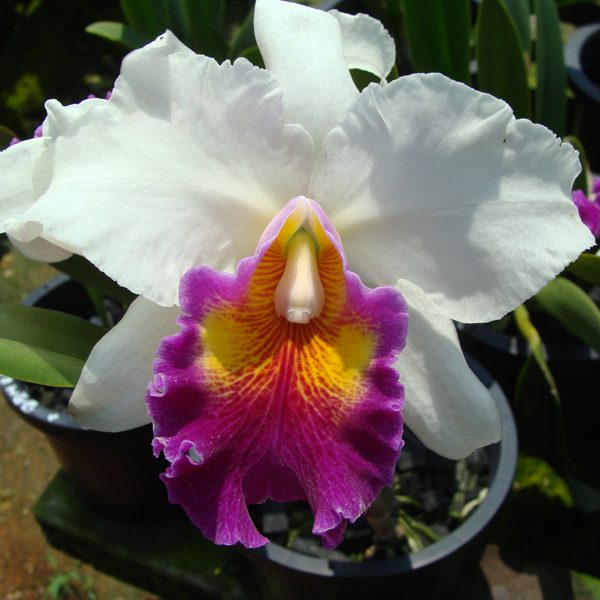
  • Coming up: Okinawa International Orchid Show 2027

    Okinawa International Orchid Show 2027 The Okinawa International Orchid Show 2027 is scheduled to take place in late January to early February 2027 at the Tropical Dream Center in Motobu, Okinawa. This event is Japan’s oldest orchid exhibition, having been held for over 35 years, and continues to draw visitors with its wide variety of blooms from Japan and abroad. Orchid enthusiasts and casual garden lovers alike can look forward to seeing thousands of orchids on display, along with specially designed photo areas featuring colorful floral arrangements.

    What to Expect at the Show

    The exhibition features orchids from both domestic and international growers, showcasing the remarkable diversity of these plants. With around 28,000 known varieties worldwide, the show highlights many of the most striking and unusual blooms. Visitors will walk through carefully arranged displays that emphasize the elegance and variety of orchid species. In addition to the floral exhibits, the venue includes multiple photo spots decorated with vibrant flowers, offering fun and memorable opportunities for pictures. These areas are designed to be accessible and enjoyable for all ages, adding a light, interactive touch to the visit.

    A Long-Standing Tradition

    The Okinawa International Orchid Show holds the distinction of being Japan’s oldest orchid event, with a history spanning more than three and a half decades. Over the years, it has become a trusted annual gathering for orchid growers, collectors, and admirers. The show’s longevity reflects both the enduring popularity of orchids and the dedication of organizers to maintain a high-quality exhibition. Held each year at the Tropical Dream Center, the event benefits from the garden’s tropical setting, which provides a natural and fitting backdrop for the display of these exotic flowers.

    How to Attend

    The show will be held at the Tropical Dream Center Botanical Garden, located at 424 Ishikawa, Motobu, Kunigami District, Okinawa 905-0206. The venue is approximately a 15-minute walk from the Okinawa Churaumi Aquarium, making it easy to combine a visit to both attractions. Several parking areas are available nearby for those arriving by car, though specific details about parking should be checked online closer to the date.

    Admission fees are set at 760 JPY for adults, defined as junior high school age and older. Children below junior high school age are admitted free of charge. Opening hours and any potential changes to the schedule have not been finalized yet. As the exact dates for late January to early February 2027 are still pending confirmation, visitors are advised to check the official event website for the most up-to-date information on timing, tickets, and any updates before planning their trip.

    The Tropical Dream Center can be found online at oki-park.jp, where further details about the garden and access routes are available. For the latest announcements regarding the Okinawa International Orchid Show 2027, refer to the event page on Japan Travel or the organizer’s site as the date approaches.

    This event offers a chance to experience one of Japan’s longest-running floral celebrations in a scenic Okinawan setting, combining natural beauty with cultural tradition in a way that appeals to both seasoned orchid fans and first-time visitors.

    Sources

    Based on: en.japantravel.com. Written and checked by the Orkpedia editors.
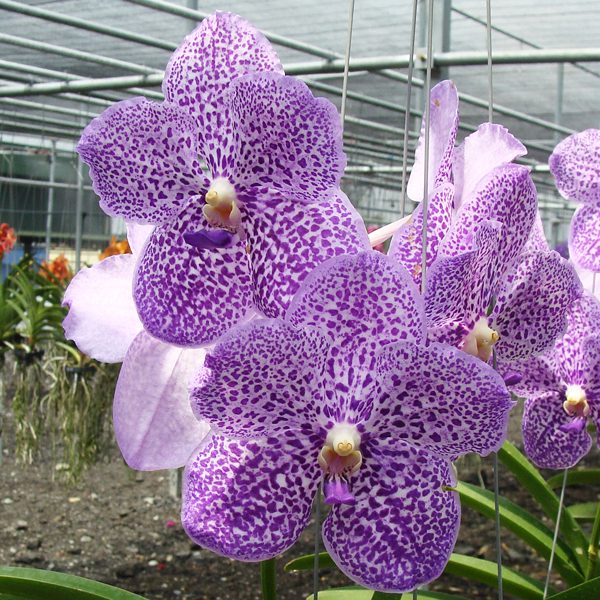
  • From flask to flower: how a lab-grown orchid reaches your home

    From flask to flower: how a lab-grown orchid reaches your home

    Starting in a Sterile Flask

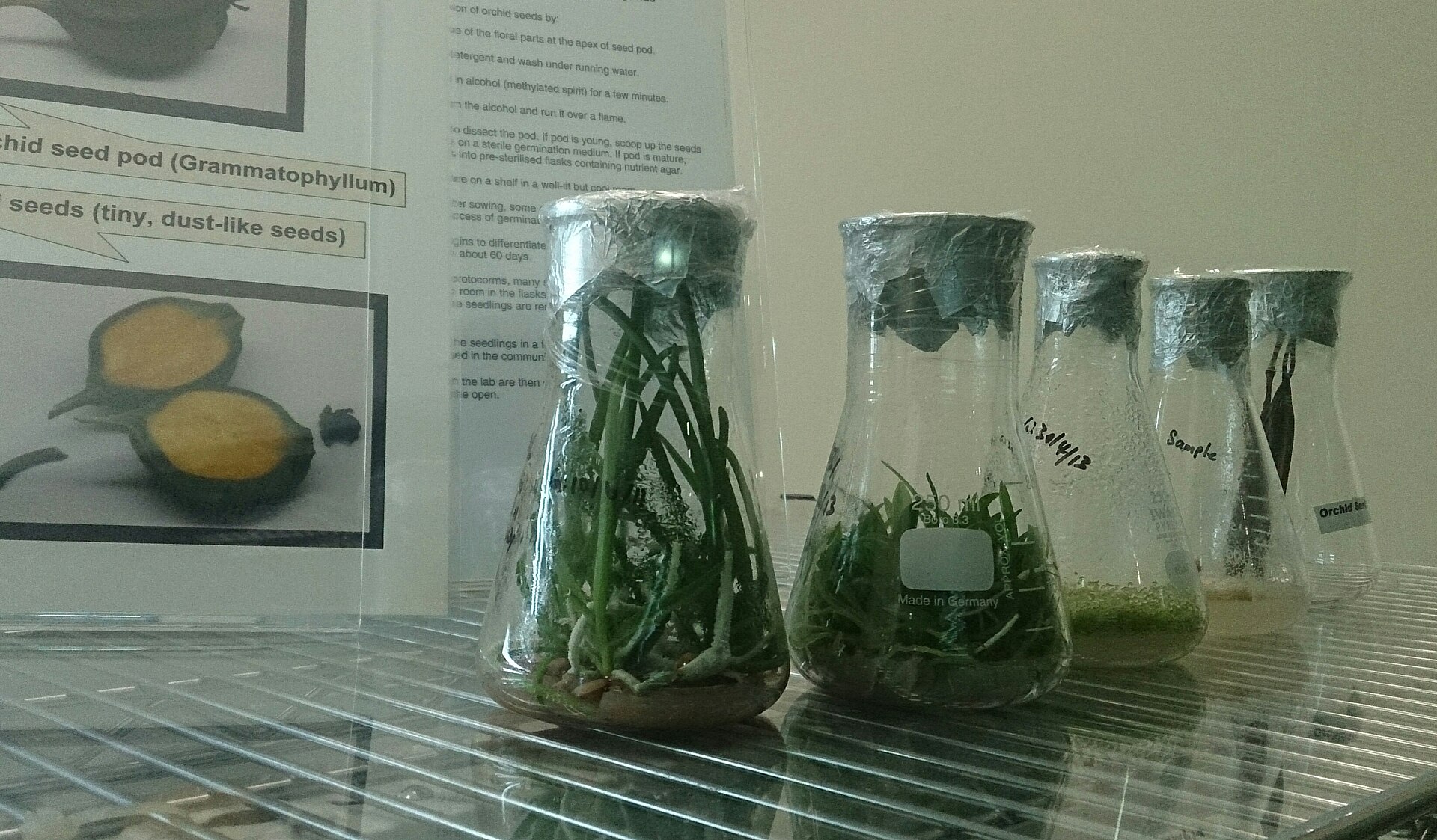
    The journey of a lab-grown orchid begins in a glass flask under completely sterile conditions. This is where tiny pieces of plant tissue, called explants, are placed on a special growth medium. The explant might be a small piece of stem, bud, or other plant part taken from a healthy mother plant. Before it goes into the flask, the tissue is carefully cleaned using washes of bleach and alcohol, then rinsed with sterilized water to remove any viruses, fungi, or other contaminants. Only clean, healthy tissue is used to give the new plant the best start.

    The growth medium inside the flask is like a nutrient-rich jelly. It contains water, sugars for energy, vitamins, minerals, and plant hormones that guide how the tissue develops. A gelling agent, usually agar, holds everything in place so the explant stays supported as it grows. Depending on what the grower wants, the medium can be adjusted—for example, adding certain hormones can encourage the formation of shoots. This entire process happens in a sterile environment to prevent contamination, which could ruin the culture.

    Multiplying the Plantlets

    Once the explant begins to grow and form small shoots, the multiplication stage starts. This is where one tiny piece of tissue can become many plants. The shoots that develop are carefully removed and placed back onto fresh growth medium to encourage even more growth. Over time, through repeated cycles, a single explant can produce dozens, hundreds, or even thousands of plantlets.

    If the tissue grows as a mass of undifferentiated cells called callus, it can be chopped into smaller pieces and recultured to produce more callus or to stimulate shoot formation. When the tissue has formed small plantlets, hormones are often added to the medium to help them create side shoots or offshoots. These new shoots can then be separated and grown further. This stage allows growers to produce large numbers of identical orchids quickly, which is especially useful for rare or slow-growing varieties.

    Encouraging Root Growth

    After multiplication, the young plantlets need to develop roots before they can survive outside the flask. This is done by transferring them to a rooting medium. This medium has a different balance of plant hormones—specifically, a higher level of auxin compared to cytokinin—which encourages root formation instead of shoot growth. Over time, tiny white roots begin to emerge from the base of each plantlet.

    Once roots have formed, the plantlets are ready for the next step: preparing to leave the sterile environment. This preparation is called hardening or acclimatization. Even though they have roots, the plantlets are still used to living in high humidity and low light inside the flask. They need time to adjust to normal air conditions, where humidity is lower and light levels are stronger. This step is crucial because moving them too quickly can cause shock or drying out.

    Leaving the Flask: Deflasking

    Deflasking is the moment when the orchid leaves the flask and enters the real world. The plantlets are gently removed from the gel-like medium, and any remaining agar is rinsed off with clean, sterilized water. This must be done carefully to avoid damaging the delicate roots and shoots.

    After rinsing, the young orchids are placed in a community pot—a shared container filled with a fine, moist growing mix like sphagnum moss or a special seedling blend. The pot is then covered with clear plastic or placed inside a humidity tent to keep the air around the plants very moist. This high humidity helps prevent the leaves from drying out while the orchids adjust to life outside the sterile flask. They are kept in warm, shaded light, not direct sun, to avoid stress.

    Over the next few weeks, the grower watches closely. The plastic cover may be opened a little more each day to slowly lower the humidity and help the plants harden off further. Watering is done with care—enough to keep the medium damp but not soggy. Fertilizer is usually avoided at first, since the young plants are still sensitive.

    Growing in Community Pots

    In the community pot, the young orchids continue to grow stronger. They develop more leaves, and their root systems become more established. This stage can last several months, depending on the orchid type and growing conditions. The goal is to let each plant build up enough energy and resilience to survive on its own.

    As they grow, the orchids may begin to look like miniature versions of their adult form. Their leaves firm up, and their stems thicken. At this point, the grower starts to treat them more like regular seedlings—gradually increasing light exposure, watering as needed, and beginning to use very dilute fertilizer if the plants show signs of needing it.

    Eventually, when the orchids are large enough to handle individually, they are separated and moved into their own small pots. This is called potting up. Each plant gets its own space with fresh growing medium, allowing it to continue developing without competition.

    Waiting for the First Flower

    It takes time for a young orchid to bloom. Even after leaving the flask and growing in its own pot, it may not flower for a year or more. The orchid needs to mature fully, building up enough strength to support a flower spike and blossoms. During this time, it needs the right balance of light, water, humidity, and nutrients—just like any orchid, whether lab-grown or not.

    When the plant is ready, a small shoot will emerge from the base or between the leaves. This is the flower spike. It grows slowly, often over several weeks, and buds begin to form along its length. Eventually, the buds open to reveal the first flowers—a sign that the orchid has reached maturity.

    Seeing that first bloom is a rewarding moment. It means the tiny tissue from the flask has become a healthy, flowering plant. From sterile flask to flowering pot, the orchid’s journey shows how science and care can work together to bring beautiful plants into homes.

    Sources

    Based on: Wikipedia · Wikipedia. Written and checked by the Orkpedia editors.
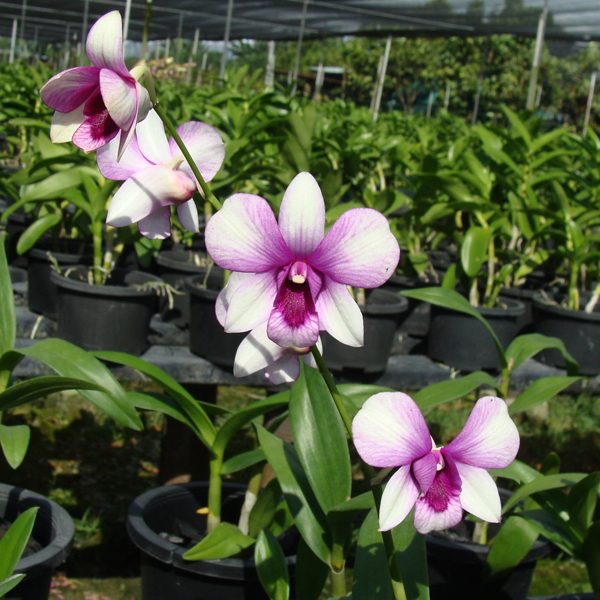
  • Coming up: Tamiami International Orchid Festival in Miami, January 15-17, 2027

    Tamiami International Orchid Festival will take place January 15-17, 2027 at the Miami Dade County Fair Expo Center in Miami, Florida. The event will run from noon to 6pm on Friday, and 10am to 6pm on Saturday and Sunday.

    What to Expect at the Festival

    Visitors can explore orchid exhibits created by local orchid societies and vendors, featuring artistic arrangements of exotic and rare orchids. Over ninety national and international orchid growers and allied product vendors will be present, offering a wide variety of orchids and orchid-related products. Complimentary orchid growing classes will be available, with some sessions held via Zoom and others accessible as pre-recorded videos. These classes are designed to help attendees learn more about growing and caring for orchids.

    Why This Festival Matters to Orchid Lovers

    The Tamiami International Orchid Festival is described as the largest winter orchid event in the United States. It brings together growers, experts, and enthusiasts from across the country and around the world. For anyone interested in orchids, it offers a rare chance to see diverse species and hybrids in person, speak directly with growers, and gain practical knowledge through educational sessions. The festival supports the orchid community by promoting cultivation, conservation, and appreciation of these plants.

    How to Attend

    The festival will be held at the Miami Dade County Fair Expo Center, located at 10901 SW 24th St, Miami, FL 33165. Attendees are encouraged to buy tickets in advance to skip the line at the door. Ticket options, including a VIP Preview Experience and merchandise, can be accessed through the festival’s official website. Opening hours are noon to 6pm on Friday, and 10am to 6pm on Saturday and Sunday. For the most current details on tickets, schedules, and any updates, visitors should check the organiser’s website closer to the event date.

    Additional Festival Details

    The Tamiami International Orchid Festival features over 100 vendors, including ninety national and international orchid growers and allied product vendors. These vendors offer an amazing assortment of exotic orchids and orchid-related products. Local orchid societies create beautiful exhibits with exotic and rare orchids in artistic arrangements. Attendees can view these exhibits and prepare to be wowed in person. The festival encourages visitors to bring home gorgeous and exotic orchids from the vendors.

    Educational Opportunities

    Complimentary orchid growing classes will be available at the festival. Some sessions will be held via Zoom, while others will be accessible as pre-recorded videos. The classes are designed to help attendees learn more about growing and caring for orchids. The lecture schedule can be checked through the festival’s official website. Pre-recorded classes can be viewed via a link provided on the site.

    Vendor and Exhibit Information

    The vendor page on the festival’s website provides information about what growers and vendors have to offer, including a map to help plan your visit. Attendees are advised to prepare for their visit by checking out the vendor offerings in advance. The festival supports the orchid community by promoting cultivation, conservation, and appreciation of orchids through these exhibits and educational sessions.

    Sources

    Based on: tamiamiorchidfestival.com · tenshinorchids.com. Written and checked by the Orkpedia editors.
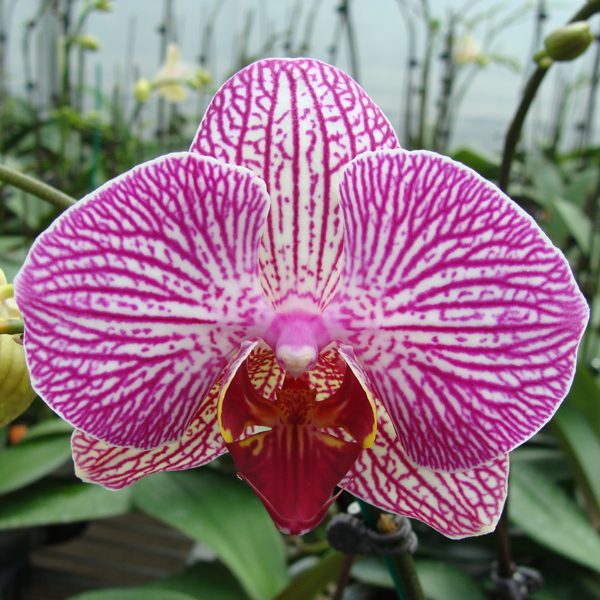
  • Coming up: Redland International Orchid Festival, October 16-18, 2026

    Redland International Orchid Festival Returns in October 2026

    The Redland International Orchid Festival® will take place from October 16 to 18, 2026, at Fruit and Spice Park in Redland, Florida. The event runs from noon to 5 pm on Friday, and from 9 am to 5 pm on Saturday and Sunday. This annual gathering brings together orchid growers and enthusiasts from around the world for three days of displays, sales, and shared passion for these plants.

    What to Expect at the Festival

    Attendees can walk through the open-air setting of Fruit and Spice Park to see a wide variety of orchids on display and for sale. Vendors from local nurseries and international growers will showcase their plants, including species and hybrids from regions such as Thailand, Taiwan, Ecuador, Brazil, Peru, Colombia, Malaysia, Hawaii, and various U.S. states. The festival has long been known as a bucket list event for orchid lovers, offering a chance to see rare and beautiful blooms in person. Many visitors leave with one or more plants to take home.

    A Short History of the Event

    For nearly thirty years, the Redland International Orchid Festival® has provided a relaxed, outdoor space where people can enjoy orchids. Held annually at Fruit and Spice Park, it has grown into a well-known gathering for both expert growers and casual fans. The festival’s location in South Dade adds to its charm, combining the beauty of the plants with the tropical surroundings of the park.

    How to Attend

    The festival is located at 24801 SW 187th Ave, Redland, FL 33031, inside Fruit and Spice Park. Visitors should check the organiser’s website for the most current information on tickets, pricing, and any updates closer to the date. Presale tickets are available for purchase online. Friday offers a special early admission option at 9 am for those who buy a Friday First ticket. Regular hours are noon to 5 pm on Friday, and 9 am to 5 pm on Saturday and Sunday. Detailed information about getting to the venue, parking, and what to expect can be found in the Frequently Asked Questions section on the festival’s website. A vendor list and park map are also available online to help plan your visit.

    Vendor Participation

    The 2026 Redland International Orchid Festival® features a diverse range of vendors from across the globe and the United States. Orchid and plant growers include Accent Orchids from St. Petersburg, Backyard Blooms from Miami, Bamboo and Orchid Gardens from Davie, Blooming Paradise from Redland, Blue Moon Tropicals from Eustis, BR Orquídea from Brazil, Camila Gardens from Redland, Ching Hua Orchids from Taiwan, Ecuadorquideas from Ecuador, Ecuagenera from Ecuador, Epic Nursery from Redland, Floralia from Brazil, Florida Orchid House from Myakka City, Florida SunCoast Orchids from Myakka City, Grandma’s Herbs from Redland, Hiko Bonsai from Miami, The Hungry Leaf from Florida, J&J Orchids from Redland, Joseph Wu Orchids from Taiwan, Judeli’s Orchids from Redland, Kanjarin Nursery from Thailand, Koke Moss Houseplants from Miami, Krull Smith from Apopka, Lee & Co Orchids from Hawaii, Life is a Koconut from Miami, Little Eden Garden from Ft. Lauderdale, Live with Plants from Thailand, Living Colors Nursery from Redland, Lucky Bamboo 4 U from Florida, Mac’s Orchids from Ft. Lauderdale, MagicOasis Orchids, Motes Orchids from Redland, Nature’s Tapestry from Miami, North Georgia Hoya from Georgia, NT Orchid Nursery from Malaysia, O’Day Orchids from Hawaii, Odom’s Orchids from Fort Pierce, The Orchid Den from Jacksonville, Orchid Plantation from Hawaii, Orchids in Bloom from Apopka, Orquidário Tradição from Brazil, Orquideas Amazonicas from Peru, Orquideas del Valle from Colombia, PCK Orchids from Miami, Peruflora from Peru, Quest Orchids from Miami, Ritter-Tropic 1 Orchids from Kissimmee, Sierra Madre Orchids from Miami, Smiley Orchids from Orlando, Soroa Orchids from Redland, So Orchids from Lakeland, Sunshine State Vanilla from Merritt Island, Tropical Exotique from Thailand, Tropicals of South America from Ecuador, Vanda Orchid Thailand from Thailand, Vicky’s Orchids from Redland, and Vine and Co. Plant Boutique from Miami. Allied vendors include Armorvue, Bactra Orchid Benches, Brainwave Mushrooms, Green Barn Orchid Supplies, Hang-a-pot, Hawaiian Moon, Leaf Filter, Leaf Water, Miguel Bode Honey, OFE International, Orchidique, Studio 431, and Vina Planters. Food and drink vendors are located along the Sip, Snack and Stroll path and include A Little Slice of Europe, Anabel’s Kitchen, Ceviche and Guacamole House, Chef Norlan Sushi, El Taquito Placero, Eat da Bone BBQ, Farm Life Kettle, Greek Flame, Outlawed Iguana Catering, Stella’s Funnel Cakes, and Thai Dot.

    Event Schedule and Access

    The Redland International Orchid Festival® takes place October 16–18, 2026. On Friday, regular hours are from noon to 5 pm, with an early admission option at 9 am available for those who purchase a Friday First ticket. Saturday and Sunday hours are from 9 am to 5 pm each day. The festival is held at Fruit and Spice Park, located at 24801 SW 187th Ave, Redland, FL 33031. Attendees are encouraged to consult the festival’s official website for the most current information on tickets, pricing, parking, and any updates. Presale tickets are available for purchase online. A vendor list and park map are accessible online to assist with visit planning. Detailed information regarding transportation, parking, and what to expect can be found in the Frequently Asked Questions section on the festival’s website.

    Sources

    Based on: redlandorchidfestival.com. Written and checked by the Orkpedia editors.
  • Vanilla: the orchid in your kitchen

    Vanilla Starts as an Orchid

    Vanilla comes from a type of orchid called Vanilla planifolia. This plant is a vine that grows in warm, humid places like Mexico, Central America, and parts of South America. It can climb trees or grow along the ground. The vine has long, glossy green leaves and thick roots that help it hold onto surfaces. When it grows in the wild, it can reach lengths of up to 30 meters. The plant needs specific conditions to thrive, including steady warmth, plenty of moisture, and well-draining soil. It is one of the main sources of vanilla flavoring because its pods contain a high amount of vanillin, the compound that gives vanilla its familiar taste and smell.

    How the Flowers Work

    The vanilla orchid produces flowers that grow in clusters from the leaf axils. Each cluster can have between 12 and 20 buds. The flowers are greenish-yellow, about 5 centimeters wide, and only have a faint scent. They open in the morning and usually close by the afternoon of the same day. Each flower lasts just one day, but the plant produces flowers over a period of about two months each year. In its natural habitat, this flowering happens in April and May, at the end of the dry season. Although the plant can fertilize itself, its flower structure prevents self-pollination without help. In the wild, the chance of a flower being pollinated naturally is very low—only about 1 in 100.

    Why Hand Pollination Is Necessary

    Because natural pollination is rare, growers must pollinate the flowers by hand. This process involves using a small tool to lift a flap inside the flower and transfer pollen from the male part (the anther) to the female part (the stigma). This must be done quickly, while the flower is still open—usually in the morning. If pollination does not happen, the flower will fade and fall off without producing a pod. Hand pollination is a careful, repetitive task that requires attention to detail. It is what makes vanilla farming possible outside of the plant’s native range, where its natural pollinators may not be present.

    How the Fruit Develops

    After successful pollination, the flower begins to develop into a fruit. Only mature plants can produce fruit, and it takes a few years for a new plant to reach that stage. For plants grown from cuttings, it can take two to three years if the cutting is about a meter long, or three to four years if it is shorter or grown in a lab. The fruit starts as a green pod that looks like a small banana. It grows slowly and matures after about eight to nine months. When ready, the pod is 15 to 23 centimeters long. It is important to harvest the pods at the right time—too early and they won’t develop full flavor, too late and they may split open.

    Curing the Beans to Unlock Flavor

    Freshly harvested vanilla pods do not yet have the rich vanilla smell we know. That flavor develops during a process called curing. The pods are first killed by heat—often by dipping them in hot water or exposing them to sunlight—to stop further growth. Then they are sweated, usually by wrapping them in blankets or placing them in closed boxes to keep them warm and moist. This step encourages enzymes inside the pod to start breaking down compounds. Over time, the pods are dried in the air and then conditioned in boxes for several weeks. During this process, an enzyme called beta-glucosidase helps release vanillin from other molecules in the pod. Vanillin is the main compound responsible for vanilla flavor, making up about 80 percent of the aromatic compounds in Vanilla planifolia pods. The curing process can take several months and is essential for developing the deep, sweet aroma associated with vanilla.

    Challenges in Growing Vanilla Today

    Vanilla planifolia faces threats in the wild. Its natural habitat has been reduced due to farming, logging, and other land uses. As a result, the number of wild plants is declining, and the species has been assessed as endangered by the International Union for Conservation of Nature. Most vanilla grown today comes from cultivated plants, often grown as clones from cuttings rather than seeds. This means there is little genetic diversity in commercial vanilla. Only a few named varieties exist, such as the “Mansa” types, which are preferred for farming. Some variegated forms are grown for decoration. Growing vanilla requires patience and care—from supporting the vine, to hand-pollinating each flower, to waiting years for the first harvest, and finally curing the pods with precision. But for those who grow it, the result is a flavor that has been valued for centuries.

    Ecological Role and Conservation Status

    Vanilla planifolia plays a role in its native ecosystem as part of the understory vegetation in tropical forests, where it climbs on trees and contributes to biodiversity. Its flowers, though short-lived, provide nectar for pollinators when successfully visited, though natural pollination rates remain extremely low without human intervention. The species has been assessed as Endangered by the International Union for Conservation of Nature due to habitat loss from agricultural expansion, logging, and land conversion. Wild populations are declining across its native range in southern Mexico, Central America, Colombia, and Brazil, where forest fragmentation limits gene flow and regeneration. Conservation efforts focus on protecting remaining habitats and promoting sustainable cultivation practices that reduce pressure on wild stocks.

    Cultivation and Genetic Limitations

    Commercial vanilla production relies almost entirely on cultivated Vanilla planifolia, with most plants propagated vegetatively from cuttings to maintain consistent flavor and yield. This clonal propagation results in low genetic diversity across global plantations, making crops more vulnerable to diseases and environmental changes. Only a few named varieties are widely used in farming, such as the “Mansa” types, which are favored for their growth characteristics and vanillin content. Some variegated forms are cultivated for ornamental purposes but are not used for flavor production. The lack of genetic variation underscores the importance of preserving wild relatives and exploring breeding programs to enhance resilience in cultivated vanilla.

    Sources

    Based on: Wikipedia. Written and checked by the Orkpedia editors.

  • Orchids and fungi: the hidden partnership behind every orchid

    Why Orchid Seeds Need Help to Start

    Orchid seeds are incredibly tiny, often no bigger than a speck of dust. They have no stored food inside to feed the baby plant when it first starts to grow. Unlike most seeds that have a lunchbox of nutrients packed in, orchid seeds are almost empty. This means they cannot sprout on their own in the wild. They need a partner to give them the food and energy they need to begin life.

    The First Partnership: Seed and Fungus

    When an orchid seed lands in a good spot, it waits for a special kind of fungus to find it. This fungus grows tiny threads called hyphae that can slip into the seed. Once inside, the fungus starts to feed the seed with sugars and other nutrients it has gathered from the soil or decaying wood. This feeding wakes up the embryo inside the seed and starts it growing. The first visible sign of life is a small blob called a protocorm. This protocorm has no leaves or roots yet, but it is alive because the fungus is feeding it.

    How the Fungus Lives Inside the Orchid

    After the fungus gets into the orchid seed or young protocorm, it begins to form tight coils inside the plant’s cells. These coils are called pelotons. They look like little balls of yarn made of fungal threads. The orchid cell wraps a special layer around each peloton to keep it separate but close enough to exchange food. The fungus gives the orchid carbon and nutrients, and in return, the orchid may give the fungus something back, though scientists are still learning what that is in many cases. As the peloton ages, it breaks down and disappears, but new ones often form to keep the partnership going.

    Some Orchids Never Make Their Own Food

    While most orchids grow green leaves and use sunlight to make their own food, some never do. These orchids lack chlorophyll, the green pigment that captures sunlight. They are white or pale and look almost ghostly. From the moment they sprout, they rely completely on their fungal partner for all their food and energy. This lifelong dependence is called being mycoheterotrophic. These orchids are not cheating the fungus; they are part of a natural relationship where the fungus gets something in return, even if we don’t yet know exactly what it is in every case.

    Where the Fungus Comes From

    The fungi that help orchids are not random. They belong to specific groups, most commonly a type called Rhizoctonia, which is known for breaking down dead leaves and wood. Other helpful fungi include types that normally partner with trees, such as those in the Russula or Thelephora groups. Some orchids even work with fungi that usually live inside tree roots and share sugar with the tree. In these cases, the orchid taps into that same network, getting food indirectly from the tree through the fungus. The type of fungus that helps often depends on where the orchid lives—whether it grows in soil, on a rock, or on the trunk of a tree.

    What This Means for Saving Orchids

    Because orchids depend so closely on fungi, saving them means saving their fungal partners too. If the right fungus is not in the soil or on the bark, orchid seeds will not grow, even if we scatter them in what looks like the perfect spot. This is why simply moving an orchid to a new place often fails—it may leave behind its essential fungal friend. Conservation efforts now pay close attention to the hidden web of fungi in the soil and on trees. Protecting forests and undisturbed habitats helps keep both orchids and their fungi alive together. Understanding this quiet partnership is key to making sure orchids don’t just survive in pots, but thrive in the wild where they belong.

    How the Fungus Helps the Orchid Grow

    Once inside the orchid, the fungus forms structures called pelotons within the root cells. These pelotons are coils of fungal hyphae that allow the exchange of nutrients. The fungus provides the orchid with carbon, which is essential because orchid seeds have no food reserves of their own. In return, the orchid may provide the fungus with minerals or other compounds, though the exact benefit to the fungus is not fully understood. The pelotons are temporary structures; as they age, they break down and are replaced by new ones, maintaining a continuous flow of nutrients. This process supports the development of the protocorm and helps the orchid grow into a mature plant.

    Fungal Entry and Infection Process

    Fungal hyphae can enter the orchid at multiple stages, including the germinated seed, protocorm, seedling, or adult root. In terrestrial orchids, entry into adult roots usually occurs through the root hair tips, which become distorted as the fungus penetrates. In protocorms, the hyphae enter at the chalazal end of the embryo. The fungi that successfully colonize orchids tend to have many mitochondria and few vacuoles, indicating high metabolic activity. This allows them to efficiently transfer nutrients to the orchid. The infection is not harmful; instead, it forms a balanced symbiosis where both organisms benefit, although the advantage to the fungus is still under study.

    Orchids That Never Photosynthesize

    Some orchids do not produce chlorophyll and are known as achlorophyllous mycoheterotrophs. These orchids rely entirely on their fungal partners for carbon throughout their entire life cycle. Unlike photosynthetic orchids, which may reduce their dependence on fungi as adults, these non-green orchids remain fully dependent on the fungus for survival. They tap into the same fungal networks that connect to nearby trees, indirectly obtaining sugars produced by the trees. This makes them part of a larger underground web where fungi link plants together, transferring resources between species.

    Why Specific Fungi Matter More Than Location

    Research shows that the presence of the correct fungal species in the environment is more important for orchid germination than how close the seed is to adult orchids or where it is geographically located. Even in seemingly suitable habitats, if the right fungus is absent, orchid seeds will not germinate successfully. This specificity explains why conservation efforts that focus only on planting seeds often fail without also ensuring the fungal partners are present. The relationship is so precise that certain orchids will only work with particular strains of fungi, highlighting the need to preserve microbial diversity in ecosystems.

    Sources

    Based on: Wikipedia. Written and checked by the Orkpedia editors.

  • What ‘4N’ means on an orchid label: polyploid orchids in plain words

    What Chromosomes Are and Why They Matter

    Chromosomes are thread-like structures inside cells that carry genetic information. Think of them as instruction manuals for building and running a living thing. Most plants and animals have their chromosomes in pairs, with one copy coming from each parent. This paired setup is called diploid, meaning two sets of chromosomes. When we talk about orchids, or any plant, understanding how these sets work helps explain why some flowers look bigger or fuller than others.

    What Diploid, Triploid, and Tetraploid Mean

    The number of chromosome sets in a cell determines the ploidy level. A diploid plant has two sets, written as 2x. A triploid has three sets, or 3x. A tetraploid has four sets, or 4x. These labels tell us how many complete copies of the genetic blueprint are in each cell. The letter x stands for one basic set of chromosomes. So when you see 4N on an orchid label, it means tetraploid — four sets of chromosomes. This is not about the number of individual chromosomes, but the number of full sets.

    Why Breeders Prefer 4N Orchids

    Orchid breeders often choose tetraploid (4N) plants as parents because they tend to produce flowers that are larger, fuller, and more substantial. The extra genetic material can lead to thicker petals, stronger stems, and a more robust appearance. This doesn’t happen every time, but it is a common trend. These qualities make 4N orchids appealing for shows and for growers who want impressive blooms. The increased size and texture come from the plant having more genetic material to work with during development.

    How Polyploidy Happens in Nature

    Polyploidy can occur naturally when something goes wrong during cell division. Sometimes, chromosomes fail to separate properly during meiosis, the process that makes pollen and egg cells. This can produce a gamete with two sets of chromosomes instead of one. If that abnormal gamete combines with a normal one, the result may be a triploid offspring. If two abnormal gametes meet, each with two sets, the offspring could be tetraploid. Another way is if an egg gets fertilized by more than one sperm, though this is less common in plants. These events are rare but can lead to new polyploid plants in the wild.

    How Humans Can Create Polyploid Orchids

    Growers and scientists can induce polyploidy using certain chemicals. The most well-known is colchicine, which disrupts normal cell division and can cause chromosomes to double. Another chemical, oryzalin, works similarly by doubling the existing chromosome content. These treatments are applied to growing points like buds or shoot tips. When successful, they produce polyploid cells that can grow into whole plants with more chromosome sets. This method is used in plant breeding to create new varieties with desired traits, such as larger flowers or increased vigor.

    Autopolyploidy and Allopolyploidy: Two Ways Polyploids Form

    Polyploids can arise in two main ways. Autopolyploidy happens when all the chromosome sets come from the same species. For example, if a diploid orchid produces unreduced gametes and they combine, the offspring may be tetraploid with four sets from that one species. Allopolyploidy occurs when the chromosome sets come from two different species. This often happens after a hybrid is formed and then undergoes chromosome doubling. Both types can lead to stable, fertile plants, though autopolyploids may initially have trouble with fertility due to how chromosomes pair during meiosis. Over time, selection can stabilize this process.

    Why Some Polyploids Are Sterile and Others Are Not

    Triploid orchids, with three sets of chromosomes, are often sterile because the chromosomes cannot pair evenly during meiosis, leading to unbalanced gametes. However, some triploids can still be useful, especially if they propagate through cloning or if they produce unreduced gametes that help form tetraploids. This path — from triploid to tetraploid — is sometimes called the triploid bridge. Tetraploids, with four sets, can often pair their chromosomes in twos during meiosis, which allows for more normal reproduction and greater fertility. This stability makes them valuable in breeding programs.

    Polyploidy in Agriculture and Plant Breeding

    Polyploidy plays a significant role in agriculture, where it is used to develop crop varieties with improved traits such as larger fruit size, increased vigor, stress tolerance, and higher yields. Many important food crops are polyploid, including wheat, which exists in diploid, tetraploid (durum or macaroni wheat), and hexaploid (bread wheat) forms. Brassica species, such as cabbage and broccoli, are often tetraploid and benefit from enhanced growth and resilience. Sugarcane frequently exhibits ploidy levels higher than octaploid, contributing to its high biomass and sugar production. Plant breeders exploit polyploidy to create sterile varieties, like seedless watermelons (triploid), which are propagated clonally and valued for consumer convenience. The induction of polyploidy using chemicals such as colchicine or oryzalin is a standard technique in plant breeding programs to double chromosome sets and generate new lines with desirable characteristics.

    Polyploidy and Speciation

    Polyploidy can drive speciation, particularly in plants, by creating reproductive isolation from diploid ancestors. When a polyploid organism cannot successfully interbreed with its diploid progenitor due to chromosome mismatch, it may form a new, reproductively isolated lineage. This process, known as sympatric speciation, has been documented in species such as Erythranthe peregrina, which arose from a sterile triploid hybrid (E. × robertsii) between E. guttata and E. lutea in the United Kingdom. Genome duplication in this hybrid restored fertility, leading to the establishment of new populations on the Scottish mainland and Orkney Islands. Conversely, polyploidy can also facilitate gene flow between previously isolated lineages through a process termed ‘reverse speciation.’ In Arabidopsis arenosa and Arabidopsis lyrata, independent autopolyploidy events enabled subsequent introgression of adaptive alleles between species, stabilizing the polyploid lineages and allowing them to act as reservoirs of genetic variation that may be adaptive under changing environmental conditions.

    Endopolyploidy in Animals and Other Organisms

    While whole-organism polyploidy is uncommon in mammals, endopolyploidy — where specific tissues contain polyploid cells within an otherwise diploid organism — occurs at high frequency in organs such as the brain, liver, heart, and bone marrow. This phenomenon is also observed in other animals, including goldfish, salmon, and salamanders, as well as in various other kingdoms. Endopolyploidy arises through DNA replication without cell division (endoreduplication) and is associated with increased cellular metabolic activity, protein synthesis, and functional specialization in certain cell types. Unlike germline polyploidy, endopolyploidy does not alter the organism’s overall chromosome number in reproductive cells but contributes to tissue-specific functions and physiological adaptations.

    Sources

    Based on: Wikipedia. Written and checked by the Orkpedia editors.