Author: Orkpedia Editors

  • Orchid awards explained: what AM, HCC and FCC mean on a label

    Understanding Orchid Awards on a Label

    When you see letters like AM, HCC, or FCC after an orchid’s name on a label, they tell you about the flower’s quality as judged by experts. These letters stand for awards given by orchid societies. The most common ones come from the American Orchid Society, or AOS. The awards are based on a 100-point scale that judges use to score the flower’s appearance. This scale helps keep judging fair and consistent across different shows and regions.

    What HCC Means

    HCC stands for Highly Commended Certificate. It is given to an orchid that scores between 75 and 79 points on the 100-point scale for flower quality. This means the flower is very good but has minor flaws that keep it from reaching the next level. Think of it like a strong B+ in school — it shows solid quality and effort, but there’s room for improvement. An HCC is still a meaningful achievement, especially for newer growers or for species that are harder to bloom perfectly.

    What AM Means

    AM stands for Award of Merit. This award is given to orchids that score between 80 and 89 points on the same 100-point scale. An AM represents a high level of flower quality — strong color, good form, and overall appeal. It’s like earning an A- to B+ range in school. Many hobbyists aim for an AM as a sign they’ve mastered the basics of growing and blooming a particular orchid well. It shows the plant has been cared for skillfully and produced a flower that stands out in a show.

    What FCC Means

    FCC stands for First Class Certificate. This is the highest flower-quality award given by the AOS. It is awarded only to orchids that score 90 points or more on the 100-point scale. An FCC means the flower is exceptional — nearly perfect in color, shape, size, and texture. It’s the orchid equivalent of an A+ with distinction. Because it’s so hard to achieve, an FCC is a mark of excellence that breeders and collectors value highly. It often indicates a plant with outstanding genetics.

    Cultural Awards: CCM and CCE

    Not all awards are about the flower alone. Some recognize how well the plant has been grown. CCM stands for Certificate of Cultural Merit. It is given to the exhibitor — not just the plant — when the orchid shows strong health and good flowering, and the grower has had it in their care for at least 12 months. The plant must score between 80 and 89 points for culture, which means its leaves, roots, and overall vigor are excellent. CCE, or Certificate of Cultural Excellence, is the same but requires a culture score of at least 90 points. These awards honor the grower’s skill in providing the right light, water, air, and nutrients over time.

    How Judging Works

    Judges look at specific traits when scoring an orchid flower. They check color vibrancy — whether the hues are rich and clear. They look at the petals and sepals for shape, spacing, and any interesting patterns like spots or splashes. The lip — often the most showy part — is examined for color, form, and uniqueness. They also consider substance and texture — how thick and waxy the petals feel — and the arrangement of blooms on the stem. To become an official AOS judge takes years of training. Judges work in teams, and their scores are combined to decide if an award is warranted.

    Why an Award Belongs to One Plant and Its Copies

    An award does not apply to every plant of a hybrid name. It belongs only to the specific individual plant that was judged and won the award. That plant has a cultivar name — the part in single quotes, like ‘Red Rose’ or ‘Sundust’. The award stays with that exact plant and any mericlones made from it. Mericlones are genetically identical copies produced through laboratory tissue culture. Because they have the same DNA, they should produce flowers just as good as the original awarded plant. But a seed-grown sibling, even from the same parents, might not earn the same award — it could be better, worse, or different.

    Real Examples from the Orkpedia Library

    Looking at real plants helps make this clear. Brassolaeliocattleya Chia Lin ‘Red Rose’ earned an AM/AOS and a SM/JGP — meaning it won an Award of Merit from the AOS and a silver medal from the Japan Grand Prix International Orchid Festival. Cattleya violacea ‘Muse’ received an FCC/AOS — a First Class Certificate from the AOS, showing top-tier flower quality. Brassolaeliocattleya Irene Finney ‘York’ also got an AM/AOS. Cymbidium Golden Elf ‘Sundust’ scored an HCC/AOS, placing it in the 75 to 79 point range. Laeliocattleya Mem Robert Strait ‘Blue Hawaii’ received a JC/AOS — a Judges’ Commendation for a special trait the judges felt deserved notice, even if it didn’t fit the usual scoring. Other examples include Potinara Ahchung Yoyo ‘Little Goldfish’ with a BM/TOGA (a bronze medal from the Taiwan Orchid Growers Association), Brassolaeliocattleya Chun Yeah ‘Yellow Swallow’ with an AM/OSROC (from the Orchid Society of the Republic of China), and Vanda Robert’s Delight ‘Garnet Beauty’ with an FCC (implying FCC/AOS, though the society isn’t restated). Ascocenda Su-fun Beauty ‘Orange Belle’ earned an AM/AOS. These examples show how awards travel with the named cultivar and its clones, not the hybrid name alone.

    Sources

    Based on: aos.org · Wikipedia. Written and checked by the Orkpedia editors.
  • A tiny new orchid, Lepanthes mashpica, named from Ecuador’s Mashpi cloud forest

    A new orchid species has been found in Ecuador’s Mashpi Reserve, a protected area in the Choco biosphere. The species, named Lepanthes mashpica, was identified after years of fieldwork and study by researchers from Mashpi Lodge, Quito’s Botanical Garden, and Universidad de las Americas. The discovery adds to the growing list of unique life forms found in this biodiverse region.

    Why This Orchid Matters to Plant Lovers

    Orchid enthusiasts often seek out rare and delicate species, especially those with intricate flowers and limited ranges. Lepanthes mashpica belongs to a group known for tiny, detailed blooms that reward close observation. Its discovery highlights how much remains to be found in tropical forests, even among well-studied plant families. For those who grow or study orchids, each new species offers insight into evolution, adaptation, and the incredible variety of form within the orchid family.

    The World of Lepanthes Orchids

    The Lepanthes genus includes over 1,100 species found across tropical regions, making it one of the largest groups of orchids. These plants are typically small, often growing on tree trunks or branches in humid forests. Their flowers are usually miniature but complex, with specialized shapes that attract specific pollinators. Because of their size and habitat preferences, many Lepanthes species are easily overlooked, which makes careful fieldwork essential for their discovery.

    Life in the Mashpi Cloud Forest

    The Mashpi Reserve lies within the Choco forest, a region recognized for exceptional biodiversity and high levels of endemism — meaning many species live nowhere else. This cloud forest habitat is characterized by persistent moisture, cool temperatures, and dense vegetation. It supports a wide range of life, from towering trees to tiny orchids, fungi, insects, and amphibians. The discovery of Lepanthes mashpica alongside other endemic species like the Magnolia mashpi tree and the Mashpi Torrenteer frog underscores the ecological importance of this area.

    What the Discovery Means for Conservation

    Researchers note that multiple healthy populations of Lepanthes mashpica exist within the reserve, with both young plants and mature specimens observed together. This suggests the species is reproducing successfully in its natural habitat. As an endemic species — currently known only from this location — its survival is tied to the protection of the Mashpi Reserve. Ongoing conservation efforts, including scientific research, community education, and carbon-sequestering programs, help safeguard the forest and the unique species it harbors.

    Discovery Process and Taxonomic Confirmation

    The type specimen of Lepanthes mashpica was collected in 2017 during an excursion along trails surrounding Mashpi Lodge. Lead researcher Luis Baquero from Universidad de las Americas (UDLA-JBQ) conducted detailed taxonomic analysis, focusing on morphological traits to distinguish the species within the Pleurothallidinae subtribe. The cataloging process confirmed Lepanthes mashpica as a distinct orchid species not previously recognized by science. According to Mateo Roldan, Research Director at Mashpi Lodge, the discovery required multiple field visits, with the breakthrough occurring on Baquero’s third outing when the orchid was found in bloom. Baquero noted key diagnostic features including flower shape, color, pattern, and especially the number of hairs on the petals, which prompted the conclusion that this was a new species.

    Ecological Context and Associated Endemic Species

    Lepanthes mashpica was discovered in the Mashpi Reserve, located within the Choco forest of north-western Ecuador, a region recognized for exceptional biodiversity and high levels of endemism. The cloud forest habitat features persistent moisture, cool temperatures, and dense vegetation, supporting a wide range of organisms including towering trees, tiny orchids, fungi, insects, and amphibians. The orchid joins other endemic species named after the reserve, such as the Magnolia mashpi tree and the Mashpi Torrenteer frog (Hyloscirtus mashpi), a recently discovered nocturnal tree frog. These findings collectively underscore the ecological significance of the Mashpi Reserve as a hotspot for unique and localized biodiversity.

    Conservation Status and Protective Measures

    Researchers have observed multiple healthy populations of Lepanthes mashpica within the Mashpi Reserve, including both seedlings and mature specimens growing together, indicating successful natural reproduction. As the species is currently known only from this location and is considered endemic to the reserve, its survival depends directly on the protection of its habitat. Conservation efforts in the area include scientific research initiatives, community education programs, and carbon-sequestering projects aimed at preventing deforestation. These activities are supported in part by contributions from Mashpi Lodge and are aligned with broader goals to safeguard a substantial portion of the Ecuadorian Choco rainforest. The discovery of Lepanthes mashpica contributes to ongoing research that helps quantify the region’s biodiversity value and informs conservation strategies.

    Sources

    Based on: mashpilodge.com. Written and checked by the Orkpedia editors.
  • Why orchids are grown from seed in glass flasks

    Why orchids are grown from seed in glass flasks

    Why Orchid Seeds Need Help to Start

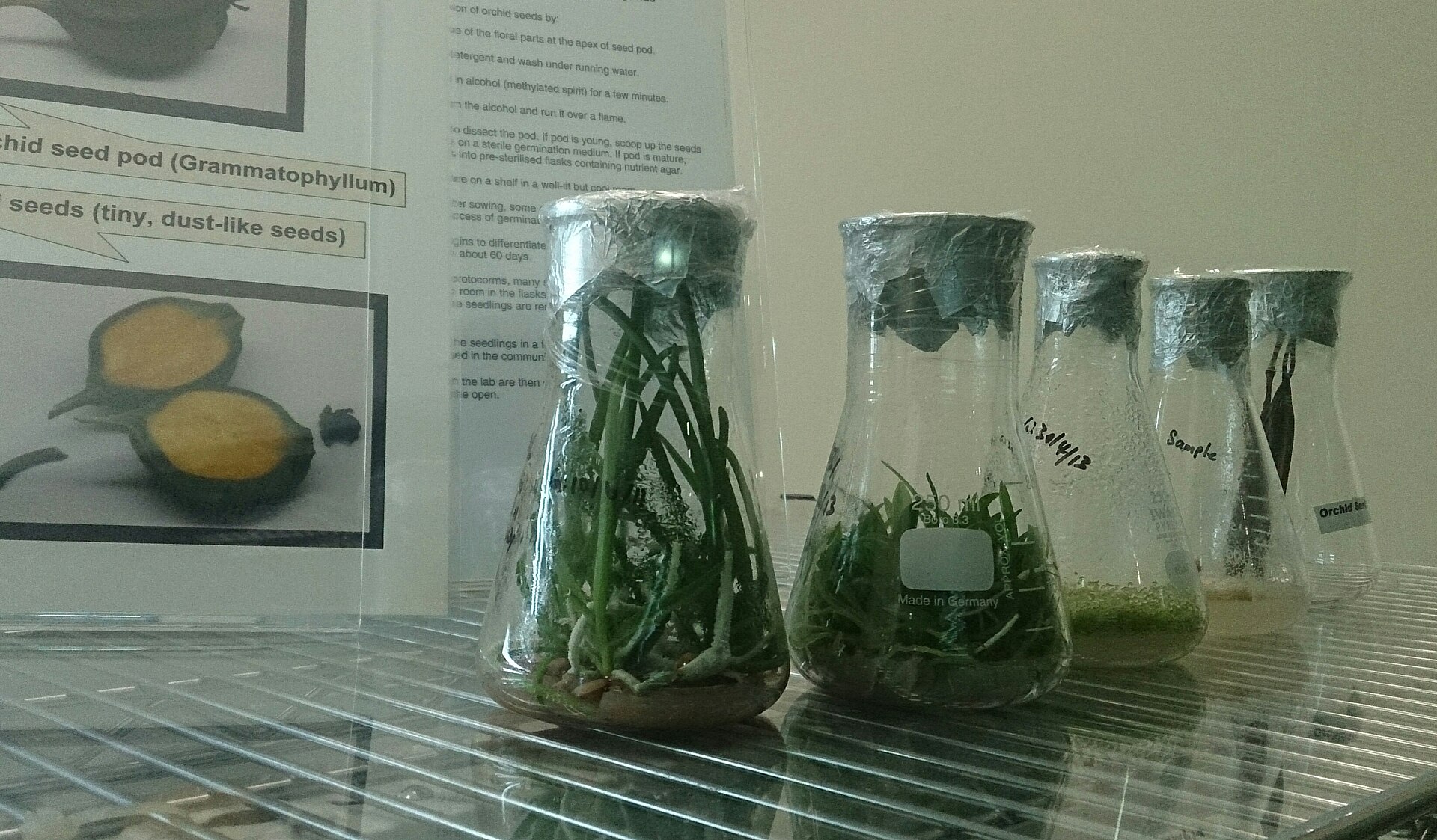
    Orchid seeds are incredibly tiny, often smaller than a grain of sand. Because they are so small, they contain almost no stored food to support the young plant when it first begins to grow. In the wild, this means the seed cannot develop on its own. Instead, it must form a partnership with a specific type of fungus that lives in the soil or on tree bark. This fungus acts like a nurse, supplying the seed with the sugars and nutrients it needs to begin life. Without this fungal help, the seed would simply remain dormant or die. This natural partnership is essential for orchids to reproduce in nature.

    What Happens in the Natural Partnership

    When an orchid seed lands in a suitable place and comes into contact with the right fungus, the fungus threads, called hyphae, enter the seed. Inside the seed, the fungus forms small, coiled structures known as pelotons. These pelotons are where the exchange of nutrients happens. The fungus breaks down complex materials and delivers simple sugars to the developing orchid embryo. At this early stage, the seed swells and forms a small, rounded body called a protocorm. The protocorm has no leaves or roots yet but contains the basic cells that will grow into a plant. Over time, if the fungus continues to support it, the protocorm develops a growing tip and begins to form the first roots and shoots. This entire process, where the fungus and seed work together, is known as symbiotic germination.

    How Lewis Knudson Changed Orchid Growing

    For many years, scientists believed that orchids could only grow if they were partnered with their natural fungus. This made growing orchids from seed very difficult and unpredictable, as it depended on finding the right fungal partner in the right conditions. In 1922, Lewis Knudson, a botanist working at Cornell University, discovered a way to bypass the need for the fungus. He found that by placing orchid seeds on a special gel made from agar and sugar, the seeds could germinate and grow just as well — or sometimes better — without any fungus at all. This breakthrough meant that orchid seeds could be started in a clean, controlled environment using only simple nutrients. His method was called asymbiotic germination because it did not require symbiosis with a fungus.

    Why Glass Flasks Are Used Today

    Once Knudson’s method was proven, growers began using glass flasks to raise orchid seedlings from seed. The flasks serve as tiny, protected greenhouses. They are made of clear glass so light can reach the seedlings, and they can be sealed with a stopper or cotton plug to keep out contaminants. Inside the flask, a sterile gel — often based on Knudson’s original recipe — holds the seeds and provides them with sugar and minerals. Because the flask is sealed, it prevents mold, bacteria, and other fungi from invading and harming the delicate seedlings. This sterile environment is crucial, as orchid seedlings are very vulnerable in their first weeks of life. The flask allows growers to monitor progress easily and gives each seedling a clean, even start.

    What Happens Inside the Flask

    When orchid seeds are placed on the nutrient gel inside a sterile flask and kept under gentle light, they begin to swell. Within days or weeks, depending on the species, the seed forms a protocorm. This small, bump-like structure is the first sign of life. Over time, the protocorm develops a growing point and starts to produce the first tiny root and shoot. These early growths are very fine and may look like threads under a magnifying glass. As the seedling grows, it begins to look more like a miniature orchid plant. It may develop its first leaf or two, though these are often very small and simple. All of this happens while the seedling remains inside the flask, feeding on the nutrients in the gel. No additional feeding or watering is needed during this stage, as the sealed environment provides everything the young plant requires.

    When the Seedlings Leave the Flask

    After several weeks or months, the orchid seedlings have grown large enough to survive outside the flask. At this point, they are carefully removed — a process called deflasking. The gel is gently rinsed from the roots, and the tiny plants are placed into a moist, well-drained mix such as fine bark, sphagnum moss, or special orchid compost. They are kept in a humid, shaded area at first, often under a clear cover or in a propagation case, to help them adjust to the drier air and lower nutrient levels outside the flask. Over time, as they grow stronger, they are given more light and treated like any other young orchid. This flask-to-pot journey allows growers to produce many healthy orchids from a single seed pod, making it possible to grow rare or hybrid varieties that would be hard to propagate any other way.

    Lewis Knudson and the Development of Asymbiotic Germination

    Lewis Knudson (1884–1958) was an American botanist who dedicated most of his professional life to the study of the biology, reproduction and propagation of orchids. He obtained his Bachelor of Science and Arts degree at the University of Missouri in 1908 and came to Cornell University as an assistant in plant physiology. Here he earned his doctorate, was appointed assistant professor of plant physiology in 1911 and was made acting head of that department in 1912. In 1916, his department became incorporated into the department of botany and he became a professor of botany. In 1941 he was named the head of this department. He retired in 1952. Orchid seeds are extremely small and hold scant sustenance. For this reason, in nature they need to associate with a fungus during germination which provides them nutrients required for growth and development. This process is known as “symbiotic germination” and until 1922 was the only known method of seed based propagation of orchids. That year, Lewis Knudson published an article describing an artificial method to germinate orchids without the participation of a fungus. This method, known as asymbiotic propagation, makes use of micropropagation techniques to achieve the germination and development of plantules in an artificial culture medium under sterile conditions. Currently, the growth medium known as “Knudson culture medium” continues being used around the world to germinate orchids fast and efficiently. Knudson originally published his work on asymbiotic germination in a Spanish-language journal which was little known at the time; and he thus republished the next year in English in a journal with wide circulation.

    Selected Publications by Lewis Knudson

    Knudson L. 1921. La germinación no simbiótica de las semillas de orquídeas. Boletin de la Real Sociedad Española de Historia Natural 21: 250-260 Knudson L. 1922. Nonsymbiotic germination of orchid seeds. Botanical Gazette 73: 1-25 Knudson L. 1929. Physiological investigations on orchid seed germination. Proc. of the International Congress of Plant Science 2: 1183-1189 Knudson L. 1951. Nutrient Solutions for Orchids. Botanical Gazette, Vol. 112, No. 4, pp. 528–532 Knudson L. 1956. Self pollination in Cattleya aurantiaca (Batem.) P. N. Don. Am. Orchid Soc. Bull. 25: 528-532

    Eponyms

    (Rosaceae) Prunus × knudsonii Rosend. & Butters

    Sources

    Based on: Wikipedia · Wikipedia · Wikipedia. Written and checked by the Orkpedia editors.
  • The mericlone process step by step, from lab to flowering plant

    The mericlone process step by step, from lab to flowering plant

    Choosing the Mother Plant

    The first step in creating a mericlone is selecting a healthy mother plant. This plant should show strong growth, desirable flowers, and no signs of disease. Growers look for plants that are virus-free and fungi-free because any infection in the mother plant will be copied in all the clones. The tissue used for cloning is taken from the growing tip of the stem, known as the meristem. This area contains undifferentiated cells that can develop into any part of the plant. By choosing a meristem from a strong, clean plant, the grower increases the chance of producing vigorous, true-to-type offspring.

    Sterilising the Explants

    Once the mother plant is chosen, a small piece of tissue is removed. This piece, called an explant, is usually just a few millimeters long and taken from the stem tip. Before it can be placed in culture, the explant must be sterilised to remove any surface microbes. This is done by washing it in a mild bleach solution, often followed by alcohol, and then rinsing it several times in sterile water. The goal is to kill bacteria, fungi, and viruses on the outside without damaging the delicate plant tissue. All of this work is done under clean conditions, often in a laminar flow cabinet that provides HEPA-filtered air to keep the workspace sterile.

    Placing on Culture Medium

    The sterilised explant is then placed on a nutrient-rich gel called culture medium. This medium provides everything the plant tissue needs to grow: water, minerals, and a sugar source like sucrose for energy. It also contains plant hormones that guide development. For shoot multiplication, a hormone called cytokinin is often added to encourage the formation of multiple buds. The medium is thickened with a gelling agent, usually agar, so it forms a solid surface that supports the explant. Some plants grow well on simple mixtures, while others need more complex formulations. One widely used medium in labs is the Murashige and Skoog formula, which balances nutrients for many species.

    Multiplying the Shoots

    After the explant establishes itself on the medium, it begins to grow and produce new shoots. This stage is called multiplication. Through repeated cycles, a single explant can generate dozens, then hundreds, of tiny plantlets. Each time shoots reach a certain size, they are clipped and transferred to fresh medium to stimulate further branching. This process allows for rapid increase in numbers without losing the genetic traits of the mother plant. It is especially valuable for orchids and other plants that are slow or difficult to propagate by traditional means.

    Rooting the Plantlets

    Once enough shoots have been produced, the next step is to encourage root growth. The shoots are moved to a different medium that contains hormones favoring root development, such as auxin. Over time, tiny roots begin to form at the base of each shoot. At this stage, the plantlets are still very small and fragile, but they are now complete plants with both shoots and roots. They remain in the sterile containers, where they continue to grow under controlled light and temperature until they are strong enough to face the outside world.

    Deflasking and Growing On

    The final laboratory step is deflasking, which means removing the plantlets from their sterile containers. This is done carefully to avoid damaging the roots. The agar gel is rinsed off, and the young plants are placed in a humid environment, such as a propagation tray with moist sphagnum moss or perlite. Here, they begin to acclimatise to lower humidity and normal air conditions — a process called hardening off. Over several weeks, they are gradually exposed to more light and less moisture until they can survive in regular potting mix. After that, they are treated like any other young orchid: watered, fed, and monitored for healthy growth.

    What a Mericlone Label Means

    When you see a plant labelled as a mericlone, it tells you that the plant was produced through tissue culture from a single mother plant. This means it is a genetic copy, so it should have the same flower color, shape, and growth habit as the original. Mericlone labelling helps growers know they are getting consistency, especially when breeding for specific traits. However, because the process involves rapid cell division, there is a small chance of mutation. These rare changes, called somaclonal variations, can lead to differences in flower color, pattern, or growth. While most mericlones are true to type, occasional variants may appear — some of which might be interesting new forms, though others could be weaker or less desirable.

    Stages of Micropropagation

    The process of micropropagation is generally divided into four main stages: selection of the mother plant, multiplication, rooting and acclimatizing, and transfer to soil. During the selection phase, healthy, virus-free plant material is chosen and explants are taken from parts such as stem tips, anthers, petals, or pollen. These explants are surface sterilized using bleach and alcohol washes before being placed on a nutrient medium containing macro- and micronutrients, sucrose, water, and plant growth regulators. The medium is often gelled with agar to support growth. In the multiplication stage, the cultured tissue is subdivided and transferred to fresh media repeatedly to increase the number of shoots. This phase can produce hundreds or thousands of plantlets from a single explant. Rooting is induced by adjusting the hormone balance in the medium, often using auxins, to encourage root formation. The final stage involves acclimatizing the plantlets to external conditions before transferring them to soil or potting mix.

    Applications and Benefits

    Micropropagation is used to rapidly multiply plants that are difficult to propagate through conventional methods, including orchids and other recalcitrant species. It allows for the production of disease-free plants by starting with sterilized explants and maintaining sterile conditions throughout the process. The technique is valuable for preserving genetic material of rare or endangered plants and for producing uniform crops in agriculture and horticulture. It enables year-round production independent of seasonal seed availability and reduces the space needed for large-scale plant propagation. Micropropagation also supports the regeneration of genetically modified plants and the recovery of plants from protoplasts or single cells under appropriate culture conditions.

    Sources

    Based on: Wikipedia · Wikipedia · Wikipedia · Wikipedia. Written and checked by the Orkpedia editors.
  • Meristem cloning explained: how one perfect orchid becomes thousands

    Meristem cloning explained: how one perfect orchid becomes thousands

    What a Meristem Is

    A meristem is a special kind of plant tissue made up of cells that can keep dividing. These cells are not yet set into a specific role like leaf or root cells. Instead, they stay flexible and ready to become whatever the plant needs. Think of them as the plant’s blank slate, found where growth happens, like the tips of shoots and roots. Because they can turn into any type of plant cell, they are the starting point for all new parts of the plant.

    Why Meristems Make Perfect Copies

    The cells in a meristem are called totipotent, which means each one has the full ability to grow into a complete plant. When a meristem cell divides, one new cell often stays meristematic to keep the supply going, while the other begins to specialize. This process allows the plant to grow longer stems, new leaves, or roots, all from the same source. Because every new plant comes from the same original meristem cell and follows the same genetic instructions, the result is an exact copy of the parent plant.

    How Growers Start the Process

    To begin meristem cloning, a grower picks a healthy mother plant that shows the traits they want to keep—like flower color, shape, or strength. From this plant, they take a tiny piece of tissue, often just the very tip of a shoot where the meristem is active. This piece, called an explant, is usually no bigger than a pinhead. It is removed under clean conditions to avoid contamination.

    Keeping It Sterile

    The explant must be free of microbes, so it goes through a careful cleaning process. It is washed in diluted bleach and alcohol, then rinsed with sterile water. This step removes fungi, bacteria, and viruses that could grow in the culture and ruin the batch. Only after this is the explant considered clean enough to place on the nutrient medium.

    Feeding the Cells

    The cleaned explant is placed on a gel-like substance made from water, minerals, sugar, and plant hormones. This medium acts as food and instructions for the cells. The sugar gives energy, the minerals support cell function, and the hormones guide whether the cells multiply or start forming roots and shoots. The gel, often made from agar, holds everything in place so the tissue doesn’t fall over as it grows.

    Multiplying the Tissue

    Once the explant starts to grow, it forms small shoots. These are cut apart and placed back on fresh medium to grow more. Each cycle can turn one shoot into several. By repeating this step, a single tiny tip can produce dozens, then hundreds, and eventually thousands of plantlets. All of them carry the exact same genes as the original meristem cell.

    Growing Roots and Preparing for Soil

    After enough shoots have formed, they are moved to a different medium that encourages root development. This stage often uses a higher balance of certain hormones to signal the plantlets to grow roots. Once roots appear, the plantlets begin a hardening process. They are gradually exposed to less humid, more natural conditions so they can survive outside the sterile container.

    Moving to the Real World

    When the plantlets have strong roots and can handle normal air and light, they are ready to be potted in soil. At this point, they look like small versions of the mother plant. Because they were grown from meristem tissue under controlled conditions, they are true clones—identical in genetics and, if raised the same way, in appearance and behavior. This method allows growers to produce large numbers of premium orchids quickly and reliably, without relying on seeds or pollinators.

    Selection of Mother Plant

    The process begins with choosing a healthy plant free of viruses and fungi to ensure the production of vigorous plantlets. Explants such as stem tips, anthers, petals, or pollen are collected from the mother plant under sterile conditions. The type of tissue used depends on the species and the goals of propagation.

    Multiplication Stage

    >After the explant is placed on a nutrient medium containing agar, sugars, and plant hormones, it begins to grow. The meristematic cells divide rapidly, forming small shoots. These shoots are then cut and transferred to fresh medium to encourage further multiplication. Each cycle increases the number of shoots, allowing one initial explant to generate dozens, hundreds, or even thousands of genetically identical plantlets over time.

    Rooting and Acclimatization

    Once sufficient shoot growth is achieved, the plantlets are moved to a medium that promotes root development, often with adjusted hormone levels. After roots form, the plantlets undergo acclimatization, where they are gradually introduced to lower humidity and normal light conditions to prepare them for survival outside the sterile culture environment.

    Transfer to Soil

    When the plantlets have developed strong roots and can withstand normal atmospheric conditions, they are potted in soil. At this stage, they resemble miniature versions of the parent plant. Because they are derived from meristematic tissue and grown under controlled conditions, they are true genetic clones of the original plant, ensuring uniformity in traits such as flower color, growth habit, and vigor—particularly valuable for premium orchid production.

    Sources

    Based on: Wikipedia · Wikipedia · Wikipedia. Written and checked by the Orkpedia editors.
  • Epidendrum and Brassavola: tough, easy orchids for beginners

    Epidendrum and Brassavola: tough, easy orchids for beginners

    What These Orchids Are and Where They Come From

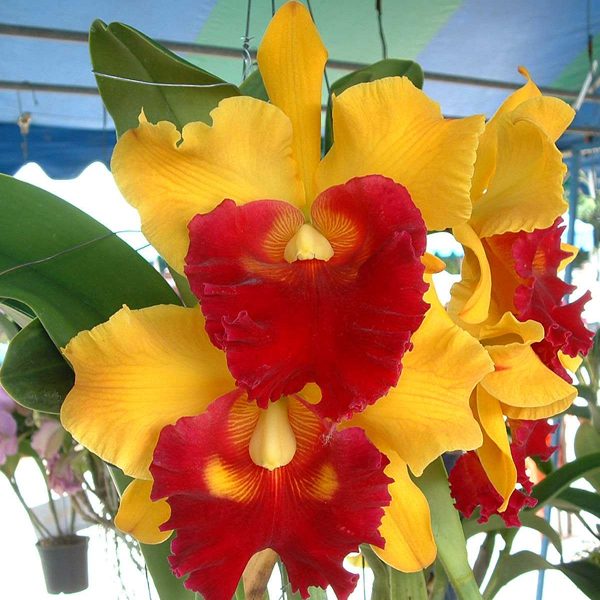
    Epidendrum is a large group of orchids native to the tropical and subtropical regions of the Americas, ranging from North Carolina down to Argentina. These plants grow in a variety of settings, including on trees (epiphytic), in soil (terrestrial), and even on bare rock (lithophytic). They thrive in humid jungles, dry forests, grassy slopes, cloud forests, and sandy coastal areas. Many species have adapted well to human-disturbed environments, such as along road cuts, where they now grow more abundantly than before.

    Brassavola is a smaller genus of 21 orchid species, named in 1813 by the botanist Robert Brown in honor of an Italian physician, Antonio Musa Brassavola. These orchids are found across Mexico, Central America, the Caribbean islands, and South America. Most are epiphytes, meaning they grow on trees, though some can also be found growing on rocks. A key feature is their single, thick, succulent leaf that grows from a swollen stem base called a pseudobulb.

    How to Recognise Them

    Epidendrum orchids vary widely in appearance. Their flowers are typically small to medium-sized and grow in clusters along a central stem, which may be simple or branched. The flowers are often not showy but can be fragrant. A key botanical trait is a small beak-like structure called the rostellum, which produces a sticky fluid. The lip of the flower is usually fused to the column, forming a nectar-holding tube, though it rarely produces actual nectar. The fruit is a dry, three-ribbed capsule.

    Brassavola orchids are easier to identify by their consistent features. Each plant has one fleshy leaf per pseudobulb. The flowers are white or greenish-white, either solitary or in small clusters. The sepals and petals are long, narrow, and greenish. The lip is broad and may have a fringed edge, and it partially wraps around the column. This column has two sickle-shaped extensions on each side. Most Brassavola flowers are fragrant, but only at night, to attract moth pollinators. The bloom can last anywhere from five to thirty days, depending on the species.

    A Short History of Breeding

    Epidendrum has a long history in cultivation. When Carl Linnaeus first named the genus in 1763, he grouped all known tree-growing orchids under it. Over time, many species were moved to other genera as botanical knowledge advanced, but Epidendrum remains a large and diverse group. Some species have become more common due to human activity, such as road building, which creates open ground where terrestrial types can flourish.

    Brassavola has played a notable role in orchid history. In 1698, Brassavola nodosa was the first tropical orchid brought from the Caribbean island of Curaçao to the Netherlands. This event marked an early milestone in the global fascination with orchids and helped start their cultivation in Europe. Brassavola species have been widely used in hybridization, especially with Cattleya and Laelia. Their genetic contribution is often seen at the start of hybrid names, such as in Blc. (Brassolaeliocattleya). Examples of hybrids include Brassavola Little Star (from B. nodosa and B. subulifolia) and various intergeneric crosses like × Rhynchovola ‘David Sanders’ and × Brassocattleya ‘Yellow Bird’ and ‘Richard Mueller’.

    Awards and Competition

    According to our library’s own catalogue of plants grown and sold by our nurseries, there are currently no award-winning Epidendrum or Brassavola plants recorded in the collection. The award key explains the meaning of common orchid honours: HCC (Highly Commended Certificate) for flowers scoring 75 to 79 points, AM (Award of Merit) for 80 to 89, and FCC (First Class Certificate) for 90 or more points on flower quality. CCM (Certificate of Cultural Merit) and CCE (Certificate of Cultural Excellence) are given for strong plant growth and care, requiring scores of 80–89 and 90+ respectively, with the plant needing to have been in the grower’s care for at least a year. JC (Judges’ Commendation) is for unique traits that judges feel deserve recognition but cannot be scored in the usual way. While no such awards are listed for our current stock, these standards are used in orchid shows to evaluate excellence.

    How to Grow Them at Home

    Both Epidendrum and Brassavola are considered among the easier orchids for beginners, thanks to their adaptability and resilience.

    For Epidendrum, use a well-aerated mix that holds moisture but drains well — many growers succeed with a blend rich in humus and mixed with some sand. These plants can tolerate a range of light conditions, from bright indirect light to some morning sun. Water when the top layer of the mix feels dry, but avoid letting the pot sit in water. They do well in average household humidity, though they appreciate extra moisture in the air. Fertilise lightly during the growing season with a balanced orchid feed. Some high-elevation cloud forest species are more challenging and may not adapt well to typical home conditions, but many hybrids and lower-elevation types are reliable.

    Brassavola prefers similar conditions: a loose, well-draining medium such as bark or mounted on cork or tree fern. They like bright, filtered light and can tolerate some direct sun. Water regularly during active growth, allowing the medium to dry slightly between waterings. Reduce watering slightly in cooler months. These orchids enjoy humidity and good air movement. Their night-time fragrance is a delight, so placing them where you can enjoy the evening scent is a nice touch. Feed with a diluted orchid fertiliser every other week during growth periods. They are generally forgiving of small mistakes, making them ideal for those new to orchid growing.

    What Our Library Holds

    Our library catalogue includes 11 Epidendrum and Brassavola plants in total. Of these, 7 are mericlones — laboratory-produced copies of a selected hybrid — and 4 are seedling hybrids, grown from seed and showing natural variation.

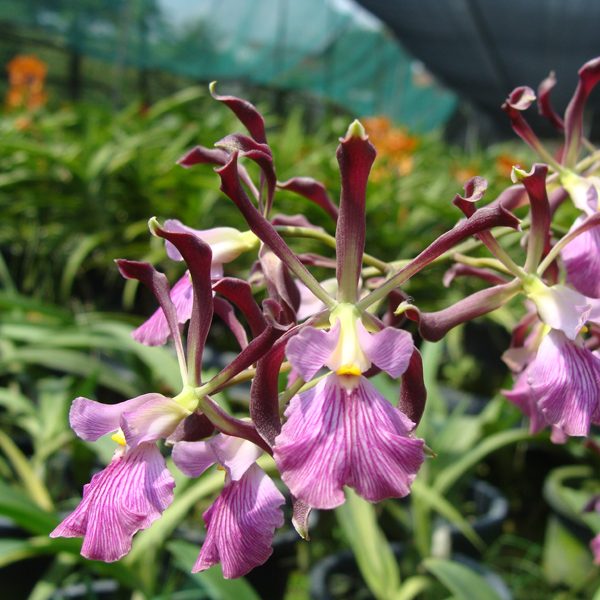
    Examples of the plants in our collection include: Brassavola David Sander (a cross between Brassavola cucullata and Brassavola digbyana), Epidendrum Elatum × Epidendrum Atropurpurtum, Epidendrum Keith Roth Purple Glory, Epidendrum floribundum, Epidendrum Stamfordianum Var Alba, Brassavola Little Star, Brassavola nodosa, Brassavola Yellow Bird × nodosa, and Brassavola cucullata. These examples show the range of forms and colours available, from the classic white night-scented blooms of Brassavola nodosa to the richer hues found in some Epidendrum hybrids.

    Sources

    Based on: Orkpedia library records · Wikipedia · Wikipedia. Written and checked by the Orkpedia editors.
  • How orchid hybrids are made: from pollen to a new plant

    How Hand-Pollination Works for Orchids

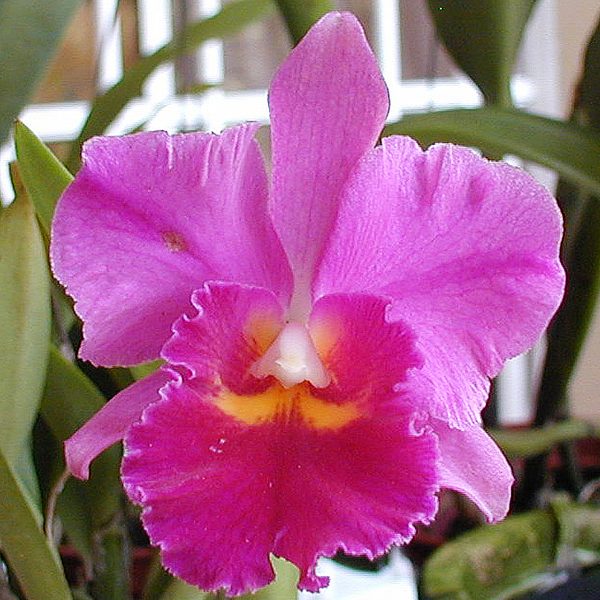
    Orchids have a special way of holding their pollen. Instead of loose grains, their pollen is packed into a small, sticky mass called a pollinium. This makes it easier to move by hand when natural pollinators are not around. To hand-pollinate an orchid, you first need to find the pollinium on the flower you want to use as the pollen donor. It is usually located under a flap called the rostellum. Using a small tool like a toothpick or a blunt needle, you gently lift the pollinium out. Then, you transfer it to the sticky surface, called the stigma, on the flower that will become the seed parent. This sticky surface is inside the column, which is the central part of the orchid flower where both male and female parts are fused. Once the pollinium touches the stigma, the pollen can grow down and fertilize the ovules. This process mimics what an insect would do, but you are in control of which plants are crossed.

    Why Growers Choose to Hand-Pollinate

    Hand-pollination is used when natural pollination is not reliable or when a grower wants to create a specific cross. In greenhouses or indoor settings, there may be no insects to carry pollen. Some orchids only grow in areas where their natural pollinators do not live. By moving the pollen yourself, you can make sure the right plants are crossed. This is important for creating new hybrids with desired traits like color, shape, or fragrance. It also helps avoid unwanted crosses when multiple orchid types are grown close together. Although it takes time and care, hand-pollination gives the grower full control over the parentage of the seeds. It is most practical for a small number of plants, such as in a home collection or a specialty nursery, because it requires close attention to each flower.

    What Happens After Pollination: The Seed Pod

    If the pollination is successful, the orchid will begin to form a seed pod. This pod develops behind the flower, often swelling slowly over several months. Inside the pod, thousands of tiny seeds start to form. Orchid seeds are unlike most plant seeds. They are extremely small—so small that they look like dust. Each seed has very little stored food inside. Because of this, they cannot grow on their own in regular soil or potting mix. In nature, orchid seeds rely on a special fungus to germinate. The fungus provides the nutrients the seed needs to start growing. Without this partnership, the seed will not develop. This is why simply scattering orchid seeds on bark or moss will not usually work for a home grower.

    Sowing Orchid Seeds in Flasks

    To grow orchids from seed outside of nature, growers use a sterile method called flasking. The seeds are placed in a glass or plastic flask filled with a nutrient-rich gel. This gel contains sugars, minerals, and sometimes a substitute for the fungus that orchids normally need. Before adding the seeds, the flask is sterilized to kill any bacteria or mold that could ruin the culture. The seeds are then sprinkled onto the surface of the gel under clean conditions, often in a laminar flow hood or a still air box. Once sealed, the flask is kept in warm, indirect light. Over time, the seeds will germinate and form tiny protocorms—early stages of the orchid plant. These look like small green or white blobs. It can take several weeks or months before any green growth is visible. The seedlings stay in the flask for many months, sometimes over a year, as they slowly develop leaves and roots.

    How Long Until the First Flower?

    Growing an orchid from seed to flowering plant takes patience. After the seeds are sown in flasks, it may take several years before the first flower appears. The exact time depends on the type of orchid and the growing conditions. Some faster-growing hybrids might bloom in three to four years, while others, especially those from slower-growing species, can take five to seven years or more. During this time, the young plants are moved from the flask to small pots with a loose, well-draining mix like bark or moss. They are given light, water, and fertilizer appropriate for orchids. Growth is gradual, with new leaves and roots appearing each season. Only when the plant has matured enough to support a flower spike will it bloom for the first time. This long wait is part of what makes growing orchids from seed a special achievement for many enthusiasts.

    Registering a New Hybrid: The Grex Name

    When a new orchid hybrid is created, it is given a grex name to identify its parentage. The term grex comes from a Latin word meaning flock, and it refers to all offspring from the same cross of two parent plants. For example, if you pollinate one orchid species with another, all the seedlings from that cross belong to the same grex. The grex name is registered with an authority that keeps track of orchid hybrids, such as the Royal Horticultural Society. Once registered, the name is used globally to avoid confusion. Within a grex, individual plants that have outstanding traits can be selected and given a cultivar name. These are often propagated by division or tissue culture to preserve their exact characteristics. The grex name stays the same for all siblings from the cross, while the cultivar name identifies a specific plant. This system helps growers share information about hybrids clearly and consistently.

    Sources

    Based on: Wikipedia · Wikipedia · Wikipedia · Wikipedia · Wikipedia. Written and checked by the Orkpedia editors.
  • Rhynchostylis and Renanthera: foxtails and fire orchids

    Rhynchostylis and Renanthera: foxtails and fire orchids

    What These Orchids Are and Where They Come From

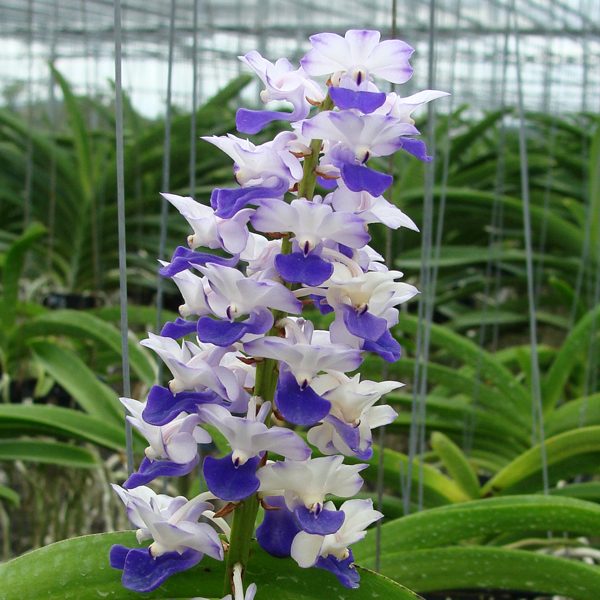
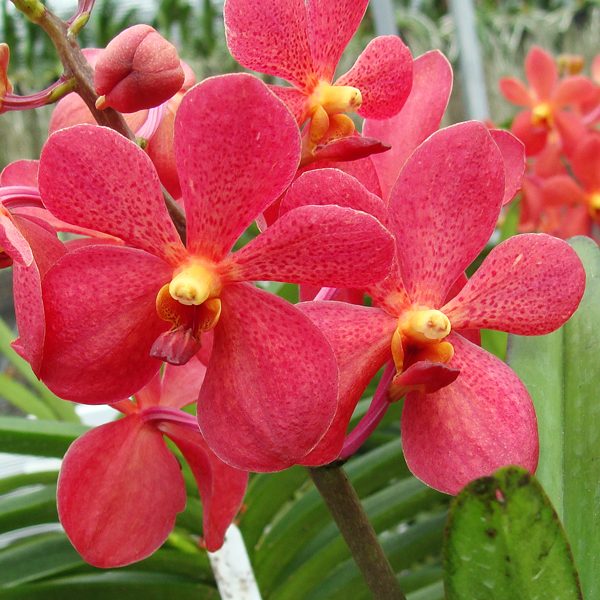
    Rhynchostylis and Renanthera are two distinct genera of orchids belonging to the orchid family, Orchidaceae. Rhynchostylis is closely related to the Vanda genus and is recognised by its one-lobed lip, a feature that distinguishes it from Vanda. It comprises four accepted species native to regions spanning the Indian subcontinent, China, Indochina, Malaysia, Indonesia, and the Philippines. These plants grow naturally in warm, moist, shaded tropical environments. Renanthera, abbreviated as Ren in horticultural trade, consists of large scrambling monopodial epiphytic and terrestrial orchids found across China, the Himalayas, Southeast Asia, New Guinea, and Melanesia. Both genera are valued by growers for their striking floral displays and, in the case of Rhynchostylis, their intense spicy fragrance.

    How to Recognise Them

    Rhynchostylis plants lack pseudobulbs and have leathery, drought-resistant leaves. Their flowers are borne in dense racemes and are known for a strong, spicy scent. The blooms often appear during slightly cooler winter months. The genus is distinguished from its close relative Vanda by the structure of the flower lip, which is single-lobed in Rhynchostylis. Renanthera species produce branched inflorescences with many flowers that range in colour from yellow and orange to red. A key identifying trait is the presence of large lateral sepals on each flower. These orchids typically grow in a scrambling habit, meaning their stems extend outward and can climb or trail, making them well-suited for mounting or basket culture.

    A Short History of Breeding

    Breeding efforts have produced several notable hybrids within and between these genera. Examples from the library catalogue include Renanthera Kalsom, which is a cross between Renanthera philippinensis and Renanthera storiei. Another hybrid, Rhynchovanda Colmarie ‘Merlot’ HCC/AOS, results from crossing Rhynchovanda Sri Siam with Rhynchostylis gigantea. Renanthera Singapore is derived from Renanthera Kalsom crossed with Renanthera Tom Thumb. Additional examples in the catalogue show crosses involving Ascocenda, such as Renanthera philippinensis × Ascocenda Yip Sum Wah, and Rhynchostylis Monachiea × Ascda Fuch Gold. These hybrids illustrate ongoing work to combine desirable traits like flower colour, form, and growth habit.

    Awards and Competition

    The library catalogue includes award-winning plants, with recognition explained using the American Orchid Society (AOS) award key. One plant listed is Rhynchovanda Colmarie ‘Merlot’ HCC/AOS. The HCC designation stands for Highly Commended Certificate, which is awarded to orchid species or hybrids scoring between 75 and 79 points inclusive on a 100-point scale for flower quality. This indicates the plant received recognition for its floral excellence at a level just below the Award of Merit.

    How to Grow Them at Home in Plain Steps

    Rhynchostylis thrives when given consistent warmth, uniform moisture, and bright but indirect light. It does well in warm, humid environments with gentle air movement. Although it can be grown in pots, it performs better in baskets or when mounted, due to the extreme fleshiness of its roots, which are prone to rot if not allowed to dry quickly. Direct sunlight should be avoided as it can harm the plants. Renanthera requires an intermediate to hot climate with good air movement and generally bright light. Like Rhynchostylis, its scrambling growth habit makes it ideal for hanging mounts or baskets. If grown in pots, excellent drainage is essential to prevent root issues. Both genera benefit from regular watering and high humidity, reflecting their tropical origins.

    What Our Library Holds

    The orchid library catalogue contains 14 plants in the Rhynchostylis and Renanthera group. Of these, 11 are mericlones and 3 are seedling hybrids. Examples of plants in the collection include Renanthera Kalsom, Rhynchostylis coelestis ‘Blue’, Rhynchostylis Gigantea Spot, Rhynchostylis Gigantea × Bangkhintian Gold, Renanthera Akihito ‘Emperor’, Rhynchovanda Colmarie ‘Merlot’ HCC/AOS, Renanthera philippinensis × Ascocenda Yip Sum Wah, Renanthera philippinensis × Renanthera storiei, Rhynchostylis Retusa, Rhynchostylis Monachiea × Ascda Fuch Gold, Renanthera Singapore, Rhynchostylis gigantea ‘Plai’, and Rhynchostylis gigantea ‘Orange’. These represent a mix of species and hybrids available through the library’s nursery offerings.

    Cultivation Requirements

    Rhynchostylis and Renanthera orchids thrive in warm, humid environments with uniform moisture and bright but indirect light. They require gentle air movement to prevent stagnation and support healthy growth. Direct sunlight should be avoided as it can damage the foliage and flowers. While these orchids can be grown in pots, they perform better in baskets or when mounted due to the extreme fleshiness of their roots, which are prone to rot if not allowed to dry quickly. Excellent drainage is essential when potting to prevent root issues. Both genera benefit from regular watering and high humidity, reflecting their tropical origins in shaded, moist forest habitats.

    Award-Winning Specimens in the Collection

    The library’s catalogue includes one award-winning plant in the Rhynchostylis and Renanthera group: Rhynchovanda Colmarie ‘Merlot’ HCC/AOS. This hybrid received a Highly Commended Certificate (HCC) from the American Orchid Society, indicating a flower quality score between 75 and 79 points on the 100-point scale. The award recognizes exceptional floral characteristics as judged by AOS standards. No other plants in the current library collection for this group have received documented awards from the American Orchid Society.

    Parentage and Hybrid Examples

    Specific hybrid parentages documented in the library’s records include: Renanthera Kalsom, which is a cross between Renanthera philippinensis and Renanthera storiei; Rhynchovanda Colmarie ‘Merlot’ HCC/AOS, resulting from Rhynchovanda Sri Siam crossed with Rhynchostylis gigantea; and Renanthera Singapore, which is a hybrid of Renanthera Kalsom and Renanthera Tom Thumb. Additional named hybrids in the collection are Renanthera philippinensis × Ascocenda Yip Sum Wah and Renanthera philippinensis × Renanthera storiei. These examples illustrate the library’s focus on both species and intergeneric hybrids within the group.

    Notable Species and Cultivars

    The library’s nursery offerings include a range of species and cultivars such as Rhynchostylis coelestis ‘Blue’, Rhynchostylis Gigantea Spot, Rhynchostylis Gigantea × Bangkhintian Gold, Renanthera Akihito ‘Emperor’, Rhynchostylis Retusa, Rhynchostylis Monachiea × Ascda Fuch Gold, Renanthera Singapore, Rhynchostylis gigantea ‘Plai’, and Rhynchostylis gigantea ‘Orange’. These represent selections from the four recognized species of Rhynchostylis, including Rhynchostylis gigantea and its subspecies, as well as Rhynchostylis retusa. The cultivars reflect variations in flower color, form, and growth habit available through the library’s propagation and sales program.

    Sources

    Based on: Orkpedia library records · Wikipedia · Wikipedia. Written and checked by the Orkpedia editors.
  • Oncidium: the dancing-lady orchids

    Oncidium: the dancing-lady orchids

    What Oncidium Orchids Are and Where They Come From

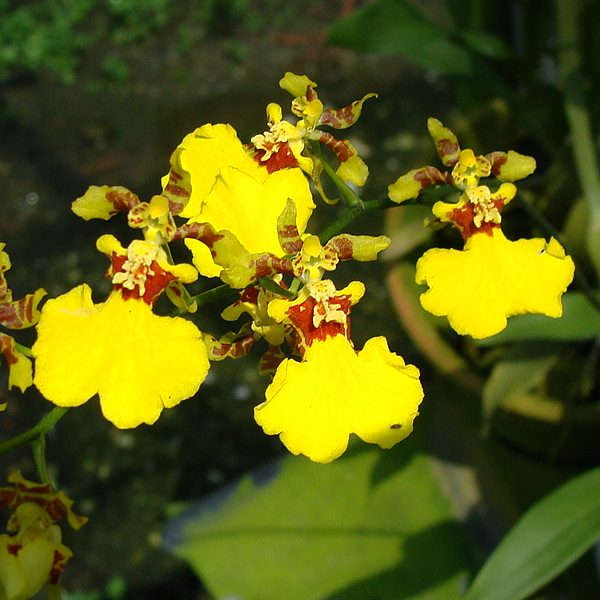
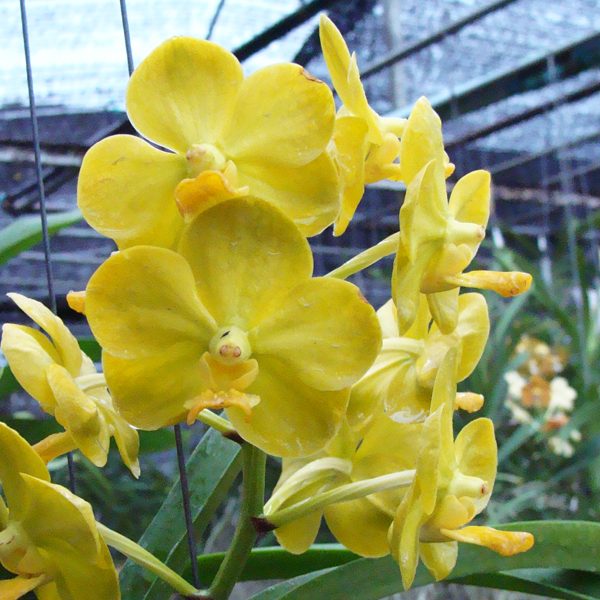
    Oncidium is a genus of orchids known for their delicate, fluttering flowers that resemble dancing ladies. These plants are native to tropical and subtropical regions of the Americas, ranging from Mexico and Central America through the West Indies and down to northern Argentina. One species, Oncidium ensatum, extends into Florida. They grow in a variety of habitats, including as epiphytes on trees, lithophytes on rocks, or terrestrially in soil. The genus was first described in 1800 by the Swedish botanist Olof Swartz. The name Oncidium comes from the Greek word “onkos,” meaning swelling, referring to the prominent callus on the lip of the flower.

    How to Recognise Oncidium Orchids

    Oncidium plants typically have clustered pseudobulbs, each bearing up to four blunt-tipped, strap-like leaves. Their flowers grow on branching inflorescences called panicles, which emerge from the axils of recently matured growth. Each pseudobulb produces flowers only once. The blooms are resupinate, meaning they twist upside down as they open. The sepals and petals are free and range from egg-shaped to nearly circular. The most distinctive feature is the lip, which is fiddle-shaped and has a prominent warty fringe. After flowering, the plant produces a capsule fruit. These characteristics help identify Oncidium among other orchid genera.

    A Short History of Breeding

    Oncidium has been widely used in artificial hybridisation, often crossed with other genera to create new and interesting forms. Many hybrids have been given names as nothogenera, which are hybrid genus names. Over time, taxonomic revisions have reclassified several groups. As of April 2026, genera such as Cochlioda and Odontoglossum are now considered synonyms of Oncidium, meaning hybrids once placed in separate groups like × Odontioda, × Odontocidium, and × Wilsonara are now recognised as part of the Oncidium alliance. This reorganisation followed years of debate, including a 2009 molecular study that found the Oncidium alliance to be grossly polyphyletic. A consensus in April 2013 led to major changes, moving many Brazilian Oncidium species with a fused lateral sepal to the genus Gomesa. These changes were informed by research for the scientific publication Genera Orchidacearum Volume 5.

    Awards and Competition

    Our library data includes several award-winning Oncidium plants. The award key explains the meaning of the letters used in the catalogue. For example, AM/AOS stands for Award of Merit from the American Orchid Society, given to orchids scoring 80 to 89 points on a 100-point scale for flower quality. One plant listed multiple times is Oncidium Sharry Baby ‘Sweet Fragrance’ AM/AOS, indicating it has received this honour. Other award-winning plants in our library include Brassia Eternal Wind ‘Summer Dream’ SM/JOGA. These awards reflect recognition for exceptional flower quality or cultural excellence in judged competitions.

    How to Grow Them at Home

    Oncidium orchids can be grown successfully in home conditions with attention to their basic needs. They prefer bright, indirect light, similar to what they receive under a forest canopy. Watering should be regular during active growth, allowing the medium to dry slightly between waterings. Reduce watering after flowering when the plant enters a rest period. They thrive in intermediate to warm temperatures and appreciate good humidity. A well-draining medium, such as bark mix or sphagnum moss, is essential to prevent root rot. Fertilise lightly during the growing season with a balanced orchid fertilizer. Repot every two years or when the medium breaks down. Good air circulation helps prevent fungal issues. With proper care, these orchids can bloom annually, producing sprays of small, lively flowers.

    What Our Library Holds

    Our library catalogue contains 37 Oncidium plants in total. Of these, 30 are mericlones, which are propagated through tissue culture to preserve the exact traits of a parent plant. The remaining 7 are seedling hybrids, grown from seed and therefore showing natural variation. The collection includes several named examples such as Oncidium Golden Shower, Oncidium Taka, Oncidium Sharry Baby ‘Sweet Fragrance’ AM/AOS, Oncidium Memoria Ralphy Yagi ‘Elsa’, Oncidium Sweet Sugar, Oncidium Wild Cat ‘Bob’, Oncidium Millennium Gold, Oncidium Ollie Palmer, Oncidium Josephine, Oncidium Maureen, Oncidium Popcorn ‘Misty Pinky’, and Inonocidvum Yellow ‘Fantacy’. Parentage information is provided for many hybrids, showing how they were created through cross-pollination. For instance, Oncidium Golden Shower results from a cross between Oncidium Palolo Gold and Oncidium Boissiense. These records help growers understand the background and characteristics of each plant in our collection.

    Care Requirements

    Oncidium orchids enter a rest period after flowering. They thrive in intermediate to warm temperatures and benefit from good humidity levels. A well-draining growing medium, such as bark mix or sphagnum moss, is essential to prevent root rot. During the growing season, they should be fertilised lightly with a balanced orchid fertilizer. Repotting is recommended every two years or when the medium begins to break down. Maintaining good air circulation helps reduce the risk of fungal infections. With appropriate care, these orchids can bloom annually, producing sprays of small, lively flowers.

    Award-Winning Plants in the Collection

    The library includes award-winning Oncidium specimens. Oncidium Sharry Baby ‘Sweet Fragrance’ AM/AOS has received an Award of Merit from the American Orchid Society, indicating a flower quality score between 80 and 89 points on a 100-point scale. Brassia Eternal Wind ‘Summer Dream’ SM/JOGA is also noted as an award-winning plant in the collection.

    Sources

    Based on: Orkpedia library records · Wikipedia. Written and checked by the Orkpedia editors.
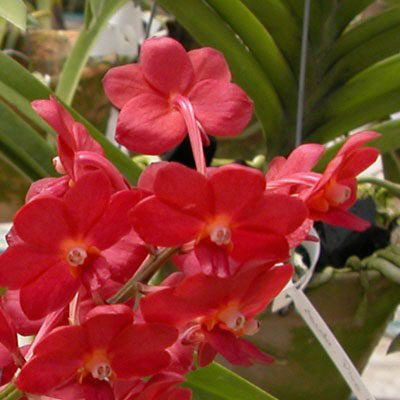
  • Cattleya hybrids decoded: Blc, Lc, Bc and Potinara

    Cattleya hybrids decoded: Blc, Lc, Bc and Potinara

    What These Orchids Are and Where They Come From

    Cattleya hybrids are orchids created by crossing different species or hybrids within the Cattleya alliance. This group includes plants with names starting in Blc, Lc, Bc, and Potinara. These abbreviations stand for specific intergeneric hybrids. Blc means Brassolaeliocattleya, a cross involving Brassavola, Laelia, and Cattleya. Lc means Laeliocattleya, a cross between Laelia and Cattleya. Bc means Brassocattleya, a cross between Brassavola and Cattleya. Potinara refers to hybrids that once included Brassavola, Cattleya, Laelia, and Sophronitis, but now, since Sophronitis is considered part of Cattleya, they are effectively Brassavola, Cattleya, and Laelia crosses, making them similar to Blc. These orchids come from cultivated breeding programs, not found naturally in the wild. They are grown for their large, showy flowers and are popular among orchid enthusiasts.

    How to Recognise Them

    These hybrids are recognised by their growth habit and flower structure. They typically have tall, upright pseudobulbs with one or two thick, leathery leaves at the top. The flowers emerge from a sheath at the top of the pseudobulb and are often large and fragrant. The sepals and petals are usually broad and spreading, while the lip is often showy, sometimes fringed or ruffled, and may have contrasting colours or patterns. The column in the centre of the flower is distinctive, often with side structures that help in identification. The abbreviations in the name — Blc, Lc, Bc, or Potinara — tell you the parent genera involved. For example, a plant named Brassolaeliocattleya has Brassavola, Laelia, and Cattleya in its background. Flower colour and form vary widely due to breeding, but the overall plant structure remains consistent across the group.

    A Short History of Breeding

    Breeding of these hybrids began as growers sought to combine the best traits of different species. Brassavola contributes fragrance and night-blooming tendencies. Laelia brings resilience and varied flower shapes. Cattleya provides large, bold blooms and a wide range of colours. Early crosses were made to improve flower size, colour, and ease of growing. Over time, breeders focused on creating compact plants with multiple flowers and strong stems. The use of mericloning — cloning plants from tissue — allowed award-winning hybrids to be reproduced exactly. This is why many plants in the library are mericlones. The goal has always been to produce orchids that are beautiful, reliable, and suitable for home growing with proper care.

    Awards and Competition

    Many plants in the library have received awards from orchid societies. These awards are marked by letters after the cultivar name. AM stands for Award of Merit. HCC means Highly Commended Certificate. JC is a Judges’ Certificate. SM is a Special Medal. FCC is a First Class Certificate. BM is a Bronze Medal. The letters after the slash indicate which society gave the award: AOS is the American Orchid Society. OSROC is the Orchid Society of the Republic of China. JGP is likely the Japan Grand Prix. CST may be the Chiang Mai Orchid Society. TOGA is the Thai Orchid Growers’ Association. For example, Brassolaeliocattleya Chun Yeah ‘Yellow Swallow’ AM/OSROC received an Award of Merit from the Orchid Society of the Republic of China. Brassolaeliocattleya Chia Lin ‘Red Rose’ AM/AOS, SM/JGP earned both an Award of Merit from the American Orchid Society and a Special Medal from the Japan Grand Prix. Brassocattleya Nodata ‘Maili’ HCC/AOS received a Highly Commended Certificate from the American Orchid Society. Potinara Ahchung Yoyo ‘Little Goldfish’ BM/TOGA earned a Bronze Medal from the Thai Orchid Growers’ Association. These awards reflect recognition of outstanding flower quality, form, colour, or plant habit in judged competitions.

    How to Grow Them at Home in Plain Steps

    Grow these orchids in bright, indirect light. An east-facing window is ideal, or a south or west window with sheer curtain to filter strong sun. They need good air movement to prevent rot. Use a well-draining orchid mix, such as bark-based medium, and repot every two years or when the medium breaks down. Water when the top layer of the mix feels dry, then water thoroughly until it runs out the bottom. Do not let the pot sit in water. Fertilise regularly during growing season with a balanced orchid fertilizer at half strength. Reduce feeding in winter. Keep temperatures between 18 and 30 degrees Celsius. They tolerate typical indoor conditions but prefer warmer days and cooler nights. Humidity above 50 percent helps, but they adapt to average home humidity if watered correctly. Watch for signs of stress: yellow leaves may mean too much light or water, dark green leaves may mean too little light. With basic care, they bloom once a year, often in spring or autumn, and can live for many years.

    What Our Library Holds

    The library contains 160 plants in the Blc, Lc, Bc, and Potinara group. Of these, 150 are mericlones — exact copies of award-winning or desirable hybrids — and 10 are seedling hybrids, grown from seed and showing natural variation. The library includes many award-winning examples, such as Brassolaeliocattleya Chun Yeah ‘Yellow Swallow’ AM/OSROC, Brassolaeliocattleya Sa-Ngob Delight ‘Sa-Ngob’ AM/AOS, Laeliocattleya Mem Robert Strait ‘Blue Hawaii’ JC/AOS, and Brassolaeliocattleya Irene Finney ‘York’ AM/AOS. Other named varieties include Brassolaeliocattleya Norman’s Bay × Blc Greenwich ‘Elmhurst’ AM/AOS, Brassocattleya Nodata ‘Maili’ HCC/AOS, Laeliocattleya Mari’s Song ‘CTM 217’ HCC/AOS, and Potinara Ahchung Yoyo ‘Little Goldfish’ BM/TOGA. The library also holds plants with parentage like Brassocattleya Star Trek ‘Orange’ from Cattleya intermedia × Brassavola perrinii, and Brassolaeliocattleya Sa-Ngob Delight ‘Sa-Ngob’ from Blc Dorcille Little × Cattleya Interglossa. These represent the range of breeding and recognition within the group.

    Sources

    Based on: Orkpedia library records · Wikipedia · Wikipedia · Wikipedia · Wikipedia. Written and checked by the Orkpedia editors.
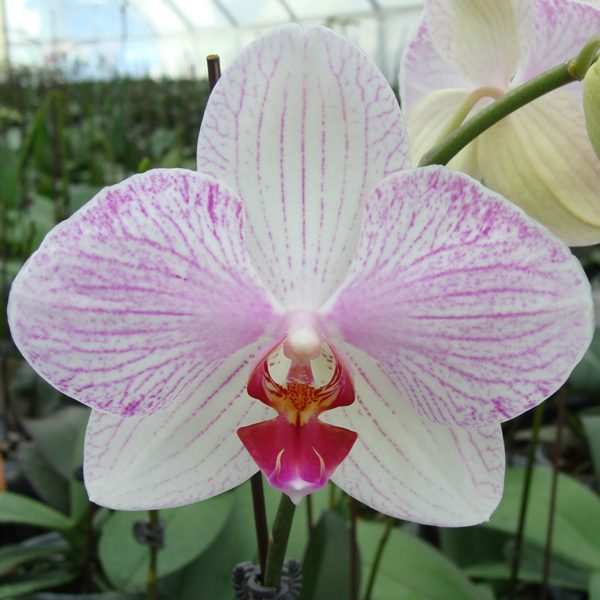
  • Cattleya: the queen of orchids and its famous awards

    Cattleya: the queen of orchids and its famous awards

    What Cattleya Orchids Are and Where They Come From

    Cattleya is a genus of orchids native to regions from Costa Rica down to Argentina. These plants grow either on trees as epiphytes or in the ground as terrestrials. They develop from a cylindrical rhizome that produces fleshy, noodle-like roots. The pseudobulbs are typically conical, spindle-shaped, or cylindrical and grow upright, bearing one or two leaves at the top. The leaves are oblong, lanceolate, or elliptical, somewhat fleshy with smooth edges. Flowers appear on a terminal raceme and feature separate sepals and petals. The lip, or labellum, is usually distinct in color and shape and partially forms a tube around the flower column. Each flower contains four pollinia, which are bag-like structures holding pollen. The fruit is a capsule containing many tiny seeds. The genus was named in 1824 by John Lindley in honor of William Cattley, who first bloomed a specimen of Cattleya labiata obtained from William Swainson in Pernambuco, Brazil, in 1817.

    How to Recognise Cattleya Orchids

    Cattleya orchids can be identified by their growth habit and floral structure. They have pseudobulbs that store water and nutrients, from which one or two leathery leaves emerge. The flower spike grows from the top of the pseudobulb and bears several large, showy blooms. The petals and sepals are similar in appearance and spread outward, while the lip is often broader, frilled, or differently colored, sometimes forming a tubular shape around the column. The presence of four pollinia is a key internal feature. These orchids are often fragrant and valued for their vibrant colors and elegant form, making them popular in cultivation and exhibitions.

    A Short History of Breeding

    Breeding of Cattleya orchids has involved both species and hybrids, often crossing with related genera to create new combinations. Natural hybrids occur in the wild, and horticulturists have developed numerous artificial hybrids. These include nothogenera such as × Brassocattleya (Brassavola × Cattleya), × Brassolaeliocattleya (Brassavola × Cattleya × Laelia), × Cattleytonia (Cattleya × Broughtonia), × Laeliocattleya (Cattleya × Laelia), and × Rhyncholaeliocattleya (Rhyncholaelia × Cattleya). Breeding efforts have focused on improving flower size, color, form, and resilience, leading to the diverse range of cultivars seen today.

    Awards and Competition

    Our library data includes several award-winning Cattleya and related hybrids, each recognised by the American Orchid Society (AOS) for flower quality. The award key explains the meaning of the letters used in the catalogue. HCC (Highly Commended Certificate) is given to orchids scoring 75 to 79 points on a 100-point scale for flower quality. AM (Award of Merit) is awarded for scores of 80 to 89 points. FCC (First Class Certificate) is the highest flower-quality award, given for scores of 90 points or more. CCM (Certificate of Cultural Merit) recognises exhibitors of healthy, well-flowered plants that have been in their care for at least 12 months and score 80 to 89 points for culture. CCE (Certificate of Cultural Excellence) is similar but requires a culture score of at least 90 points. In our library, the following plants have received awards: Cattleya Hawaii Wedding Song ‘Virgin’ HCC/AOS; Epilaeliocattleya Don Herman ‘Butterball’ HCC/AOS; Hawkinsara Sogo Doll ‘Little Angel’ AM/AOS; Cattleya violacea ‘Muse’ FCC/AOS; Cattleya Hawaiian Wedding Song ‘Virgin’ HCC/AOS (noted twice in the data); and Cattleytonia Rosy Jewel ‘Ewa’ AM/AOS. These awards reflect the plants’ excellence in flower form, color, and overall quality as judged by AOS standards.

    How to Grow Them at Home

    Growing Cattleya orchids at home requires attention to light, temperature, humidity, watering, and fertilizing. They need bright light but should be protected from direct, intense sunlight, which can damage the leaves; shade should be provided when necessary. Day temperatures should range from 25 to 30 °C (77 to 86 °F), while night temperatures should not fall below 10 to 12 °C (50 to 53.6 °F). Humidity must be maintained between 40 and 70 percent, with good air circulation to prevent stagnation, though plants should not be placed in direct drafts. Watering should occur only when the growing medium is dry to the touch; frequency varies with conditions and season, but a weekly schedule is a common starting point. Fertilizing is not strictly necessary, but if used, nitrogen-based fertilizers without urea are recommended during the growth period. To prevent salt buildup in the substrate, water thoroughly between applications. These practices support healthy growth and regular flowering.

    What Our Library Holds

    Our library catalogue contains 37 Cattleya-related plants, consisting of 31 mericlones and 6 seedling hybrids. Among these are several award-winning specimens recognised by the American Orchid Society. Examples of plants in the collection include Cattleya Bangkok ‘Ruby’, which is a cross between Cattleya Isis and Cattleya Meteor; Epilaeliocattleya Don Herman ‘Butterball’ HCC/AOS, derived from Cattlianthe Gold Digger × Epidendrum stamfordianum; Cattleya violacea ‘Yen’, from C amethystoglossa × Lc Ann Follis; Brassolaelia Yellow Bird, from Brassolaelia Richard Mueller × Brassavola nodosa; Sophrolaeliocattleya Anzac Jewel, from Slc. Anzac × Slc. Jewel Box; Cattleya Hawaiian Wedding Song ‘Virgin’ HCC/AOS, from Cattleya Angel Bells × Cattleya Claesiana; Cattleytonia Rosy Jewel ‘Ewa’ AM/AOS, from Guarianthe bowringiana × Broughtonia sanguinea; Laeliocatonia Happy Face, from Cattleytonia Peggy San × Cattleya Mari’s Song; Cattleya Marjorie Hausermann, from Cattleya Henrietta Japhet × Cattleya Ethel Leder; and Rhyncholaeliocattleya Hsinying Pachi Pachi ‘Rie’, from Blc Haw Yuan ‘Delight’ × Golden Delight. Other example names in the catalogue are Cattleya Netrasiri Fame, Sophrolaeliocattleya Netrasiri Doll ‘Bicentenial’, Cattleya Porntip ‘Joe’, Cattleya Netrasiri Waxy × Love Knot, Hawkinsara Sogo Doll ‘Little Angel’ AM/AOS, Brassolaelia Yellow Bird, Cattleya Fireball Fame × Blc Lucky Strike, Cattleya Fireball Fame × Blc Bryce Canyon, Sophrolaeliocattleya Anzac Jewel, Cattleya Yen Red Face, and Cattleya Blc Greenwich Elmhurst. These represent a sample of the diversity preserved in our library.

    Sources

    Based on: Orkpedia library records · Wikipedia. Written and checked by the Orkpedia editors.
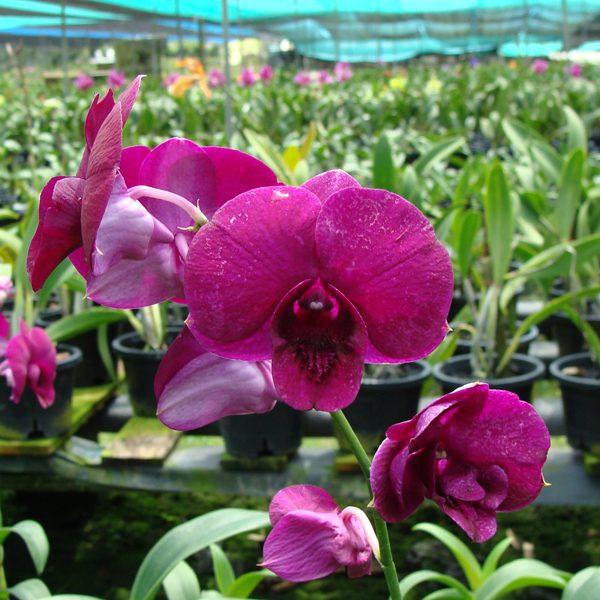
  • Mokara, Aranda and Kagawara: Southeast Asia’s cut-flower orchids

    Mokara, Aranda and Kagawara: Southeast Asia’s cut-flower orchids

    What These Orchids Are and Where They Come From

    Mokara, Aranda and Kagawara are hybrid orchids created by crossing different genera. Aranda comes from a cross between Arachnis and Vanda. Mokara involves Arachnis, Ascocenda and Vanda in its background. Kagawara combines Renanthera and Ascocenda. These hybrids were developed in Southeast Asia for the cut-flower trade. They grow well in warm, humid climates and are valued for their strong stems and long-lasting blooms. The parent species come from regions including China, the Himalayas, Southeast Asia, New Guinea, Melanesia, India, the Philippines, Indonesia and northern Australia.

    How to Recognise Them

    These orchids have tall, upright flower spikes with many blooms opening in sequence. Aranda flowers often show the spider-like shape of Arachnis combined with the roundness of Vanda. Mokara blooms tend to be compact and waxy, with colours ranging from gold to orange and red. Kagawara flowers are known for their intense reds and oranges, inherited from Renanthera, and are carried on branching stems. The leaves are usually broad and strap-like, typical of Vanda relatives. The plants grow monopodially, meaning they have a single main stem that grows upward from the base.

    A Short History of Breeding

    Breeding of these hybrids began in Southeast Asia to produce orchids suitable for commercial cut-flower production. Aranda was one of the first successful intergeneric crosses, combining Arachnis hookeriana and Vanda. Over time, breeders added Ascocenda and Renanthera to expand colour range and flower form. Mokara and Kagawara followed as further refinements. The goal was to create plants with strong stems, long-lasting flowers and colours that stood out in arrangements. Many of the hybrids in the library trace back to well-known parent lines such as Vanda Dawn Nishimura, Ascocenda Memoria Choo Laikeun and Renanthera Nancy Chandler.

    Awards and Competition

    Our library data shows award-winning plants in this group. The award notation HCC/AOS means the plant received a Highly Commended Certificate from the American Orchid Society. This award is given to orchids scoring 75 to 79 points on a 100-point scale for flower quality. The plant Kagawara Christie Low ‘Redland’ appears three times in our library data with this award. Each entry refers to the same mericlone, recognised for its flower quality. No other awards such as AM, FCC, CCM, CCE or JC are listed for these plants in our current library data.

    How to Grow Them at Home

    These orchids need bright, indirect light. A south or east-facing window with sheer curtain is ideal. Water when the top layer of the potting medium feels dry. Use a coarse mix that drains well, such as bark, charcoal and perlite. They prefer warm temperatures and good air movement. Mist the leaves occasionally if the air is dry. Feed with a balanced orchid fertilizer every two weeks during growing season. Reduce feeding in cooler months. Repot every two years or when the medium breaks down. They can be grown in pots or baskets. Watch for signs of rot if roots stay too wet.

    What Our Library Holds

    Our library contains 57 plants in the Mokara, Aranda and Kagawara group. All are mericlones, meaning they are propagated by tissue culture to preserve the exact traits of the parent plant. There are no seedling hybrids in this section of the catalogue. Example plants include Aranda Noorah Alsagoff Pink, which comes from Arachnis hookeriana and Vanda Dawn Nishimura. Mokara Luenberger Gold is derived from Mokara Khaw Phaik Suan and Vanda Kultana Gold. Mokara Dolal Miah comes from Arachnis Ishbel and Ascocenda Wangsa Gold. Aranda Woleco is a cross between Aranda Christine and Vanda Doctor Anek. Other examples are Aranda Wan Chark Kuan, Aranda Prapin Beauty, Kagawaara Samrerng, Mokara Madame Panni, Aranda Tan Mei Ying and Mokara Toddman. These examples show the range of parent combinations used to create these cut-flower orchids.

    Award-Winning Plants in the Collection

    Three award-winning plants are listed in the library catalogue for the Mokara, Aranda, and Kagawara group. All three are Kagawara Christie Low ‘Redland’ and have received an HCC/AOS award. The HCC (Highly Commended Certificate) is awarded by the American Orchid Society to orchids scoring 75 to 79 points on a 100-point scale for flower quality.

    Parentage of Notable Hybrids

    Kagawara Christie Low ‘Redland’ HCC/AOS is a hybrid between Renanthera Nancy Chandler and Ascocenda Memoria Choo Laikeun. Kagawaara Samrerng results from a cross between Renanthera Nancy Chandler and Ascocenda Madame Panni. Mokara Madame Panni is derived from Mokara Sayan and Vanda Charles Goodfellow. Aranda Tan Mei Ying comes from Vanda Mabelmae Kamahele and Aranda Christine. Mokara Toddman is a hybrid of Mokara Sayan and Ascocenda Fuchs Sunset.

    Additional Examples in the Catalogue

    Other plants in the library include Aranda Wan Chark Kuan, which is a cross between Aranda Lily Chong and Vanda Memoria Fumiko Omoto. Aranda Prapin Beauty is produced from Aranda Christine and Vanda Rasri Gold. Mokara Luenberger Gold originates from Mokara Khaw Phaik Suan and Vanda Kultana Gold. Mokara Dolal Miah is a hybrid of Arachnis Ishbel and Ascocenda Wangsa Gold. Aranda Woleco results from Aranda Christine and Vanda Doctor Anek. Aranda Noorah Alsagoff Pink is derived from Arachnis hookeriana and Vanda Dawn Nishimura.

    Sources

    Based on: Orkpedia library records · Wikipedia · Wikipedia · Wikipedia. Written and checked by the Orkpedia editors.

  • Ascocenda: compact Vanda hybrids with big colour

    Ascocenda: compact Vanda hybrids with big colour

    What Ascocenda Orchids Are and Where They Come From

    Ascocenda orchids are human-made hybrids created by crossing plants from the Ascocentrum and Vanda genera. These hybrids combine traits from both parents: the compact growth and vibrant color of Ascocentrum with the larger flower size and strong growth habit of Vanda. Although Ascocentrum is now considered part of the Vanda genus in modern classification, the name Ascocenda remains in use for these specific hybrids. They are evergreen epiphytes, meaning they naturally grow on trees or rocks rather than in soil, absorbing moisture and nutrients from the air and rain. Their native origins trace back to tropical regions of East and Southeast Asia, where both parent genera are found in the wild.

    How to Recognise Ascocenda Orchids

    Ascocenda plants have upright, narrow, oviform leaves that are thick and leathery. They grow in a monopodial pattern, meaning they develop from a single growing point at the top of the stem. The inflorescence appears as an axillary cluster—emerging from the leaf axil—and typically bears six to eight open flowers at a time. Blooms can occur two or even three times a year, with each flower lasting a long time. The flowers are known for their bright, intense colours, often showing contrasting overlays or patterns. This combination of compact size, frequent blooming, and vivid colour makes them stand out in collections.

    A Short History of Breeding

    The Ascocenda hybrid was first created in 1949, as documented in Orchid Rev. 57: 172. Since then, breeders have developed numerous cultivars by crossing various Ascocenda lines with Vanda and related genera. These efforts have focused on enhancing flower colour, improving plant compactness, and increasing bloom frequency. Over time, many secondary hybrids have emerged, including crosses between Ascocenda and other genera like Rhynchostylis, leading to related groups such as Vascostylis. The library data shows ongoing breeding work, with many named cultivars reflecting parentage from well-known lines such as Ascocenda Peggy Foo, Vanda Kultana Gold, and Ascocenda Tubtim Velvet.

    Awards and Competition

    Two award-winning Ascocenda plants are listed in the library data, both recognised by the American Orchid Society (AOS). The first is Ascocenda Su-fun Beauty ‘Orange Belle’ with the designation AM/AOS. According to the award key, AM stands for Award of Merit, given to orchids scoring between 80 and 89 points on a 100-point scale for flower quality. The second is Ascocenda Bicentennial ‘Carmela’ AM/AOS, which also received an Award of Merit from the AOS under the same criteria. These awards indicate that both plants were judged to have flowers of high quality, though not reaching the highest level of FCC (First Class Certificate), which requires 90 points or more.

    How to Grow Them at Home

    Ascocenda orchids thrive in bright, indirect light, similar to what they would receive under a tropical tree canopy. Direct midday sun should be avoided to prevent leaf burn. They prefer warm temperatures and high humidity, reflecting their native forest habitat. Watering should be frequent during active growth, allowing the roots to dry slightly between sessions but never letting the plant remain soggy. Good air circulation is essential to prevent rot, especially in humid conditions. These orchids are typically grown in open baskets or mounted on slabs to mimic their epiphytic nature, using little or no traditional potting medium. Fertiliser can be applied regularly during the growing season at a weak strength. Since they are monopodial, they do not have pseudobulbs to store water, so consistent moisture is important. Repotting or remounting is best done when new roots are appearing, usually in spring or early summer.

    What Our Library Holds

    The library contains 50 Ascocenda and related plants in total. Of these, 41 are mericlones—propagated through tissue culture to preserve the exact traits of the parent plant—and 9 are seedling hybrids, grown from seed and therefore showing natural variation. Example plants in the collection include Ascocenda Su-fun Beauty ‘Orange Belle’, Ascocenda Bicentennial ‘Carmela’, Ascocenda Chainarin, Ascocenda Princess Mikasa ‘Blue’, and Ascocenda Louise Coffey. Related Vascostylis examples include Vascostylis Pine Rivers ‘Pink’, Vascostylis Thai Sky, and Vascostylis Velvet ‘Perfection’. These examples illustrate the range of colours, forms, and parentage available in the group, from pink and blue hues to gold and red tones, often derived from well-known parent lines such as Ascocenda Tubtim Velvet, Vanda Kultana Gold, and Rhynchostylis coelestis.

    Growing Conditions and Care

    Ascocenda and related hybrids require bright, filtered light to thrive, similar to their Vanda ancestors. They prefer warm temperatures, ideally between 18°C and 30°C, and high humidity levels, often above 60%. Watering should be frequent during active growth, allowing the roots to dry slightly between sessions but never letting the plant remain soggy. Good air circulation is essential to prevent rot, especially in humid conditions. These orchids are typically grown in open baskets or mounted on slabs to mimic their epiphytic nature, using little or no traditional potting medium. Fertiliser can be applied regularly during the growing season at a weak strength. Since they are monopodial, they do not have pseudobulbs to store water, so consistent moisture is important. Repotting or remounting is best done when new roots are appearing, usually in spring or early summer.

    Award-Winning Cultivars in the Collection

    Two plants in the library have received formal recognition from the American Orchid Society. Ascocenda Su-fun Beauty ‘Orange Belle’ holds an Award of Merit (AM/AOS), indicating a flower quality score between 80 and 89 points on the AOS 100-point scale. Ascocenda Bicentennial ‘Carmela’ also holds an Award of Merit (AM/AOS), reflecting the same range of flower quality achievement. These awards are based on evaluations of floral characteristics such as colour, form, size, and substance, as defined by the AOS judging standards.

    Parentage and Breeding Lines

    Several hybrids in the library trace their lineage to well-known parent lines. Ascocenda Su-fun Beauty ‘Orange Belle’ is a cross between Vanda Bangkapi and Ascocenda Pralor. Ascocenda Bicentennial ‘Carmela’ results from crossing Ascda Bonanza with Ascda Yip Sum Wah. Ascocenda Chainarin is derived from Ascocenda Crownfox Midnight Delight and Vanda Doctor Anek. Ascocenda Princess Mikasa ‘Blue’ comes from Ascocenda Royal Sapphire and Vanda coerulea. Ascocenda Louise Coffey is a hybrid of Ascocenda Tubtim Velvet and Yip Sum Wah. Vascostylis Pine Rivers ‘Pink’ is produced from Ascocenda Peggy Foo and Rhynchostylis coelestis. Vascostylis Velvet ‘Perfection’ (also listed as Vascostylis Viboon Velvet ‘Perfection’) shares the same parentage: Ascocenda Tubtim Velvet crossed with Rhynchostylis coelestis. Vascostylis Thai Sky is a hybrid of Vascostylis Charlotte Oestreicher and Vascostylis Tham Yuen Hae. These crosses illustrate breeding efforts focused on colour, form, and floral vigor, often combining traits from Vanda, Ascocentrum, and Rhynchostylis lineages.

    Sources

    Based on: Orkpedia library records · Wikipedia · Wikipedia · Wikipedia. Written and checked by the Orkpedia editors.

  • Vanda orchids: history, awards and how to grow them

    Vanda orchids: history, awards and how to grow them

    What Vanda orchids are and where they come from

    Vanda orchids belong to a genus in the orchid family known for their showy, fragrant, long-lasting, and intensely colorful flowers. They are monopodial plants, meaning they grow from a single stem with leaves arranged along it. The leaves are typically flat, broad, and ovoid in shape, often described as strap-leaves. Some species have cylindrical, fleshy leaves adapted to dry periods, but these are now classified in a separate genus called Papilionanthe. Vanda plants vary greatly in size, from miniature forms to specimens with stems several meters long. In both natural habitats and cultivation, they can become quite large, especially epiphytic types that develop extensive, rambling aerial root systems. These roots have small openings called pneumatodes that help with gas exchange. The flowers grow on lateral inflorescences and are usually few to many in number. While many show yellow-brown colors with brown markings, they also appear in white, green, orange, red, and burgundy shades. The lip of the flower has a small spur. Vanda species typically bloom every few months, and each flower lasts two to three weeks. Naturally, they are found across East Asia, Southeast Asia, and New Guinea, with some species extending into Queensland and islands of the western Pacific. Their distribution also includes India, the Himalayas, Indonesia, the Philippines, southern China, and northern Australia.

    How to recognise Vanda orchids

    Vanda orchids can be recognised by their monopodial growth habit, where the plant grows upward from a single stem. The leaves are usually flat, broad, and ovoid, resembling straps, and are arranged alternately along the stem. The aerial root system is a key feature — these roots are thick, silvery-green, and grow freely in the air, often hanging down from the plant or attaching to nearby surfaces. The roots have small openings called pneumatodes, which aid in respiration. The flowers grow sideways from the stem on a lateral inflorescence and are known for their large size, waxy texture, and intense coloration. While color varies, many display bold hues like purple, blue, red, or orange, often with contrasting markings. The lip of the flower is prominent and usually has a small spur at the base. Unlike some orchids that bloom once a year, Vandas tend to flower every few months under good conditions, with each bloom lasting two to three weeks. These traits — especially the aerial roots, strap-like leaves, and frequent colorful blooms — help distinguish Vandas from other orchid genera.

    A short history of breeding

    Vanda orchids have been bred for their striking flowers and adaptability to cultivation. Hybridisation has played a major role in developing varieties with improved color, form, and blooming frequency. One notable example is Papilionanthe Miss Joaquim, originally classified as Vanda Miss Joaquim, which is a natural hybrid between Vanda hookeriana and Vanda teres. It was discovered in Singapore and later became the nation’s national flower due to its resilience and year-round blooming. Another example is Vanda Pachara Delight, which results from crossing Vanda Karulea and Vanda Gordon Dillon. Vanda Robert’s Delight ‘Garnet Beauty’ and Vanda Robert’s Delight ‘Somsri’ both come from the cross between Vanda Kasem’s Delight and Vanda Madame Rattana. Vanda Tharab Beauty is a hybrid of Vanda Thong Chai and Sirilak. Vanda Dr Anek AM × Vanda comes from Gordon Dillon Pink crossed with Bitz’s Heartthrob. Vanda Gypsy’s Rocket is a cross between Vanda Manuvadee and Vanda Madame Rattana. Vanda Pure’s Wax ‘Purple Blue’ results from Vanda Doctor Anek crossed with Vanda Kasem’s Delight. Vanda Mimi Palmer ‘Teo Boon Hian’ HCC RHT is derived from Vanda Tan Chay Yan and Vanda tessellata. Vanda Mas Los Angeles comes from Vanda Mevr. L. Velthuis and Vanda Sunray. Vanda Lady Rebekah Kao is a hybrid of Vanda Bang Sai Queen and Vanda Manuvadee FCC. These crosses show how breeders combine species and hybrids to create new varieties with desirable traits such as color intensity, flower size, and growth habit.

    Awards and competition

    Several Vanda orchids in our library have received formal recognition for flower quality. The award key explains the meaning of each designation. HCC, or Highly Commended Certificate, is given to orchids scoring 75 to 79 points on a 100-point scale for flower quality. AM, or Award of Merit, is awarded to those scoring 80 to 89 points. FCC, or First Class Certificate, is the highest flower-quality award, given to orchids scoring 90 points or more. CCM, or Certificate of Cultural Merit, recognises exhibitors of well-flowered, robust plants that have been in their care for at least 12 months and score 80 to 89 points for culture. In our library, the following plants have received awards: Vanda Doctor Anek FCC; Vanda Kasem’s Delight AM × Blitz Heartthrob; Vanda Robert’s Delight ‘Garnet Beauty’ FCC; Vanda Robert’s Delight ‘Somsri’ AM; Vanda Doctor Anek FCC × V Blitz Heartrob; Vanda Dr Anek AM × Vanda; Vanda Pakchong New Land × Vanda Doctor Anek FCC 4N; Vanda Mimi Palmer ‘Teo Boon Hian’ HCC RHT; Vanda Pat Delight ‘Pink Tango’ AM/AOS; Vanda Pachara Delight FCC/JOGA; Vanda Renachai AM; and Vanda Pachara Delight FCC/JOGA (listed twice). These awards indicate that these orchids have been judged to have exceptional flower quality, with FCC recipients representing the highest standard.

    How to grow them at home

    Growing Vanda orchids at home requires attention to light, water, air, and roots. They need bright, filtered light — direct midday sun can damage the leaves, but insufficient light will reduce flowering. A south or east-facing window with sheer curtain is often ideal. Unlike many orchids, Vandas are often grown without potting media. Their roots should be allowed to hang freely in the air, as they absorb moisture and nutrients from the environment. Watering should be done daily or every other day, depending on humidity, by spraying the roots until they turn silvery-green. In dry climates, misting may be needed more than once a day. Fertiliser should be applied regularly during the growing season using a balanced orchid fertiliser at weak strength, either in the water or as a foliar spray. Good air movement is essential to prevent rot and promote healthy roots. Temperatures should be warm, ideally between 18°C and 30°C, with no cold drafts. Since Vandas are epiphytic, they do not tolerate soggy conditions — roots must dry quickly after watering. If grown in a basket or mounted on wood, ensure the base allows for drainage and airflow. Repotting is rarely needed unless the plant outgrows its support. Remove any dead or damaged roots with sterile tools. With consistent care, Vandas can produce multiple flushes of flowers each year.

    What our library holds

    Our library contains 118 Vanda orchids in total. Of these, 80 are mericlones — plants propagated through tissue culture to be genetically identical to the parent. The remaining 38 are seedling hybrids, grown from seed and therefore genetically unique. These plants represent a range of awarded and notable varieties. Examples include Vanda Doctor Anek FCC, which has received the highest flower-quality award. Vanda Robert’s Delight ‘Garnet Beauty’ FCC and Vanda Robert’s Delight ‘Somsri’ AM show how sibling seedlings from the same cross can earn different awards based on flower quality. Vanda Mimi Palmer ‘Teo Boon Hian’ HCC RHT has earned a Highly Commended Certificate, indicating strong flower quality. Vanda Pachara Delight FCC/JOGA appears twice in the list, suggesting it may be a particularly notable line or has been recognised by multiple judging systems. Other awarded plants in the collection include Vanda Kasem’s Delight AM × Blitz Heartthrob, Vanda Doctor Anek FCC × V Blitz Heartrob, Vanda Dr Anek AM × Vanda, Vanda Pakchong New Land × Vanda Doctor Anek FCC 4N, Vanda Pat Delight ‘Pink Tango’ AM/AOS, and Vanda Renachai AM. These plants reflect the library’s focus on high-quality, award-winning Vanda hybrids that are valued for their beauty and genetic merit.

    Sources

    Based on: Orkpedia library records · Wikipedia · Wikipedia · Wikipedia. Written and checked by the Orkpedia editors.

  • Phalaenopsis and Doritaenopsis: the moth orchids explained

    Phalaenopsis and Doritaenopsis: the moth orchids explained

    What These Orchids Are and Where They Come From

    Phalaenopsis and Doritaenopsis are types of orchids commonly called moth orchids. Phalaenopsis is a genus of about seventy species in the Orchidaceae family. These plants are monopodial epiphytes or lithophytes, meaning they grow on trees or rocks with long, coarse roots and short leafy stems. Their flowers are flat and long-lasting, often arranged on branching stems. They are native to Asia, New Guinea, and Australia, with most species found in Indonesia and the Philippines. Doritaenopsis is not a separate genus but a hybrid group created by crossing Phalaenopsis with Doritis, another orchid genus. These hybrids share the same growing habits and flower structure as Phalaenopsis but may show variations in colour and form due to their mixed parentage.

    How to Recognise Them

    Moth orchids have short, leafy stems hidden by overlapping leaf bases. The leaves are usually arranged in two rows, large and leathery, oblong to elliptic in shape, and sometimes succulent. Flowers are flat and spread widely, with sepals and petals free from each other. The lateral sepals are typically larger than the dorsal sepal, and the petals are much wider than the sepals. The labellum, or lip, is stiffly joined to the column and has three lobes. The side lobes are erect and parallel, while the middle lobe may have small appendages. Flowers are long-lasting and often fragrant, growing on erect to hanging racemes or panicles. These features help distinguish them from other orchid types.

    A Short History of Breeding

    Breeding of Phalaenopsis and Doritaenopsis has focused on creating hybrids with desirable flower traits such as colour, pattern, and longevity. The library data shows many named hybrids, often resulting from crosses between specific parent plants. Examples include Phalaenopsis Diamond Beauty ‘ST-2295’ from Tinny Apple × Tinny Grace-M. Lip, and Doritaenopsis Taida Pearl from DTPS Taisuco Sweet × DTPS Taisuco Rose. Other crosses involve species like Phalaenopsis Amboinensis, Phalaenopsis Violacea, and Phalaenopsis Lueddemanniana. Breeders have also used varieties such as Phalaenopsis violacea var coerulea and hybrids like Taisuco Stripe and Taisuco Gaster equestris. These efforts have produced a wide range of cultivars with varied appearances, many of which are grown for their ornamental value.

    Awards and Competition

    The library data includes an award key explaining flower-quality awards from the American Orchid Society (AOS). These are scored on a 100-point scale: HCC (Highly Commended Certificate) for scores of 75 to 79 points, AM (Award of Merit) for 80 to 89 points, and FCC (First Class Certificate) for 90 points or more. However, the library’s own catalogue records no award-winning plants in the Phalaenopsis and Doritaenopsis group. The award letters as printed in the catalogue show none recorded for this group. Therefore, while the award system is defined and used elsewhere, no plants in this specific library collection have received these honours according to the current data.

    How to Grow Them at Home

    Grow Phalaenopsis and Doritaenopsis in bright, indirect light—avoid direct midday sun which can burn the leaves. Water when the top layer of the potting medium feels dry, but do not let the pot sit in water. These orchids prefer humidity, so misting the air around them or using a humidity tray can help, especially in dry homes. Use a well-draining potting mix made for orchids, such as bark or sphagnum moss. Repot every one to two years, or when the medium breaks down. Fertilise weakly and regularly during the growing season with a balanced orchid fertilizer. Keep temperatures warm, ideally between 18 and 30 degrees Celsius. Good air circulation prevents rot. After flowering, cut the spike just above a node to encourage a possible second bloom, or remove it entirely if it turns yellow.

    What Our Library Holds

    The library catalogue lists 162 plants in the Phalaenopsis and Doritaenopsis group. This includes 41 mericlones and 121 seedling hybrids. Example plants in the collection are Phalaenopsis Diamond Beauty ‘ST-2295’, Phalaenopsis Amandinal × Doritaenopsis, Doritaenopsis Taida Pearl, Phalaenopsis Salu Spot, Phalaenopsis Princess Kaiulani, Doritaenopsis Purple Martin ‘KS’, and Phalaenopsis Sogo Rose ‘Lee’. Other named examples include various crosses involving Haur Jin Princess, Ho’s Little Caroline, Phalaenopsis Yellow Peoker, Doritaenopsis Leopard Prince, and Phalaenopsis Dou dii Rose. These examples show the range of breeding work represented in the library’s collection.

    Award Status in the Collection

    The library catalogue records no award-winning plants in the Phalaenopsis and Doritaenopsis group. According to the award key provided, flower-quality awards such as HCC, AM, and FCC are based on a 100-point scale, but none of the plants in this collection have received such recognition as documented in the catalogue.

    Parentage Details of Selected Plants

    Specific parentage information is provided for several example plants in the collection. Phalaenopsis Diamond Beauty ‘ST-2295’ results from a cross between Tinny Apple and Tinny Grace-M. Lip. Phalaenopsis Amandinal × Doritaenopsis has parents Taisuco Stripe and a cross involving Taisuco Gaster equestris. Doritaenopsis Taida Pearl is derived from DTPS Taisuco Sweet crossed with DTPS Taisuco Rose. Another entry shows a complex hybrid where Phalaenopsis (Art Kaala – Yukimai × Grace Palm) × (Haur Jin Diamond × Yann Me Star ‘SL’) is listed. Phalaenopsis Salu Spot comes from Salu Peoker × Taisuco Kaaladian. A further example indicates Phalaenopsis (Salu Princess × Chiayi Spot – Golden Sun) × (Haur Jin Diamond × DTPS DA – Chien Spider Beauty). Doritaenopsis I-Hsin Petite × Dou-Dii Golden Princess is also cited. Phalaenopsis El Tigre ‘Ipoh Magic’ is a cross of Phalaenopsis Cornu-Cervi and Phalaenopsis Lueddemanniana. Phalaenopsis Penang Girl results from Phalaenopsis Venosa × Phalaenopsis Violacea. Phalaenopsis Princess Kaiulani is produced by crossing Phalaenopsis Amboinensis with Phalaenopsis Violacea Bellina ‘Pink’. Doritaenopsis Purple Martin ‘KS’ comes from Dtps Kenneth Schubert × Phalaenopsis violacea var coerulea. Finally, Phalaenopsis Sogo Rose ‘Lee’ is the offspring of Phalaenopsis Golden Sun × Phalaenopsis Sogo Kaiulani.

    Additional Named Examples in the Collection

    The library’s collection includes various named hybrids and crosses. These involve Haur Jin Princess crossed with Doritaenopsis in multiple combinations, such as (Taisuco Stripe × (Taisuco Gaster – Equestris)). Ho’s Little Caroline appears in several crosses with Doritaenopsis Mount Lip and related complexes. Phalaenopsis Ho’s Fantastic Mirage is also crossed with Doritaenopsis [Taisuco Stripe × (Taisuco Gaster – Equestris)]. Phalaenopsis Yellow Peoker – Ching Her Buddha appears in two forms: ‘305’ crossed with Schilleriana ‘ST’ and ‘CHT-250’ crossed with Timothy Christopher ‘Taida’. Doritaenopsis Leopard Prince is involved in crosses with Phalaenopsisschilleriana ‘flavoured’ and stuartiana ‘yellow’ (as ‘Sogo’ variant). Additional examples include Phalaenopsis Haur Jin Princess × Phalaenopsis stuartiana, Phalaenopsis Haur Jin Princess ‘2300’ × Stuartiana ‘Yellow’, Phalaenopsis Dou dii Rose × Phalaenopsis stuartiana, and Doritaenopsis I Hsin Idole × Phalaenopsis Tian Nong Stripes. The cross Phalaenopsis Amandinal × Doritaenopsis is also listed among the named examples.

    Sources

    Based on: Orkpedia library records · Wikipedia. Written and checked by the Orkpedia editors.

  • Dendrobium orchids: a grower’s guide to the library’s biggest group

    Dendrobium orchids: a grower’s guide to the library’s biggest group

    What Dendrobium Orchids Are and Where They Come From

    Dendrobium is a large group of orchids that grow on trees or rocks rather than in soil. They are found across a wide area of Asia and the Pacific, including places like China, Japan, India, the Philippines, Indonesia, Australia, New Guinea, and many Pacific islands. Some also grow in the Himalayas and even in dry parts of Australia. These plants have roots that cling to surfaces and often store water in thick stems called pseudobulbs. They are known for their ability to adapt to different climates, from cool mountains to warm, humid forests.

    How to Recognise Dendrobium Orchids

    Dendrobium orchids usually have stems that grow sideways, forming new shoots from the base. Their stems can be thin and cane-like or thicker and cone-shaped. Leaves grow in two rows along the stem and are often long and narrow, lasting only one season. Flowers grow along an unbranched stem and can be few or many. They may stand upright or hang down and come in colours like white, green, yellow, pink, or purple. The lip of the flower is often egg-shaped and differs from the petals and sepals. Some have a raised pattern in the centre of the lip made of narrow ridges.

    A Short History of Breeding

    People have long been interested in Dendrobium orchids for their beauty and variety. Over time, growers have created many hybrids by crossing different species. This has led to a wide range of colours and forms, especially in groups like the noble dendrobium. Some hybrids have been named after well-known people or events, such as leaders, athletes, or anniversaries. One hybrid, Dendrobium Berry gx, has received recognition from the Royal Horticultural Society for its garden value. Breeding has also focused on traits like long-lasting flowers and resistance to pests.

    Awards and Competition

    The library’s own collection includes 212 Dendrobium plants, made up of 117 mericlones and 92 seedling hybrids. However, none of these plants have received awards as recorded in the catalogue. The award key explains how honours are given: flower quality is scored out of 100, with HCC for 75–79 points, AM for 80–89, and FCC for 90 or more. Cultural awards like CCM and CCE are given for how well a plant is grown, with CCM for 80–89 culture points and CCE for 90 or more. JC is given for special traits that judges agree are notable but cannot be scored in the usual way.

    How to Grow Them at Home

    Dendrobium orchids do best in bright, indirect light, similar to what they get under tree canopy. They need good air flow around the roots and should not sit in wet soil. Many grow well in bark or moss that lets water drain quickly. Water them when the medium is nearly dry, but avoid letting them dry out completely. They benefit from regular feeding during growing seasons with a balanced orchid fertilizer. Most prefer warm days and cooler nights, though some types can handle a wider range. After flowering, reduce water and food slightly to let the plant rest. Repot only when the medium breaks down or the plant outgrows its container, using fresh mix and a pot with good drainage.

    What Our Library Holds

    The library’s Dendrobium collection contains 212 plants in total. Of these, 117 are mericlones, which are copies made from tissue culture to keep the exact traits of a parent plant. The other 92 are seedling hybrids, grown from seed and showing natural variation. The catalogue lists several example plants and their parentage, such as Dendrobium Frosty Dawn from Dendrobium Dawn Maree and Dendrobium Lime Frost, and Dendrobium Ai Miyazato from Dendrobium Burana Jade and Dendrobium Sang White. Other examples include Dendrobium Mikasa ‘Pink’, Dendrobium Bobby Messina, and Dendrobium Aridang Blue. The library also notes various names like Dendrobium Strebloceras and Dendrobium discolor, showing the diversity within the group.

    Growth Habits and Natural Habitat

    Dendrobium orchids are primarily epiphytic or lithophytic, meaning they grow on trees or rocks rather than in soil. Their roots creep over surfaces and absorb moisture and nutrients from the air, rain, and debris around them. The genus includes more than 1,800 species found across south, east, and southeast Asia, extending to China, Japan, India, the Philippines, Indonesia, Australia, New Guinea, Vietnam, and many Pacific islands. Plants in this genus develop pseudobulbs that are hard, cane-like, cylindrical, or cone-shaped and are covered with leaf bases. Leaves are arranged in two ranks, vary from linear to oblong, and typically last only one growing season. Flowers are borne along an unbranched stem and can be resupinate or non-resupinate, lasting from short to long periods. Flower colors range from white, green, yellow, to pink and purple, often with contrasting hues in the labellum, which is egg-shaped and features a central callus of narrow, parallel ridges.

    Taxonomic History and Classification

    The genus Dendrobium was first formally described in 1799 by Olof Swartz in the publication Nova Acta Regiae Societatis Scientiarum Upsaliensis. Despite multiple attempts to divide the genus into smaller groups, most such classifications have not been accepted by the World Checklist of Selected Plant Families. Dendrobium remains a broadly defined genus due to its extensive diversity and overlapping characteristics among species. The lack of consensus on splitting the genus reflects the complexity of its morphology and the challenges in defining clear boundaries between groups based on traditional taxonomic traits.

    Sources

    Based on: Orkpedia library records · Wikipedia. Written and checked by the Orkpedia editors.

  • Hilo Orchid Society holds its 72nd orchid show

    The Hilo Orchid Society held its 72nd orchid show and sale.

    What visitors could see and buy

    Attendees walked through displays featuring a wide variety of orchids, including species and hybrids grown by local members and guest growers. The sales area offered plants for purchase, ranging from beginner-friendly types to more rare specimens. Vendors and outreach groups set up booths to share information and sell orchid-related items. Silent auction donors contributed plants and items that were bid on during the event, adding to the interactive experience.

    The grand champion and special recognition

    The show named a grand champion orchid, selected from among the entries based on quality, form, and presentation. The grand champion was Paphiopedilum Hsinying Anita ‘HOF’, and the tradition of awarding a top honor reflects the society’s commitment to recognizing excellence in orchid cultivation. Additional awards were given in various categories, continuing a long-standing practice at the society’s annual shows.

    Why the show matters to orchid lovers

    For orchid enthusiasts, the event provides a chance to see plants grown under local conditions, learn from experienced growers, and connect with others who share the same interest. Lectures and demonstrations were part of the schedule, offering practical tips on care, potting, and pest management. Mini displays highlighted creative ways to present orchids, inspiring visitors for their own homes or greenhouses. The show also supports the society’s broader work in conservation and community education.

    Continuing a long tradition

    As the 72nd edition of the show, this event builds on decades of activity by the Hilo Orchid Society, which has hosted annual shows since the mid-20th century. The society’s history includes past shows dating back to 1950, and each year’s event adds to that legacy. By maintaining the show, the society preserves horticultural knowledge, encourages responsible growing practices, and celebrates the beauty and diversity of orchids in Hawaii and beyond.

    Show schedule and venue details

    The 72nd Hilo Orchid Show took place at the Edith Kanakaʻole Tennis Stadium in Hilo, Hawaii, as part of the society’s annual event schedule. The show ran over multiple days, with specific hours for public viewing, vendor sales, and special activities. The venue provided space for orchid displays, lecture halls, sales areas, and silent auction tables, accommodating both exhibitors and visitors. Directions to the location were made available through the society’s website and promotional materials.

    Lectures and demonstrations

    The show featured a series of lectures and demonstrations led by experienced orchid growers and horticultural experts. Topics included orchid care, potting techniques, pest and disease management, and species-specific growing tips. These sessions were designed to provide practical knowledge for both novice and experienced growers. Demonstrations included hands-on examples of mounting orchids, dividing plants, and preparing entries for show judging.

    Sales area and vendor participation

    A dedicated sales area allowed vendors to offer orchids, growing supplies, fertilizers, potting media, and related horticultural products. Both local and off-island growers participated as exhibitors, providing attendees with opportunities to purchase plants and materials. The sales area supported the society’s goal of promoting orchid cultivation and made rare or hybrid varieties accessible to the public.

    Silent auction and sponsorships

    The show included a silent auction featuring donated orchids, horticultural items, and gift certificates, with proceeds supporting the society’s programs. Sponsorships from local businesses and organizations helped fund the event, covering costs related to venue rental, awards, and educational outreach. Donors were acknowledged in the show program and through signage at the venue.

    Preview party and special events

    A preview party was held prior to the public opening, offering members and invited guests an early view of the exhibits. This event often includes light refreshments and informal networking among growers and society members. Additional special events, such as keiki (children’s) activities and restroom availability, were noted as part of the practical arrangements for visitor convenience.

    Society outreach and community engagement

    The Hilo Orchid Society uses the annual show as a platform for community service and education, aligning with its broader mission. The event supports the society’s conservation efforts and provides a venue for sharing knowledge about orchid species native to Hawaii and other regions. Through displays, lectures, and interactions with vendors and experts, the show fosters public interest in orchid growing and environmental stewardship.

    Sources

    Based on: hiloorchidsociety.org. Written and checked by the Orkpedia editors.

  • Singapore Orchid Show crowns its grand champion and a new hybrid honours the Garden Festival

    The Singapore Orchid Show, held as part of the Singapore Garden Festival at Gardens by the Bay, has concluded with the announcement of its grand champion and the unveiling of a new orchid hybrid named in honour of the festival’s milestone edition. The event brought together orchid enthusiasts, growers, and designers to celebrate the beauty and diversity of these plants.

    The grand champion and the competition

    The Singapore Orchid Show featured entries across eight sections and 52 competition classes, showcasing rare, unique, and show-winning orchid varieties grown by hobbyists and industry partners. These included warm and cool-growing species and hybrids from different regions around the world. The display took place at the Flower Dome, where visitors could view the entries and learn about the care and cultivation of orchids. The grand champion was a hybrid of Renantanda Singapore Gardening Society and Vanda Alice Motes, and the competition recognised excellence in growing and presenting these plants, highlighting the skill and dedication of the participants.

    A new hybrid for a milestone festival

    To mark the 10th edition of the Singapore Garden Festival, a new orchid hybrid was named Papilionanthe Singapore Garden Festival. This hybrid was unveiled at the Awards Night and is now on display at The Meadow, welcoming visitors as they enter the festival grounds. Its ancestry traces back to Papilionanthe Miss Joaquim, Singapore’s national flower, linking it to the country’s botanical heritage. The hybrid’s breeding background includes contributions from British, American, and Australian breeders, as well as Asian species, reflecting the festival’s international spirit while maintaining strong local roots.

    Connecting to Miss Joaquim

    Papilionanthe Miss Joaquim holds a special place in Singapore’s history as the nation’s national flower, chosen for its vibrant colours and resilience. The new hybrid, Papilionanthe Singapore Garden Festival, builds on this legacy by incorporating the same species in its lineage. This connection honours both the natural heritage of Singapore and the festival’s role in promoting horticultural excellence. By naming the hybrid after the festival, organisers have created a living tribute that will continue to bloom and be shared with visitors for years to come.

    Orchid Extravaganza adds global flavour

    Alongside the Singapore Orchid Show, the Orchid Extravaganza: Rhythm of the Rainforest was held in the same venue at the Flower Dome. This display featured more than 7,000 orchids, including native species and varieties from Indonesia. The exhibition was presented in partnership with the Ministry of Creative Economy of Indonesia and the Embassy of the Republic of Indonesia in Singapore. It included handwoven artworks and sculptural pieces made using the traditional anyaman weaving technique with coconut leaves and bamboo. Architectural recreations of traditional Sumbanese houses and Balinese Meru towers were also showcased, along with motifs inspired by Toba Batak patterns and ikat designs, highlighting the cultural stories and craftsmanship of the Indonesian archipelago. Together, these displays offered a rich experience of orchids not just as plants, but as part of broader traditions of nature and culture.

    Sources

    Based on: isomer-user-content.by.gov.sg · alvinology.com. Written and checked by the Orkpedia editors.

  • Malaysian police seize smuggled orchids worth millions of ringgit

    Malaysia police seize smuggled orchids worth hundreds of thousands of ringgit

    The Southeast Brigade of the General Operations Force (GOF) stopped two separate smuggling attempts involving ornamental and other plants valued at over RM900,000 in Tanah Merah. The plants were being brought in from Thailand. This happened on Thursday and the day before.

    Orchid lovers should pay attention because smuggling plants can bring hidden dangers. When orchids are moved illegally, they often skip the checks that keep pests and diseases out. These unwanted organisms can harm local plants, gardens, and even farms. Once they establish, they are hard and costly to remove. Protecting Malaysia’s plant health starts with stopping illegal shipments at the border.

    Buyers should know what to look for when buying orchids. Legally imported plants come with paperwork that shows they passed inspection. This includes a phytosanitary certificate, which confirms the plant is free of harmful pests and diseases. If a seller cannot show this document, the plant may have been smuggled. Buying such plants risks introducing problems into your collection or neighborhood.

    Authorities urge the public to report suspicious plant sales. If you see orchids being sold without clear origin or documentation, contact the Department of Agriculture or local police. Quick action helps stop the spread of harmful organisms. It also supports growers who follow the rules and invest in healthy, safe plants. By choosing legal sources, orchid lovers help protect Malaysia’s green spaces and biodiversity.

    Value of the seized plants confirmed at RM935,300

    The General Operations Force (GOF) intercepted two separate smuggling attempts in Tanah Merah involving ornamental and other plants with a total value of RM935,300. The plants were being transported from Thailand into Malaysia. The seizures occurred on Thursday and the preceding day, according to official reports.

    Authorities warn of biosecurity risks from illegal plant trade

    Illegally moved orchids and other plants often bypass mandatory phytosanitary inspections designed to prevent the entry of harmful pests and diseases. Once introduced, such organisms can establish in local ecosystems, damaging native flora, gardens, and agricultural crops. Eradicating these invasive species is typically difficult and expensive, posing long-term threats to Malaysia’s plant health and biodiversity.

    Public advised to verify documentation when purchasing plants

    Legally imported plants are accompanied by official documentation, including a phytosanitary certificate issued by agricultural authorities. This certificate confirms that the shipment has been inspected and is free from regulated pests and diseases. Buyers are urged to request and verify such documents before purchasing orchids or other ornamental plants. The absence of proper paperwork may indicate illegal sourcing and potential biosecurity risks.

    Citizens encouraged to report suspicious plant sales

    The Department of Agriculture and local police are urging members of the public to report any suspicious plant sales, particularly those lacking clear origin or documentation. Timely reporting enables authorities to intervene quickly, helping to prevent the spread of harmful organisms. Supporting legal trade also protects compliant growers who adhere to safety standards and invest in healthy, pest-free plants.

    Sources

    Based on: thesun.my · thesun.my. Written and checked by the Orkpedia editors.

  • The 24th World Orchid Conference comes to Dresden

    The 24th World Orchid Conference was held in Dresden, Germany, from March 26 to 29, 2026, organised by the German Orchid Society. This event brought together orchid enthusiasts, researchers, and growers from around the world to share knowledge and celebrate the diversity of orchids.

    What is the World Orchid Conference?

    The World Orchid Conference is a major international gathering that takes place every three years in a different country. It serves as a key meeting point for people interested in orchids, whether they are scientists, hobbyists, or professional growers. At the conference, attendees can learn about new research, see rare orchid species on display, and exchange ideas about cultivation and conservation. The event helps strengthen the global orchid community and promotes the study and protection of these plants.

    Why Dresden mattered for orchid lovers

    Hosting the conference in Dresden gave attendees a chance to experience the city’s botanical offerings and connect with the German Orchid Society, which played a central role in organizing the event. Germany has a long history of orchid cultivation and research, and the conference highlighted local contributions to the field. For many visitors, it was an opportunity to see how orchids are grown and studied in a European context, with access to specialized nurseries, botanical gardens, and expert talks.

    The OSSEA Fellowship honours

    During the conference, the Orchid Society of South East Asia presented its Fellowship awards to individuals who have made important and visible contributions to orchidology. The Fellowship is a respected recognition in the orchid world, limited to a total of 36 recipients. Each Fellow receives a gold medal and is made an honorary member of the society. At the 24th World Orchid Conference in Dresden, the following individuals were honoured: Olaf Gruss from Germany, Ron McHatton from the United States, Julian Shaw from the United Kingdom, and Cássio van den Berg from Brazil. Their work has advanced understanding in areas such as orchid classification, cultivation, and conservation.

    Continuing the conversation

    After the event, the American Orchid Society offered a webinar titled ‘Take a Virtual Trip to Dresden, the 2026 World Orchid Conference,’ led by orchid expert Kay Perry. This allowed those who could not attend in person to learn about the conference’s highlights and the experiences shared in Dresden. Such follow-up efforts help extend the impact of the conference beyond its dates, keeping the orchid community engaged and informed. The World Orchid Conference remains a vital event for fostering collaboration and passion for orchids across borders and generations.

    Conference Location and Organisation

    The 24th World Orchid Conference was hosted in Dresden, Germany, from March 26 to 29, 2026, and was organised by the German Orchid Society (Deutsche Orchideen-Gesellschaft e.V.). World Orchid Conferences are held every three years in a different country.

    American Orchid Society Webinar

    The American Orchid Society later ran a webinar titled ‘Take a Virtual Trip to Dresden, the 2026 World Orchid Conference’, led by orchid expert Kay Perry. This webinar allowed those who could not attend in person to learn about the conference’s highlights and the experiences shared in Dresden.

    Sources

    Based on: aos.org · ossea.org.sg. Written and checked by the Orkpedia editors.

  • Santa Barbara International Orchid Show 2026: the trophy winners

    The Santa Barbara International Orchid Show concluded with a range of awards recognizing excellence in display, cultivation, and plant quality across multiple categories. Held in Santa Barbara, the event brought together growers, societies, and enthusiasts to showcase orchids in competitive and educational settings. Winners were named for displays of various sizes and types, as well as individual plants and groupings that demonstrated outstanding horticultural achievement.

    What a show trophy means

    A show trophy at the Santa Barbara International Orchid Show is awarded to exhibits or plants that meet the highest standards in their class, as judged by experienced orchid experts. These awards recognize not only the beauty of the flowers but also the skill involved in growing, arranging, and presenting them. Trophies are given for displays based on size, theme, artistic merit, and educational value, while plant awards focus on form, color, vigor, and cultural excellence. Earning a trophy indicates that the entry stood out among competitors in a rigorous evaluation process.

    Top honors in display categories

    Bert Kallman of Cal-Orchid won the Sweepstakes “Best Display” award, the show’s top honor for overall display excellence. Fred A. Stewart of the Conejo Orchid Society received Best Display, any size, non-commercial. Ethel & Buzz Seeburg of Ambriz Kingdom of Plants were recognized for the Most Artistic Display. Eliot F. Haberlitz of Zuma Orchids LLC won Best “Theme of Show.” John A. Parma of Santa Barbara Orchid Estate took the Best Educational and/or Scientific Display award. Wilson Orchids earned Best Foreign Exhibit, any type orchids. For smaller displays under 25 square feet, Paph Paradise won the Open category, Harvey Bean of Frank’s Orchid Empire won the Amateur – Garden theme, and the Ventura County Orchid Society won the Non-Commercial, Societies/Organizations division. In the 25 to 100 square foot range, Ambriz Kingdom of Plants won Open, while the Vietnamese Orchid Society won Non-Commercial Societies/Organizations. For displays over 100 square feet, Cal-Orchid won Open and the Conejo Orchid Society won Non-Commercial Societies/Organizations, also receiving the Orchid Digest, American Orchid Society, and CSA Gold Medal awards for their Cymbidium and Paphiopedilum displays.

    Standout orchid winners

    The Best Orchid In Show award went to Gallup & Stribling for a Paphiopedilum Shin-Yi’s Dragon ‘Huntington’s Fire’ from the Huntington Library. The Grand Champion Cymbidium of Show was awarded to Samuel B. Mosher of TX Garden for Cymbidium Jacqueline Hatfield ‘Pretty’. Mary M. Chrisman of TX Garden received Reserve Champion Cymbidium of Show for Cymbidium Memoria Amelia Earhart ‘TX’. Ruth & Fred Castator of the Vietnamese Orchid Society won the Cymbidium Beauty Trophy for Cymbidium Mem Thuy Hon Bui ‘My Van’. Loren Batchman of TX Garden earned the Loren Batchman Trophy, CSA for Best Boldly Spotted Cymbidium Flower with Cymbidium Cray Cray ‘Super Cray’. Jensoa Enthusiasts, represented by Enming Chen, won Best Oriental Cymbidium for Cymbidium goeringii ‘Tenyuu’. John Rowe of TX Garden won Best Standard Cymbidium for a hybrid cross, and Paul Miller of Jon Palos won Best Miniature Cymbidium for a Fifi x floribundum cross. The Vietnamese Orchid Society also won Best Novelty Cymbidium for Cymbidium Memoria James Burson ‘Ryan’, and Keith Andrew of TX Garden won Best Pendulous Cymbidium with the same Cray Cray ‘Super Cray’ plant. Fang Hua Garden won Best Species Cymbidium for Cymbidium goeringii Tenyuu. Wm. R. Dickinson of Sorella Orchids won Best 1st Blooming Cymbidium Seedling for Cymbidium Nguyen Trung, and T.M. Storke of Orchids Royale won Best 1st Blooming Pink or Rose Shades Cymbidium Seedling. Amy Dupont received recognition for Best Group of 1st Blooming Standard Cymbidium Seedlings, though no exhibitor was listed. Ruth & Jack Hudlow of Gallup & Stribling won Best Group 3 Cymbidium Plants each a different clone for Cymbidium Dr Lloyd Hawkinson ‘Piedmont’.

    Excellence across other genera

    In the Cattleya Alliance, the Vietnamese Orchid Society won Best Division through Mosher, and Ronna & Eric Hoffman won Best Red Cattleya, both with Slc Jewel Box ‘Dark Water’. M.E. McCreery of Jim Sloniker won Best Group of 5 or more orchids excluding Cymbidiums and Cattleyas with a Paphiopedilum rothschildianum group. Keith Shaffer of Jim Sloniker won Best Group of Blooming Seedlings, any genera, with a Paphiopedilum Hawaiian Ruby group. Ruben Colmenares won Best Dendrobium Show Trophy for Den. Rainbow Dancer. Anne P. Gripp of Bill Gunning won Best Lycaste Alliance for Lycaste xytriophora. Gayle Brodie won Best Oncidium Alliance Show Trophy for Psychopsis Kalihi. Roy F. Wilcox of Huntington Library won Best Cypripedium Alliance Division for Paphiopedilum Shin-Yi’s Dragon ‘Huntington’s Fire’. Albert C. Svoboda, Jr. of Jim Sloniker won Best Standard Complex Paphiopedilum Hybrid. Arthur Freed of Zuma Orchids LLC won Best Phalaenopsis for Phalaenopsis Yu Pin Panda. T.S. Takafuji of Chris Spence won Best Vanda for Angraecum Crestwood. Jean Weeks won Best Miscellaneous Genera Show Trophy for Dendrochilum uncatum. James Rose of the Vietnamese Orchid Society won Best Specimen Cattleya Alliance Blooming Plant for Slc Jewel Box ‘Dark Water’. L.H. Nelson of Gallup & Stribling won Best Specimen Cymbidium Plant for Vidar ‘Harlequin’. Clayton Smith of Jean Weeks won Best Specimen Plant other than Cymbidium, Cattleya or Paphiopedilum for Dendrochilum uncatum. Finally, the Huntington Library won Best Cypripedium Alliance Specimen Blooming Plant for Paphiopedilum Shin-Yi’s Dragon ‘Huntington’s Fire’.

    Sources

    Based on: sborchidshow.com. Written and checked by the Orkpedia editors.

  • A standard Cymbidium wins grand champion at the Gardena orchid show

    The Gardena Orchid Club wrapped up its 36th annual show and sale on March 7 at the Ken Nakaoka Center. Grand champion Gilbert Ramirez took top honors with a standard cymbidium hybrid. The event drew dozens of growers and hundreds of visitors to the community hall.

    Why it matters to orchid lovers

    Standard cymbidiums The winning plant was a standard cymbidium hybrid named Spot X Samuray. Standard cymbidiums are the large-flowered types often seen in corsages and home collections. They produce spikes of blooms that can last for weeks. The variety that won combines two well-known parent plants, creating a flower with strong form and color. For growers, seeing a home-bred plant take grand champion shows how specific crosses can produce outstanding results.

    Pendulous cymbidiums Mitsuko Pierre earned the pendulous cymbidium category with a plant named Bob Norton Green Fire, Madidum X Miretta. Pendulous cymbidiums differ from the standard types in that their flower spikes hang downward. This growth habit makes them popular for hanging baskets or high shelves. The winner’s name reflects its parentage: a cross between the hybrid Bob Norton Green Fire and another hybrid, Madidum X Miretta. The blooms tend to be smaller than standard types but often have a graceful, trailing habit.

    Miniature cymbidiums and first bloom Yvonne Nishio won the miniature cymbidium category with a plant named Dorothy Stockstill, Forgotten Fruit. Miniature cymbidiums are compact plants, often no larger than a breadbox, yet they produce full-sized flowers in proportion to their size. They are favored by growers with limited space. Jose Avila took the Cymbidium First Bloom category with Western Movie Keylime, Designer Star Sout Bay. This award recognizes plants that are flowering for the first time, highlighting new introductions or seedlings that have reached maturity.

    Other categories Bernadette Nazareno was recognized for a Cattleya hybrid, l.c. Orglades Grand Fian Mu. Cattleyas are often called “corsage orchids” because of their large, showy flowers and strong fragrance. James Ly won the Dendrobium category with Oroville. Dendrobiums are a large and diverse group, ranging from small, delicate plants to tall, cane-like forms. The show also included a repotting demonstration by club members Gary Kennell and Cora Manahan, who showed attendees how to refresh potting mix and divide overgrown plants.

    Judging Criteria and Club Activities

    The Gardena Orchid Club’s annual show serves as both a competition and an educational platform for local growers. Judges evaluated entries based on floral quality, plant health, and adherence to species characteristics. In addition to the awards ceremony, the event featured a repotting demonstration by club members Gary Kennell and Cora Manahan. The duo provided step-by-step instruction on refreshing potting media and dividing overgrown specimens, offering practical advice to attendees seeking to maintain healthy orchid collections.

    Club Leadership and Community Presence

    The Gardena Orchid Club is co-chaired by Yvonne Nishio and Jose Avila, who played active roles throughout the event. Former State Senator Steven Bradford was also present to offer congratulations to the winners and club members. The club’s 36th annual show and sale attracted a diverse audience of hobbyists and collectors, reinforcing its role as a central gathering point for the Southern California orchid community.

    Orchid Varieties and Cultivation

    Standard cymbidiums displayed at the show typically feature upright flower spikes, while pendulous varieties are distinguished by their downward-hanging inflorescences. This growth habit makes them particularly well-suited for hanging baskets or placement on high shelves. Miniature cymbidiums, such as the award-winning Dorothy Stockstill, Forgotten Fruit, are compact plants—often no larger than a breadbox—yet they produce full-sized flowers in proportion to their size. This characteristic makes them a favored choice for growers with limited space. Additionally, Cattleya hybrids were noted for their large, showy flowers and strong fragrance, often earning them the nickname “corsage orchids,” while Dendrobium entries ranged from small, delicate forms to tall, cane-like structures.

    Sources

    Based on: rafu.com. Written and checked by the Orkpedia editors.

  • Taiwan International Orchid Show 2026: a Vanda takes the grand champion title

    Vanda Kulwadee Fragrance from Tetraploid Orchid Garden has won the grand champion title at the Taiwan International Orchid Show.

    About the Show

    The Taiwan International Orchid Show and Floral Technology Exhibition opened on February 27 at the Houbi Flower Innovation Park in Tainan. The event attracted participants from 30 countries and featured exhibitors and buyers on site. Organizers used the latest technologies, including AI applications that combined famous artworks with orchid displays to create a diverse and immersive viewing experience. The show was held in four main exhibition zones, showcasing the latest orchid varieties alongside technological innovations.

    Why the Win Matters

    The grand champion Vanda Kulwadee Fragrance stood out for its strong growth vigor and ornamental value, which the judges described as unmatched. Its flower spikes were abundant and clearly layered, with deep red wine velvet-like coloration combined with thick, glossy texture, creating strong visual impact. The plant displayed an upright leaf posture and a powerful, coiled root system, balancing grandeur with delicate detail. Judges called it a benchmark work of the year, reflecting high cultivation skill and line stability.

    Other Category Winners

    In addition to the grand champion, four category champions were named. In the Cattleya alliance group, Du’s Orchid Garden won with a white-flowered Cattleya that had four large blooms on one stem, featuring snow-white petals with light purple edges on the lip, earning both the group championship and a gold medal. In the Paphiopedilum group, Haoji Orchid Garden took top honors with a multifloral type derived from the Paphiopedilum Mount Toro albino line, praised for its flower count uniformity and genetic purity. In the Phalaenopsis group, Kolon International Biotech Co., Ltd. won with a yellow-green flowered moth orchid that combined the excellent flower form of “Taiwan Grandma” with the bluish-green hue of Phal. Heliodor, producing up to ten flower spikes with nearly a hundred flowers blooming at once, showing high consistency for a mass-produced line. In the other alliance group, Wu Wen-bin won with a white-flowered Rhynchostylis gigantea line, noted for its densely packed, naturally drooping flower spikes, snow-white color appearing translucent in light, thick leaves, and sturdy growth habit that exemplified the fox tail orchid’s characteristic extension.

    Looking Ahead

    The Tainan City government said the award-winning plants represent Taiwan’s excellence in orchid breeding and reflect the close integration of variety improvement and market demand. Through the international orchid show stage, Taiwan has once again demonstrated its soft power and competitiveness as the “Orchid Kingdom.” The winning plants are currently on display at the Agricultural Department’s Flower Innovation Park in Houbi, Tainan, and the public is welcome to visit and view them.

    Transaction Forecast

    Organizers estimate that transaction values at the 2026 Taiwan International Orchid Show and Floral Technology Exhibition will surpass NT$1.2 billion, with Deputy Agriculture Minister Hu Chung-yi stating the figure should be double last year’s and that total transaction value over the next three to five years could exceed NT$20 billion.

    Official Statements

    Tainan Mayor Huang Wei-che noted the event’s overlap with the Taiwan Lantern Festival in Chiayi creates a favorable opportunity for visitors to view orchids in Tainan during the day and attend the lantern festival at night, while also highlighting that reduced U.S. tariffs to 15% enhance the global competitiveness of Taiwanese orchids due to both tariff advantages and high flower quality.

    Sources

    Based on: nownews.com · english.ftvnews.com.tw. Written and checked by the Orkpedia editors.

  • New York’s Orchid Show turns the city into a flower-filled concrete jungle

    New York’s Orchid Show turns the city into a flower-filled concrete jungle The New York Botanical Garden hosted The Orchid Show: Mr. Flower Fantastic’s Concrete Jungle from February 7 through April 26, 2026. The 23rd edition of the annual celebration transformed the Enid A. Haupt Conservatory into a vibrant tribute to New York City’s streets, blending orchids with urban imagery in a display that ran for over two months. On select evenings beginning March 21, visitors could experience Orchid Nights, described as “the Lushest Bar in Town,” with music, dancing, and refreshments among the blooms.

    Why this show matters to orchid lovers

    For those who grow or admire orchids, the event offered more than visual spectacle. It highlighted how these plants thrive not only in distant rainforests but also in unexpected places, including right here in New York State. The garden’s scientists continue to study and document orchid species, some of which are still being discovered. Visitors had the chance to learn about wild orchids and the ongoing conservation work that protects them, connecting the beauty on display to real-world science and preservation efforts.

    The designer’s vision and the city in bloom

    Mr. Flower Fantastic, a native New Yorker known for merging floristry with pop culture and street art, created his first solo institutional exhibition at the garden. His work brought familiar city scenes to life — fire hydrants became flower-covered fixtures, stoops and subway entrances sprouted orchids, and slice shops bloomed with color. Using bold palettes and textures, the installations captured the rhythm and diversity of urban life, turning the conservatory into a living streetscape where flora and cityscape intertwined.

    What visitors experienced during the run

    Throughout the exhibition, thousands of orchids filled the space, arranged to evoke everyday New York moments reimagined in floral form. On select weekend dates, horticulture staff shared tips on orchid care and cultivation, helping newcomers and seasoned growers alike deepen their understanding. The combination of art, education, and immersive design made the show accessible to both longtime enthusiasts and first-time visitors, reinforcing the garden’s role as a place where nature and culture meet. Orchid Nights added an evening dimension, offering adults a chance to enjoy the displays in a lively, social setting with music and refreshments under soft, floral light.

    Dates and ticket information

    The Orchid Show: Mr. Flower Fantastic’s Concrete Jungle opened on February 7, 2026 and ran through April 26, 2026 at the New York Botanical Garden in the Bronx, New York. The exhibition was held in the Enid A. Haupt Conservatory. Orchid Nights events for adults 21 and over began on March 21, 2026 and occurred on select evenings throughout the run, featuring music, dancing, cash bars, and food for purchase among the displays. Visitors could find more information about tickets, schedules, and Orchid Nights at nybg.org/tos.

    Conservation and education efforts highlighted

    Throughout the exhibition, visitors had opportunities to learn about wild orchids and the New York Botanical Garden’s ongoing global orchid research and conservation work. Horticulture staff provided orchid care and cultivation tips on select weekend dates, helping both newcomers and experienced growers deepen their knowledge. The garden emphasized that orchids are not limited to tropical regions but also grow in New York State, with scientists still discovering new species. These educational components connected the artistic displays to real-world science and preservation efforts.

    About the designer and artistic approach

    Mr. Flower Fantastic, a native New Yorker, created his first solo institutional exhibition at the New York Botanical Garden with this show. Known for merging floristry with pop culture and street art, he has collaborated with brands such as Louis Vuitton, Adidas, and Netflix. His work for The Orchid Show used bold palettes and textures to reimagine familiar New York City scenes—such as fire hydrants, stoops, subway entrances, and slice shops—as floral installations. The designs captured the rhythm and diversity of urban life, transforming the conservatory into a living streetscape where flora and cityscape intertwined.

    Visitor experience and accessibility

    Thousands of orchids filled the Enid A. Haupt Conservatory during the exhibition’s run, arranged to evoke everyday New York moments in floral form. The combination of art, education, and immersive design made the show accessible to longtime orchid enthusiasts and first-time visitors alike. Orchid Nights added an evening dimension for adults 21 and over, offering a lively, social setting with music and refreshments under soft, floral light. The exhibition reinforced the garden’s role as a place where nature and culture meet, drawing visitors into a space where botanical beauty and urban creativity converged.

    Sources

    Based on: nybg.org. Written and checked by the Orkpedia editors.